


Art Nouveau Enamel Necklace
An art nouveau enamel necklace brings together sinuous natural forms and vibrant vitreous glass, capturing the defining aesthetic of the early twentieth century.
Art Nouveau Enamel Necklace
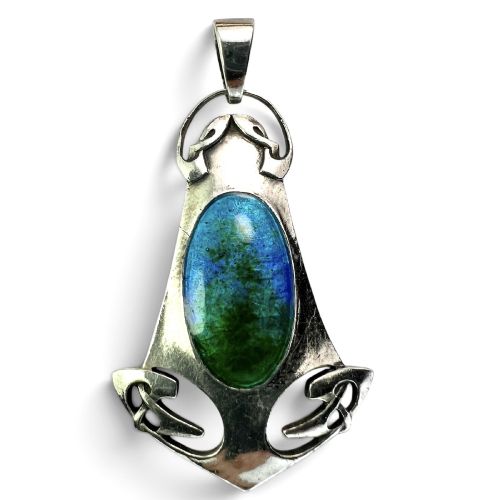
When you search for an art nouveau enamel necklace, you encounter pendants and necklets originating primarily from the nineteen hundreds, Edwardian era, and nineteenth century. These items manifest the flowing lines and organic motifs characteristic of the period, often incorporating related Arts and Crafts designs.
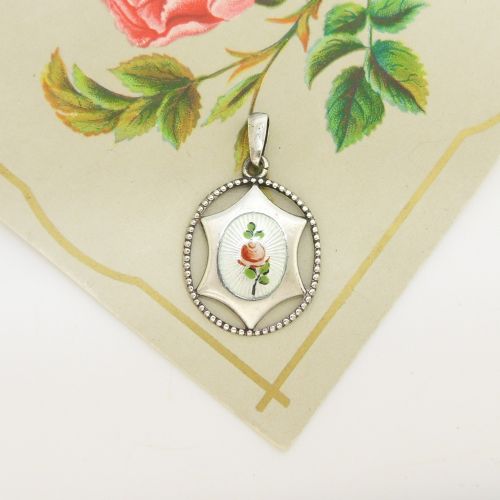
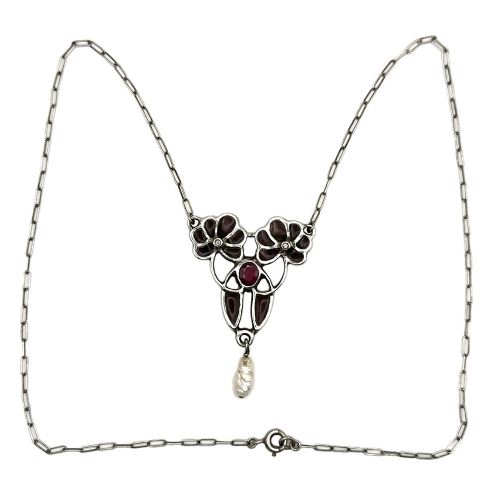
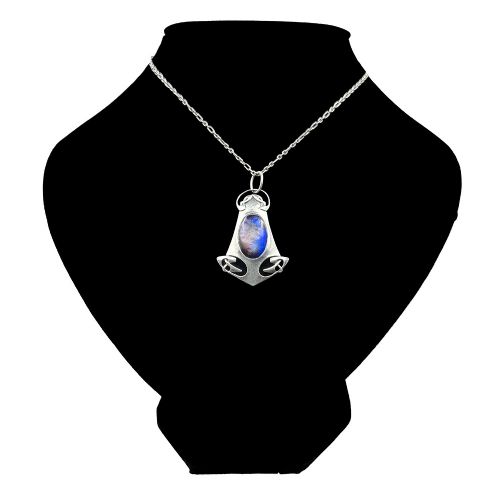
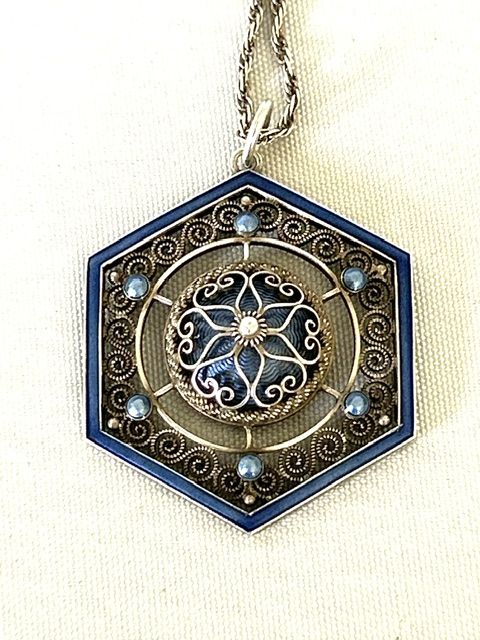
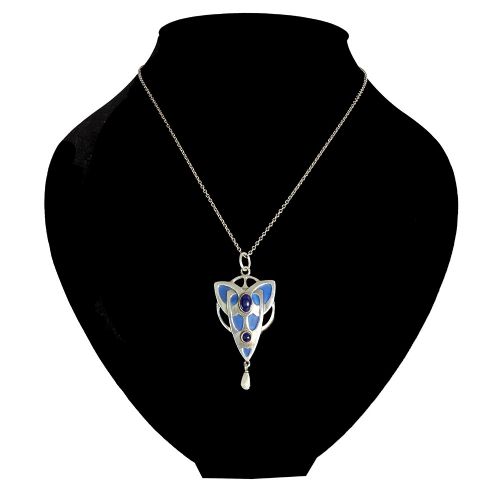
You are most likely to meet silver and silver gilt settings holding blue, green, or multi-coloured enamel work, frequently suspended from fine chains. Many examples integrate natural elements such as pearls, seed pearls, and semi-precious stones alongside the central enamel panels.
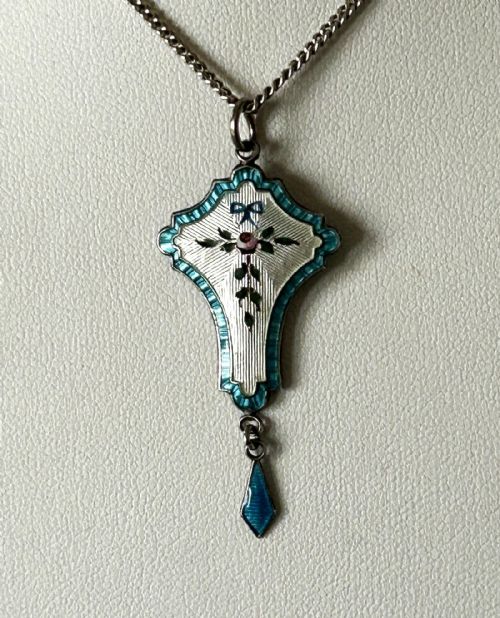
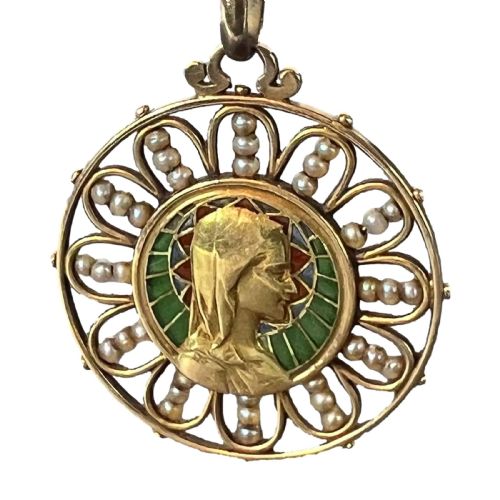
The format ranges from simple drop pendants on simple links to elaborate festoon necklaces and convertible brooch pendants. French religious medals and secular floral designs appear alongside British Arts and Crafts productions.
Materials and technique
Silversmiths and goldsmiths shaped sterling silver, silver gilt, and yellow gold into organic frames using casting, hammering, and wirework techniques. These precious metals provide the structural support for the decorative glass elements.
Vitreous enamel, guilloche, and plique-a-jour techniques supply the characteristic translucent colour. Plique-a-jour work leaves the enamel cells without a solid backing, allowing light to pass through the glass like a stained glass window.
Maker artisans integrated pearls, seed pearls, blister pearls, peridots, amethysts, citrines, chrysoprase, and chalcedony as accent stones to complement the enamel colour palettes.
Materials recorded across the inventory include silver, sterling silver, silver gilt, eighteen carat and fifteen carat yellow gold, platinum, and various gem stones.
Assessing the range
The standard of an art nouveau enamel necklace rests on the precision of the metalwork and the translucency of the glass. Superior examples display flawless plique-a-jour cells without cloudiness or unintended bubbles in the fired enamel.
Design attribution elevates certain pieces, particularly those associated with known workshops, retail houses, and specific designers of the period. Signed items or documented designs show more inventive use of naturalistic curves and balanced stone setting.
Marius Hammer·Murrle Bennett·Archibald Knox·Liberty and Co·Wilhelm Fuhner·Levinger and Bissinger·Otto Prutscher·Heinrich Levinger·Charles Horner·Eduard Loss·Martin Mayer·Ludwig Knupfer·Theodor Fahrner·Meyle and Meyer
The Art Nouveau Enamel Necklace Glossary
- Plique-a-jour
- An enamelling technique where the enamel is applied in cells without a backing metal, creating a transparent stained-glass effect. Light passes directly through the coloured glass.
- Guilloche
- A decorative technique where a precise geometric pattern is機械 engraved into a metal surface beneath transparent enamel. This creates depth and shimmering movement in the light.
- Vitreous enamel
- A material made by fusing powdered glass to a substrate by firing, producing a durable and glossy coloured surface. It provides the permanent rich hues seen on these pieces.
- Festoon necklace
- A necklace featuring draped chains or garlands of linked drops, flowers, or enamel plaques across the neckline. This style was popular during the Edwardian period.
- Silver gilt
- Sterling silver that has been coated with a thin layer of gold, giving the metal a warm yellow tone. It provides the appearance of solid gold while maintaining a silver base.
Art Nouveau Enamel Necklace: Frequently Asked Questions
How do I care for my necklace?
Store your necklace flat in a lined box away from direct sunlight and moisture to protect the delicate enamel and mounted pearls. Avoid using ultrasonic cleaners or harsh chemical dips, as these can damage the glass and organic stones.
Clean the metal components gently with a soft microfibre cloth after wear. Take care not to bend the fine silver wirework or plique-a-jour cells when handling the piece.
Are these necklaces fragile?
Vitreous enamel and plique-a-jour work require careful handling because glass can chip or crack if struck hard against a hard surface. The delicate wire frames can also bend under heavy pressure.
With sensible wear and proper storage, these pieces remain robust. Many have survived for over a century in wearable condition.
How can I tell the period?
Look at the overall design style, mounting techniques, and material combinations to determine the era. Pieces from the nineteen hundreds often feature sinuous, asymmetrical plant motifs and plique-a-jour enamel.
Maker marks, silver hallmarks, and clasp types provide further clues for dating. British sterling silver hallmarks often include date letters specific to the assay office.
Can I wear this every day?
These antique necklaces are delicate items that suit occasional wear rather than daily use. The thin glass enamels and seed pearls are vulnerable to knocks and snagging on clothing.
Reserving the necklace for special occasions helps preserve the original condition of the enamel and secure the pendant safely on its chain.