



Art Nouveau Drop Necklace
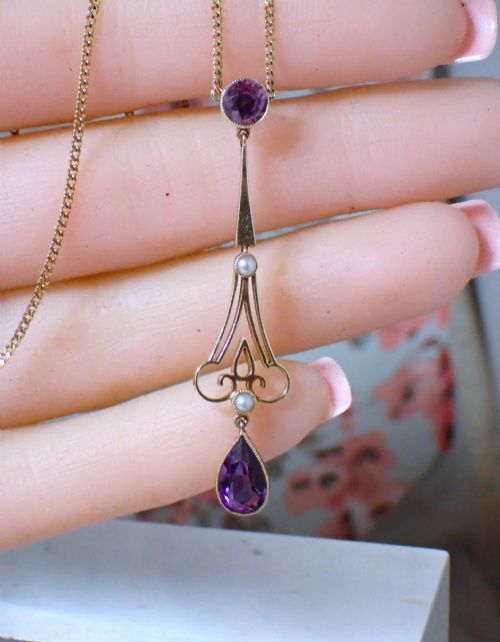
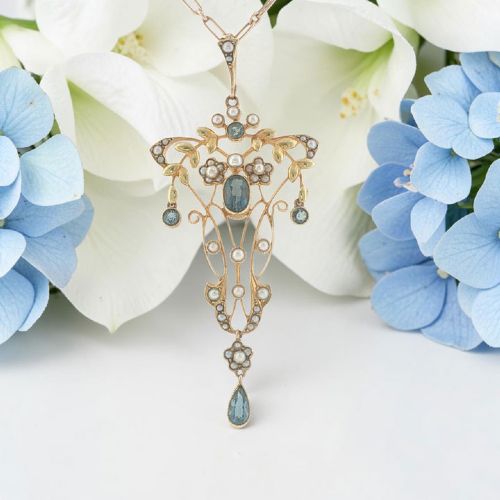
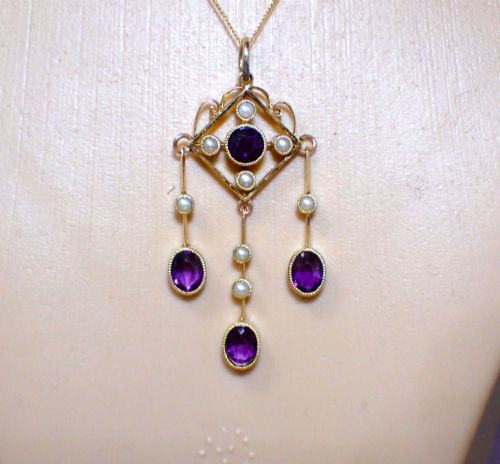
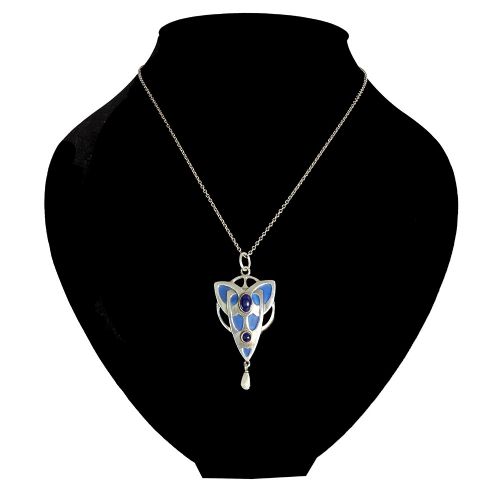
An art nouveau drop necklace brings organic, flowing lines and soft gems to the neckline, offering a distinct departure from rigid Victorian geometry.
Art Nouveau Drop Necklace
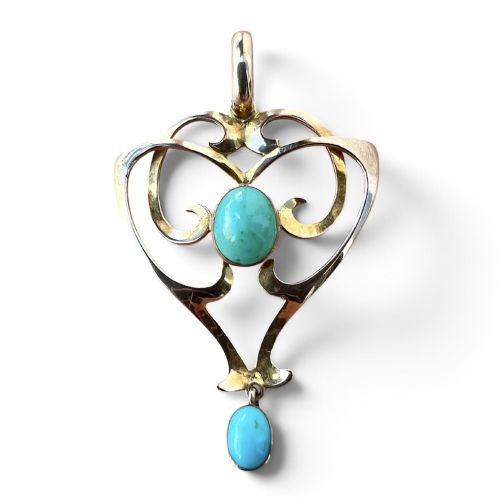
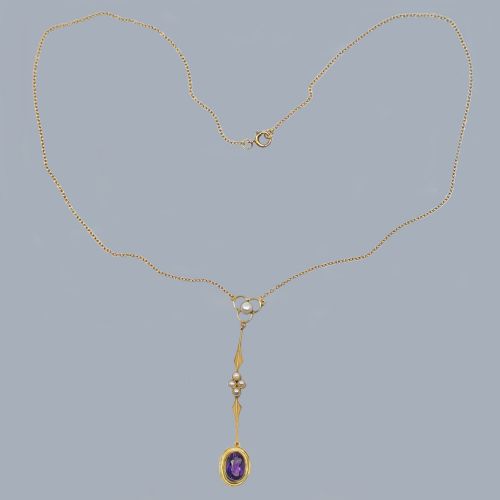
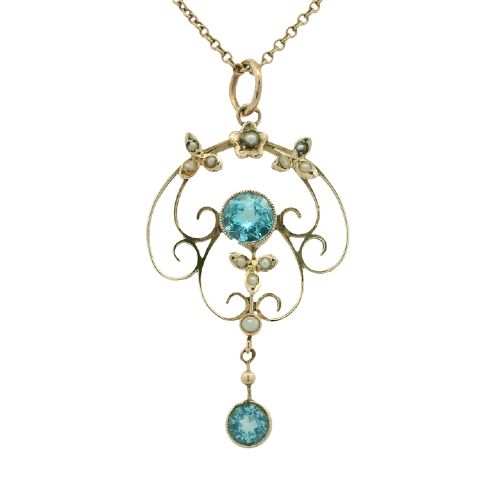
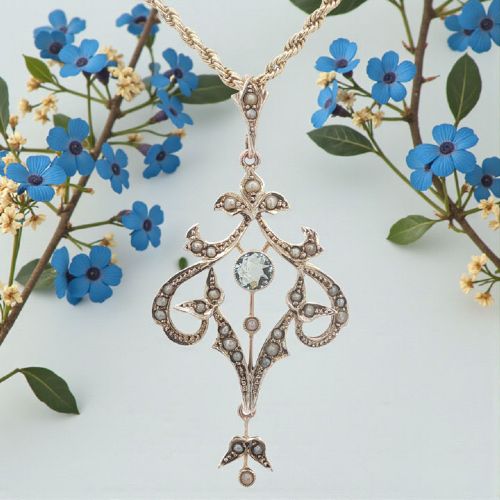
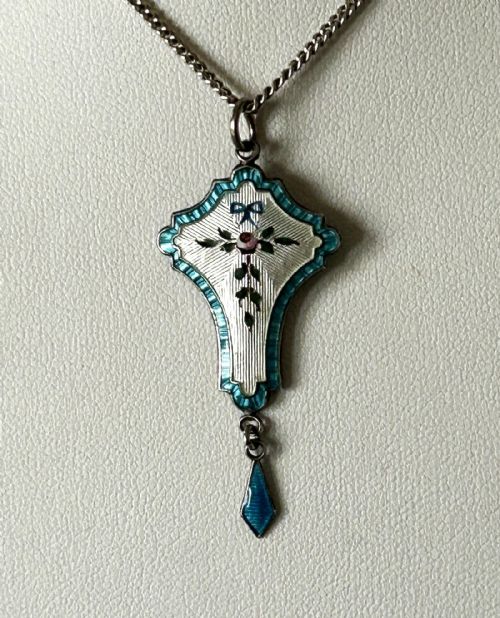
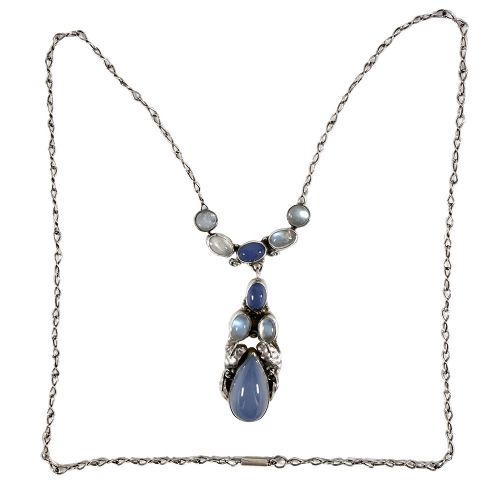
An art nouveau drop necklace hangs a central pendant or gemstone from a delicate chain, utilising the sinuous whiplash curves characteristic of the turn of the twentieth century. These pieces emerge primarily from the Edwardian period, the 1900s, and the Arts and Crafts movement, capturing natural motifs like flora and insects.
The most common examples on this page pair silver or yellow gold with pearls, amethysts, peridots, and vibrant enamel work. Makers often integrated seed pearls and turquoise into cascading drops that gently move with the wearer.
Beyond standard commercial production, works associated with prominent designers and retailers such as Liberty & Co appear alongside unmarked vernacular pieces. Buyers will find both gold lavalieres and silver pendants set with moonstones, chalcedony, and aquamarines.
How they were made
Goldsmiths and silversmiths shaped precious metals using hand fabrication, wirework, and casting, often combining 9ct or 15ct gold with sterling silver to securely mount gemstones. Enamelling techniques, particularly translucent plique-à-jour which resembles miniature stained glass, required immense skill to suspend coloured glass within open metal cells.
Gemstones such as amethysts, peridots, and opals were cut en cabochon or faceted with old-cut diamonds, then secured with delicate claw settings or bezels. Seed pearls were meticulously drilled and strung on silk or wired individually into clusters and dangling fringes.
Common gemstones include amethyst, peridot, aquamarine, turquoise, moonstone, and chalcedony.
What varies in quality
Quality rests upon the originality of the design, the crispness of the hand-chased metalwork, and the transparency and depth of the enamel. Pieces bearing the marks of known workshops or independent designers exhibit superior weight, finer detail in the organic whiplash curves, and more thoughtful stone selection.
The choice of materials elevates a piece, distinguishing simple silver and paste combinations from substantial 15ct gold mountings set with finely matched aquamarines, tourmalines, and natural pearls. Intact enamel without chipping and secure, original clasps separate exceptional examples from altered or heavily restored survivors.
Deakin & Francis·Mary Thew·Archibald Knox·Liberty & Co·Murrle Bennett·Wilhelm Fuhner·Dorrie Nossiter·Marius Hammer·John Paul Cooper·Levinger & Bissinger·Otto Prutscher·Charles Horner
The Art Nouveau Drop Necklace Glossary
- Lavalier
- A pendant necklace featuring a small drop suspended below the main decorative element, popular during the Edwardian era. This style allows the lower gem to sway independently with movement.
- Plique-à-jour
- An enamelling technique where enamel is applied to open cells without a backing, allowing light to shine through the transparent colour. It creates an effect similar to a tiny stained-glass window.
- Seed pearl
- A very small, naturally occurring pearl, often less than two millimetres in diameter. These tiny pearls were drilled and clustered tightly together to form textured borders and floral motifs.
- Whiplash curve
- The characteristic asymmetrical, flowing line found in Art Nouveau design, mimicking the undulating stems of plants and tendrils of climbing vines. It defines the aesthetic movement across jewellery and decorative arts.
- Cabochon
- A gemstone shaped and polished with a smooth, rounded convex surface rather than faceted. This cut is frequently used for moonstones, chalcedony, and turquoise to showcase their internal glow or matrix.
Art Nouveau Drop Necklace: Frequently Asked Questions
How do I care for antique enamel jewellery?
Antique enamel requires careful handling because glass can chip or crack if struck against hard surfaces. Keep these pieces away from harsh chemicals, ultrasonic cleaners, and prolonged immersion in water.
Store them individually in soft pouches to prevent scratching from harder metals and gemstones.
Are these necklaces made of solid gold?
The gold pieces seen here are typically constructed from 9ct, 12ct, 14ct, or 15ct gold, reflecting the standard fineness alloys of the Victorian and Edwardian periods. Solid gold was often paired with silver fronts to make diamonds and white stones pop against a brighter background.
Assay marks and maker's stamps, where present, help confirm the specific gold standard used by the workshop.
How can I tell Art Nouveau from Arts and Crafts?
Art Nouveau jewellery focuses on fluid, asymmetrical, whiplash lines inspired by organic growth, movement, and feminine forms. The aesthetic emphasises grace and decorative rhythm.
Arts and Crafts pieces tend to display a more hand-wrought, medieval character, celebrating visible hammer marks, cabochon stones in heavy bezels, and structural integrity over sweeping curves.