



Art Nouveau Coal Scuttle
An art nouveau coal scuttle brings organic line and hammered metal to the hearth, offering a practical way to store fuel beside the fireplace.
Art Nouveau Coal Scuttle
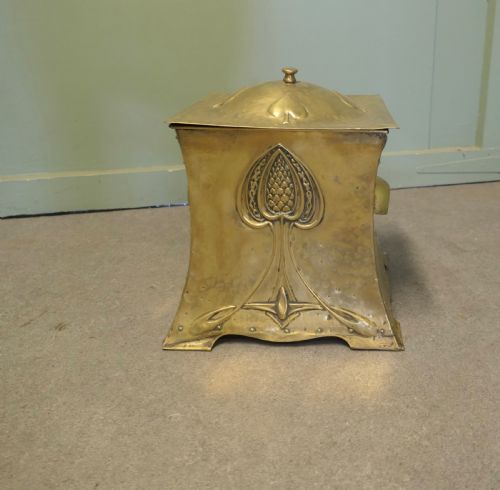
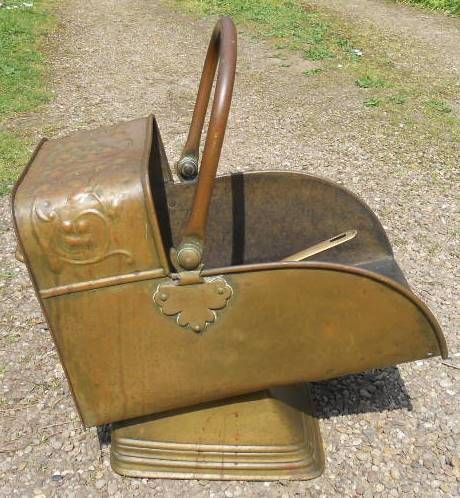
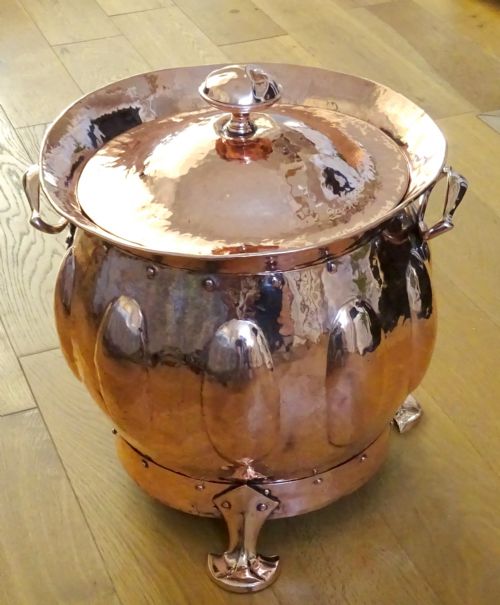
An art nouveau coal scuttle is a fireside accessory designed to hold solid fuel while displaying the characteristic floral motifs and flowing lines of the movement. You will encounter these pieces in forms ranging from lidded boxes and purdoniums to open buckets and helmet scuttles.
The materials span base metals and timbers, with copper and brass forming the bulk of the metalwork alongside oak, mahogany, walnut, and beech cabinetry. Pieces emerge from the late nineteenth century through to the early twentieth century, carrying Victorian, Edwardian, and Arts and Crafts influences.
Makers drew on contemporary design movements, resulting in items that double as functional storage and decorative metalwork. They sit beside the hearth as hearth accessories and fireside containers, frequently accompanied by shovels or internal liners.
What Varies in Quality
Quality reveals itself in the weight of the metal and the depth of the repoussé work, where sharp, crisp hammering distinguishes workshop output from mass production. Thicker gauge copper and brass resist denting and maintain the structural integrity of the handle mounts over decades of daily lifting.
In wooden examples, the joinery of the cabinet and the figure of the timber dictate the standing of the piece. Fine dovetailing, well-fitted drop-front mechanisms, and original ceramic or metal liners elevate an ordinary box to a substantial piece of furniture.
Liberty·Ruskin
The Art Nouveau Coal Scuttle Glossary
- Purdonium
- A specialised coal cabinet featuring a sloping front panel that drops forward to reveal a removable metal liner. It typically includes a compartment on top and stands on small feet or castors.
- Helmet Scuttle
- A deep coal bucket shaped with a high back and a flared, sloping front reminiscent of a classical helmet. It usually incorporates a swing handle and a smaller rear grip for tipping.
- Repoussé
- A metalworking technique where the artisan hammers the design from the reverse side to create a raised relief on the front. This method defines the decorative panels on copper and brass scuttles.
- Liner
- The internal galvanized or brass bucket that lifts out of wooden coal boxes and purdoniums. It keeps soot and coal dust away from the timber structure.
- Arts and Crafts
- A design movement emphasising handcraftsmanship, simple forms, and natural materials. It heavily influenced the aesthetic of fireside metalwork during this period.
Art Nouveau Coal Scuttle: Frequently Asked Questions
What is a purdonium?
A purdonium is an enclosed wooden coal box featuring a sloping drop-front panel and an internal metal liner. This design keeps coal concealed and tidy beside the fireplace.
Cabinet versions often include a small shelf on top and rest on short feet, functioning more like a small piece of furniture than a simple bucket.
How do I clean copper coal scuttles?
Copper items respond best to gentle washing with warm soapy water and a soft cloth to remove soot and surface grime. Avoid abrasive scouring pads that flatten the original texture of the metal.
Many collectors prefer to leave an aged patina on nineteenth-century copper rather than polishing it to a bright shine.
Are liners usually original?
Liners are frequently replaced over time due to the corrosive nature of coal dust and damp fuel. Finding a metal liner that fits snugly inside the wooden box indicates a careful matching or survival.
Galvanized or brass inserts are typical, and their presence makes regular use practical today.
How do I date these pieces?
Dating relies on the combination of material, construction methods, and stylistic cues such as embossed floral motifs. Pieces span the late Victorian era through the Edwardian period up to the early twentieth century.
Wooden purdoniums often display the joinery and timber choices popular around nineteen hundred.