






Art Nouveau Chest
An art nouveau chest brings flowing botanical lines and organic hardware into a room, offering both decorative presence and practical storage.
Art Nouveau Chest
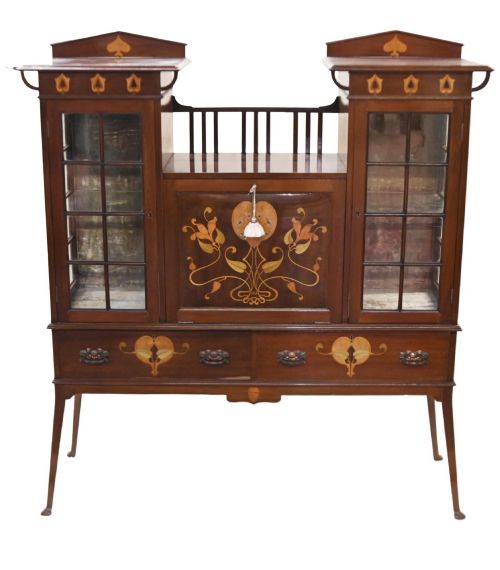
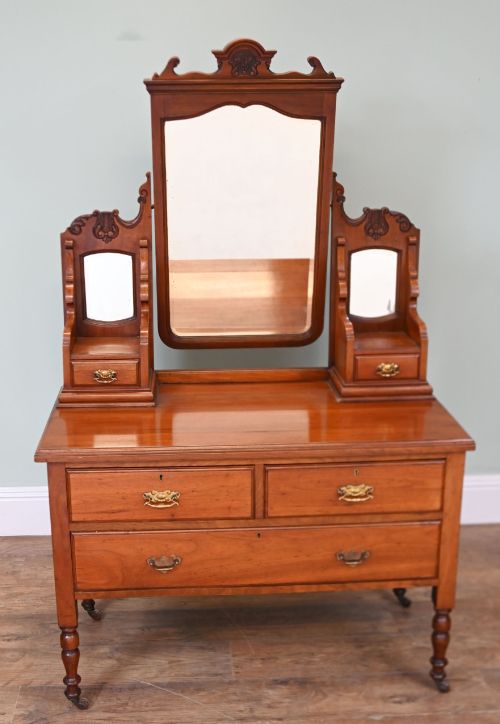
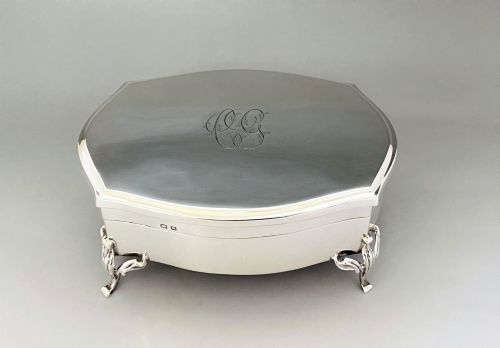
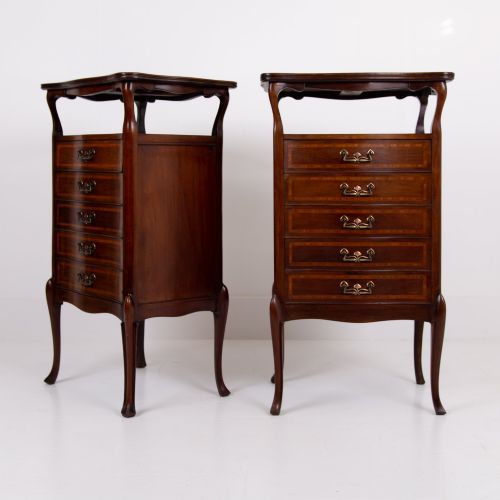
When you search for an art nouveau chest, you encounter a distinct design vocabulary that moves away from Victorian rigidity towards fluid, nature-inspired forms. The pieces available span cabinets, jewellery boxes, music cabinets, and traditional chests of drawers dating from the late nineteenth and early twentieth centuries.
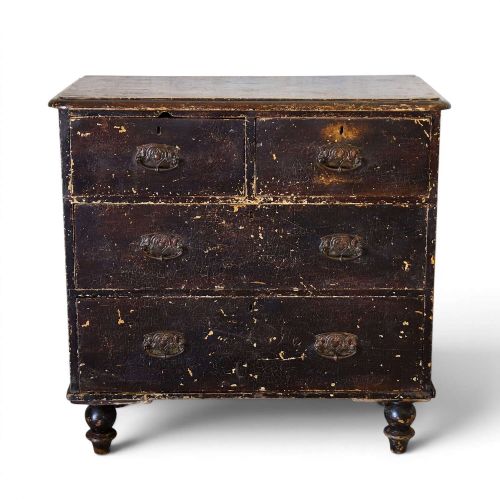
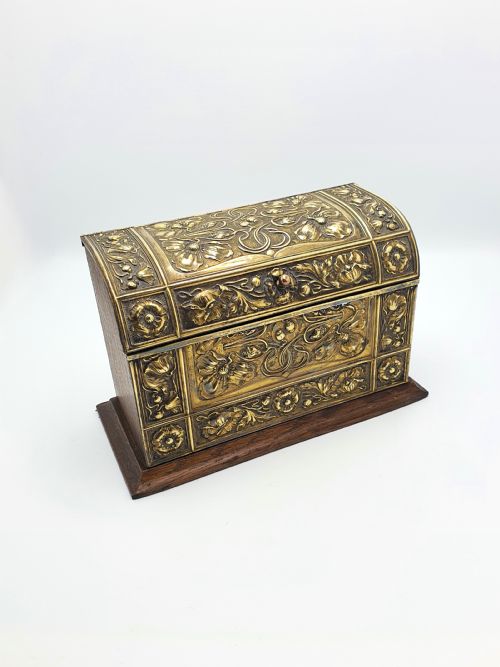
The version most commonly met on this page is the Edwardian or 1900s household piece utilising mahogany, walnut, or pine, often accented with specific period hardware. Makers of the period applied these organic motifs across various scales, from large display and cocktail cabinets down to small trinket and document boxes.
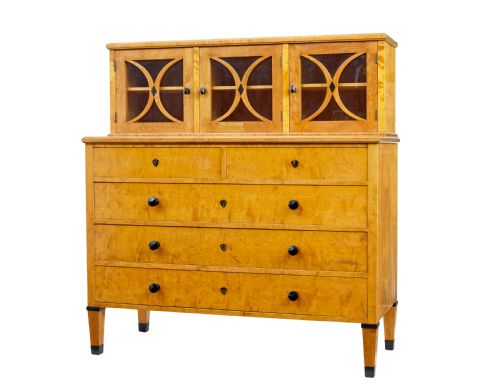
Geographic origin also shapes these forms, with English interpretations sitting alongside French pieces and Swedish birch examples. Each variant demonstrates how cabinetmakers adapted the international style to regional tastes in furniture construction.
Materials and construction
Makers constructed these carcases using solid and veneered timbers such as mahogany, walnut, satinwood, pine, and birch. Surfaces frequently display marquetry inlay or original finishes like brown scumble paint.
Metalwork forms an integral part of the construction, utilising brass and bronze for handles, hinges, and decorative caskets. Glass panels and fitted interiors of velvet or silk complete the detailing of display cabinets and jewellery boxes.
Art Nouveau Chest Retail Price Guide 2026
Typical asking prices for art nouveau chest among the pieces listed under this phrase on Sellingantiques today, from the lower quarter to the upper quarter. They describe what is for sale here now, not the wider market.
Materials recorded across current pieces range from solid mahogany and walnut to Swedish birch, pine with scumble paint, and cast bronze.
Assessing quality and execution
Quality rests in the crispness of the carving and the subtlety of the organic curves integrated into the woodwork. Superior examples show careful selection of wood grains, such as figured walnut or mahogany, which complement rather than fight the sweeping lines.
Hardware execution dictates the standing of a piece, separating standard production from finer output. Original brass or bronze mounts designed specifically for the cabinet elevate the overall integrity of the object.
S Theeman·Liberty
The Art Nouveau Chest Glossary
- Scumble paint
- A decorative paint technique involving translucent layers dragged or brushed over a base coat to simulate grain or create mottled patterns. This finish appears on period pine pieces.
- Marquetry
- The art and craft of applying small pieces of veneer to a structure to form decorative patterns. Walnut and other timbers are frequently used for these pictorial designs.
- Fall front
- A hinged panel that drops down to reveal a writing surface or interior compartments. It is a common feature on music cabinets and writing slopes.
- Casket
- A small decorative box designed to hold jewellery, trinkets, or documents. These items often feature detailed metalwork in bronze or brass.
- Baton
- A rigid strip of wood or metal used to secure or accent panels. It defines the linear structure of many cabinets.
Art Nouveau Chest: Frequently Asked Questions
How do I date an art nouveau chest?
Dating relies on examining the construction methods, secondary timbers, and characteristic hardware of the period. Pieces generally fall between the 1890s and the 1920s, bridging Victorian heaviness and later modernist movements.
Cabinet construction techniques and registration marks on metal mounts can narrow down the manufacturing decade.
Where were these chests made?
Production occurred across Europe, with distinct English, French, and Swedish examples represented in the material. Regional workshops and larger retail houses interpreted the international style using locally available woods like birch, pine, and mahogany.
French pieces often lean into more theatrical floral marquetry, while English interpretations frequently utilise traditional cabinet timbers.
How do I clean an original painted finish?
Original painted surfaces, such as scumble paint, require gentle dusting with a dry, soft cloth to preserve the fragile top layers. Moisture and modern chemical cleaners can lift or damage aged decorative finishes.
Consulting a professional restorer is advisable if deeper cleaning becomes necessary to remove stubborn grime.