




Art Nouveau Armchair
An art nouveau armchair brings organic curves and floral motifs straight into a room, offering both sculptural presence and comfortable seating.

Art Nouveau Armchair
An art nouveau armchair is a seating piece defined by flowing, plant-inspired lines and naturalistic ornamentation that emerged around the turn of the twentieth century. When exploring this selection, buyers frequently encounter mahogany and beech frames dating from the late Victorian period through to nineteen hundred and the Edwardian era.
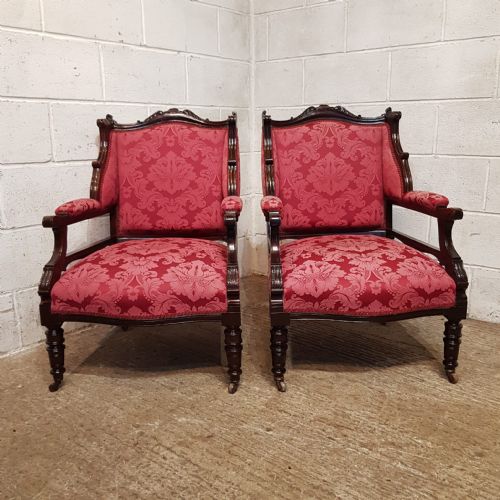
The forms vary widely, ranging from high-backed hall chairs and rocking chairs to upholstered salon suites, corner chairs, and low nursing chairs. These diverse configurations reflect the versatile domestic spaces of the period, from formal parlours to intimate morning rooms.
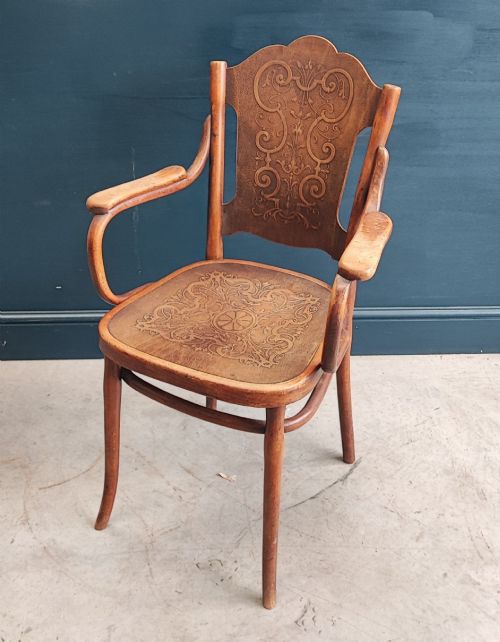
Originating across Britain, France, and central Europe, these chairs display regional interpretations that span from Vienna Secession bentwood designs to English inlaid mahogany work. This variety ensures that collectors can find pieces matching both British vernacular traditions and continental stylistic movements.
Materials and construction
Makers utilised solid timbers such as mahogany, beech, and oak, often shaping them through traditional joinery alongside advanced bentwood techniques. Wood inlay provided contrasting botanical or geometric patterns across the wooden frames.
Upholstery played a central role in finishing these pieces, with original and replacement textiles including woven fabrics and textured upholstery. Brass accents occasionally appeared in mounts or fittings, adding metallic detail to the wooden structures.
Art Nouveau Armchair Retail Price Guide 2026
Typical asking prices for art nouveau armchair among the pieces listed under this phrase on Sellingantiques today, from the lower quarter to the upper quarter. They describe what is for sale here now, not the wider market.
Listings feature mahogany, beech, oak, and brass alongside fabric, textile, and wood inlay materials spanning the Victorian, Edwardian, and nineteen-thirties periods.
Assessing quality and execution
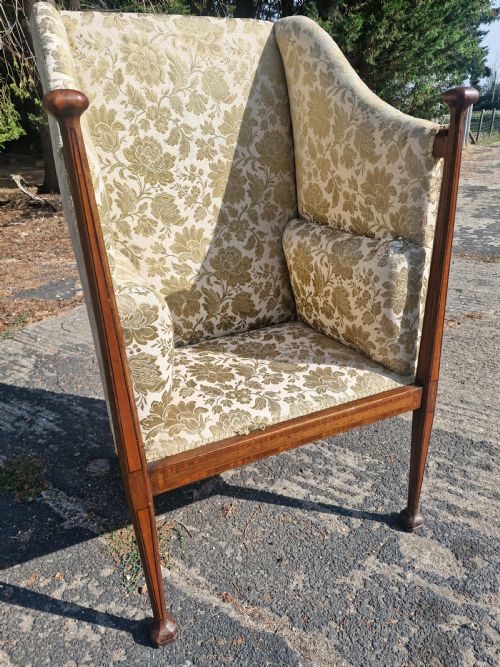
The distinction between standard production and superior craftsmanship lies in the fluidity of the carved ornament and the precision of the wood inlay. Finer examples display deeply sculptural wooden elements where the organic curves feel fully integrated into the structural frame rather than merely applied.
Integrity of construction and the preservation of original materials heavily influence the standing of a piece. Chairs retaining their period upholstery or demonstrating expert steam-bent curvature show the higher standards achieved by prominent workshops and makers of the era.
Jacob and Josef Kohn·Thonet·Goodyers of London·Anton Rosen·Baumann·Louis Majorelle
The Art Nouveau Armchair Glossary
- Bentwood
- Wood softened by steam and bent into curved structural forms. This technique created lightweight yet resilient frames particularly favored in central European seating design.
- Inlay
- Contrasting materials fitted flush into the wooden surface to form decorative motifs. This ornamentation is frequently executed in lighter woods against a darker mahogany background.
- Salon suite
- A matching set of seating furniture intended for a formal reception room. These suites usually comprise armchairs, carvers, and occasional chairs designed in a unified style.
- Vienna Secession
- An Austrian artistic movement that rejected historicism in favor of clean lines and geometric stylisation. Pieces from this circle often combine starker structural forms with subtle organic detailing.
- Tub chair
- An upholstered armchair with a rounded, enclosed back that curves continuously into the arms. This enveloping form provides deep, supportive seating.
Art Nouveau Armchair: Frequently Asked Questions
What defines an art nouveau armchair?
An art nouveau armchair is characterised by sweeping, asymmetrical lines inspired by natural forms like stems, flowers, and whiplash curves. These decorative elements distinguish them from the stricter geometric styles of earlier periods.
Makers translated these organic motifs directly into the carved wooden frames, inlay work, and even the shapes of the upholstered backs and armrests.
How do I care for antique upholstery?
Protecting period textiles requires keeping chairs out of direct sunlight to prevent fading and textile degradation. Gentle vacuuming with a soft brush attachment helps remove dust without stressing fragile fibres.
If the upholstery is original and delicate, professional conservation is recommended rather than attempting a modern domestic clean.
Are bentwood chairs comfortable?
Bentwood chairs offer surprising resilience and flexibility due to the steam-bending process used to form the wooden frames. The curved components provide natural give when seated.
While many feature supportive cane or upholstered seats, their ergonomic designs made them popular for everyday domestic use in parlours and morning rooms.
How can I distinguish Edwardian from Victorian pieces?
Victorian examples often retain heavier, more historicist proportions with darker finishes, even when incorporating early organic motifs. Edwardian pieces generally trend towards lighter construction, brighter mahogany tones, and more simplified, airy frames.
Examining the underlying construction methods and the boldness of the floral inlay helps clarify the transition between the two eras.