


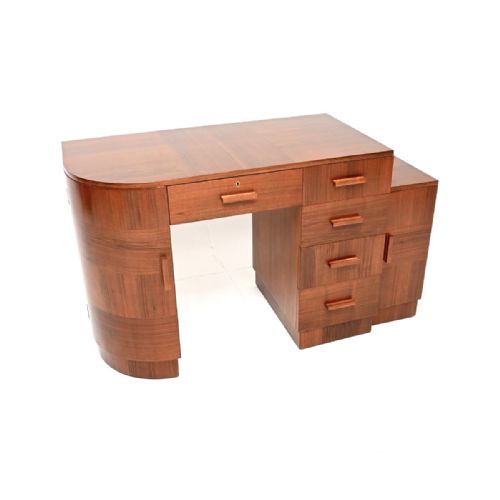


Art Deco Walnut Dressing Table
An art deco walnut dressing table brings geometric harmony and rich grain to the bedroom.
Art Deco Walnut Dressing Table
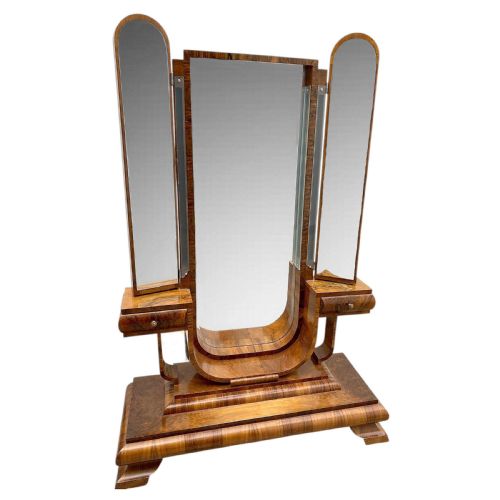
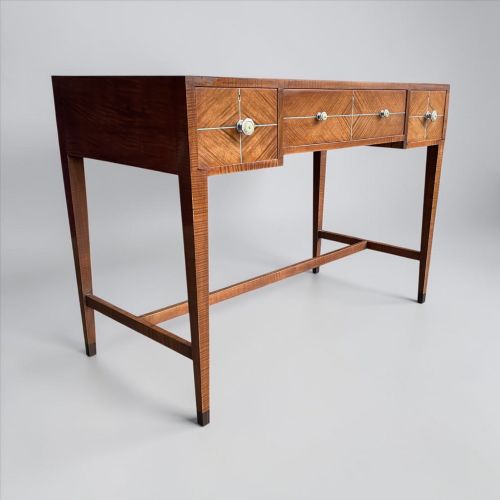
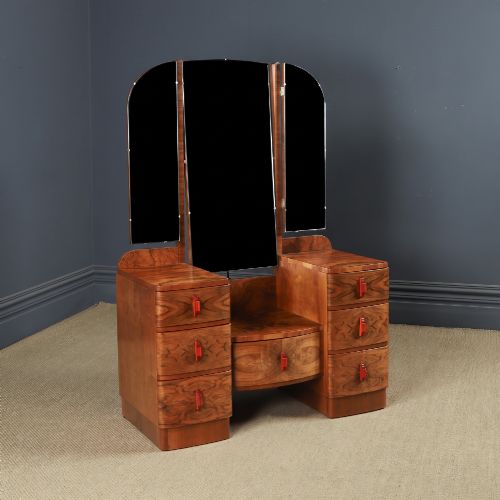
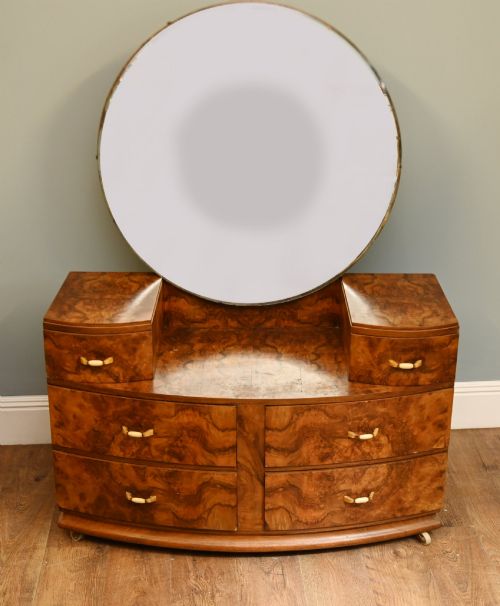
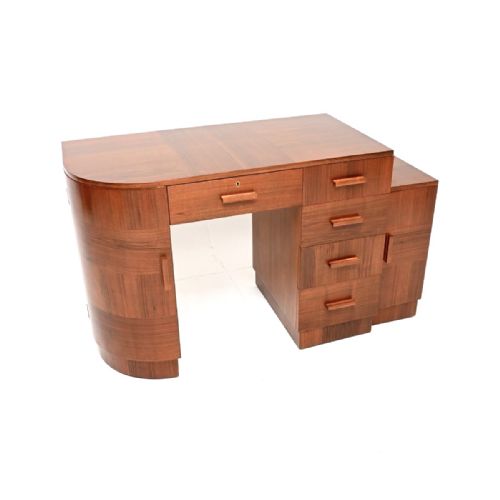
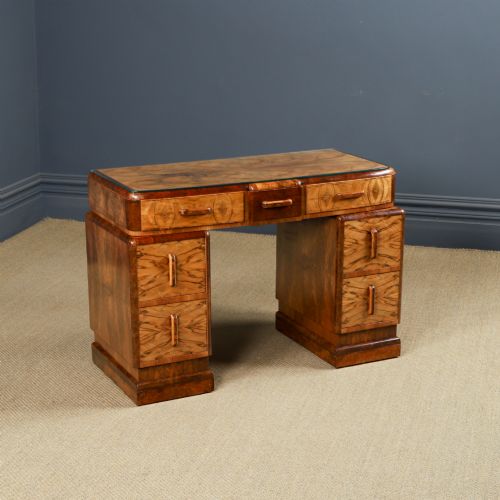
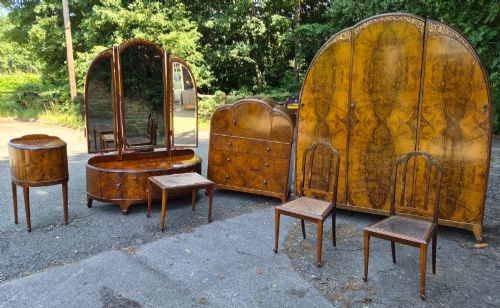
An art deco walnut dressing table is a bedroom piece defined by the bold geometric lines of the interwar period, most commonly appearing from around nineteen thirty. These pieces frequently feature pedestal forms, central mirrors, and matched veneers that accentuate the natural grain of the timber. Alongside dedicated vanity tables, buyers encounter related pieces such as dressing chests, matching stools, and pedestal desks from the same design vocabulary.
The prevalent materials span plain walnut, highly figured walnut, and burr walnut, often paired with glass, brass, mirror glass, and leather details. English and continental workshops produced these items during the nineteen twenties and nineteen thirties, applying architectural silhouettes that lean heavily into skyscraper and streamline aesthetics. Most surviving examples retain their original mirrors or incorporate compartments designed for personal grooming.
How they were made
Cabinetmakers constructed these pieces using solid wood carcasses overlaid with carefully sliced walnut and burr walnut veneers. The application of veneer allowed craftsmen to mirror the grain patterns across drawer fronts and pedestal doors, creating symmetrical visual patterns characteristic of the period. Secondary timbers provided internal stability for drawers and framing.
Metal elements such as brass handles, hinges, and structural brackets were integrated into the design alongside inset leather writing surfaces and bevelled mirror glass. Surface finishes typically involved French polishing or lacquer techniques designed to highlight the warmth and depth of the walnut figure without obscuring the grain.
Art Deco Walnut Dressing Table Retail Price Guide 2026
Typical asking prices for art deco walnut dressing table among the pieces listed under this phrase on Sellingantiques today, from the lower quarter to the upper quarter. They describe what is for sale here now, not the wider market.
Listings span pieces dated to nineteen twenty and nineteen thirty, incorporating walnut, burr walnut, brass, leather, and mirror glass across desks, stools, and dressing tables.
What varies in quality
The standard of an art deco walnut dressing table depends heavily on the selection and matching of the veneer. Pieces featuring continuous burr walnut grain across multiple drawers demonstrate a higher degree of initial craftsmanship than those with plain, unmatched surfaces. The integration of auxiliary materials like thick mirror glass, original brass hardware, and fitted leather also distinguishes finer workshop production from standard commercial output.
Structural complexity sets apart the range, separating simple rectangular carcases from sophisticated pedestal layouts with curved fronts and tiered skyscraper superstructures. Maker attribution further elevates certain examples, particularly those bearing the marks of established cabinet makers who utilised superior joinery and high-grade finishing methods.
Frank Taylor and Co.·Maurice Adams·Harry and Lou Epstein·Heals of London·Whytock and Reid
The Art Deco Walnut Dressing Table Glossary
- Burr walnut
- A figured wood grain obtained from walnut tree growths, producing intricate swirling patterns that decorators prize for cabinet fronts. It provides a highly decorative surface on nineteen thirties furniture.
- Pedestal
- A structural support form where drawers or cabinets flank a central kneehole space. This layout dominates nineteen thirties dressing tables and writing desks.
- Veneer
- A thin slice of superior wood applied over a stable secondary timber base. This technique allowed makers to display dramatic walnut grain without using solid cuts of expensive wood.
- Skyscraper style
- An architectural design influence characterised by stepped vertical forms and receding tiers. It appears frequently in the pedestals and mirrors of interwar furniture.
Art Deco Walnut Dressing Table: Frequently Asked Questions
How do I care for walnut veneer?
Walnut veneer requires protection from direct sunlight and excessive moisture to prevent fading and lifting of the thin wood layer. Regular dusting with a soft, dry cloth preserves the polished finish.
Avoid placing hot or damp items directly on the surface. Occasional application of appropriate furniture wax helps maintain the natural lustre of the timber.
Are matching stools common?
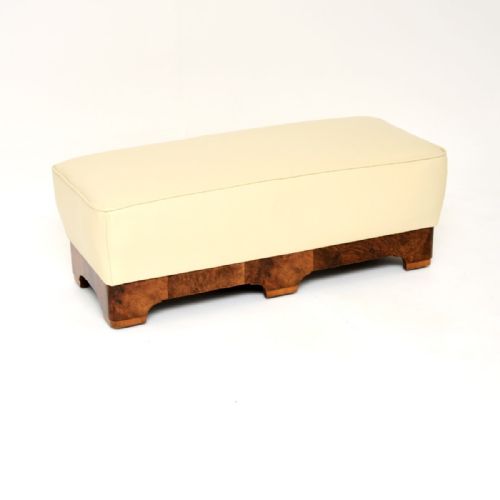
Matching stools frequently accompany these vanity units, often sharing the same walnut framing, upholstered leather seats, and geometric proportions. Some examples incorporate hidden storage compartments beneath the seat.
Finding a complete suite with its original stool enhances the integrity of the bedroom grouping. These seats mirror the architectural lines of the main dressing chest.
How do I date these dressing tables?
Dating relies on stylistic markers such as skyscraper silhouettes, linear banding, and the specific use of burr walnut veneers. Most pieces originate from the nineteen twenties and nineteen thirties.
Makers' stamps, trade labels, and associated hardware styles also help pinpoint the manufacturing era. Construction methods like drawer dovetailing provide further clues to age.