
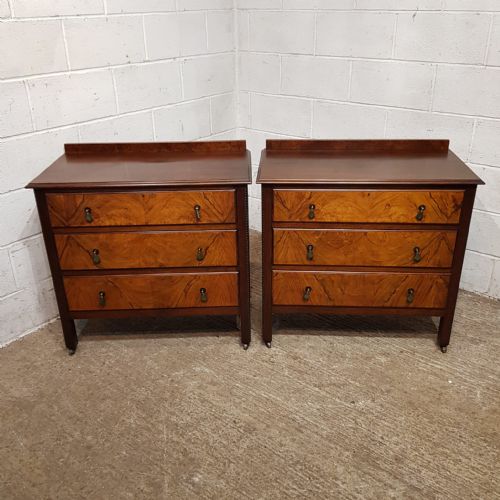
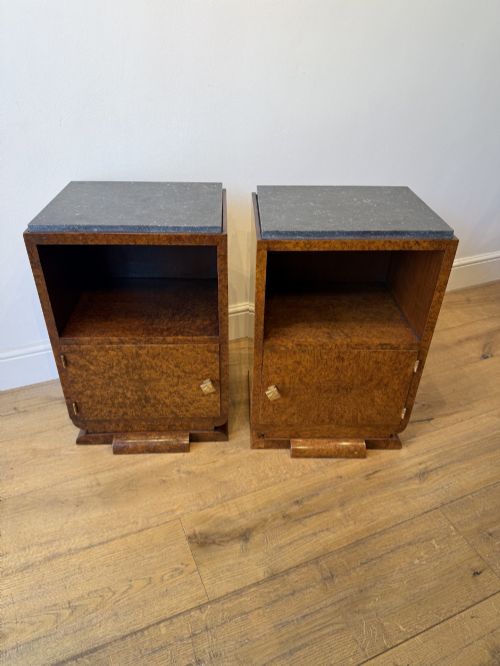

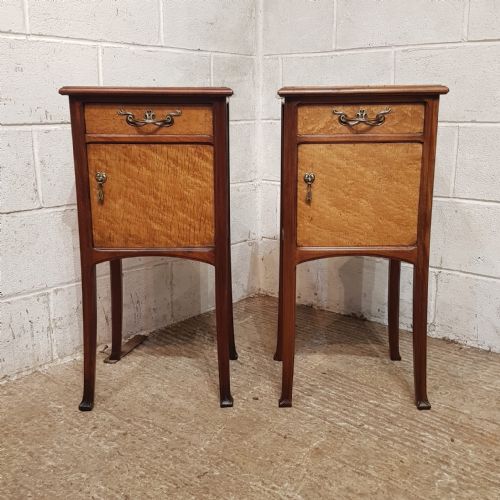
Art Deco Walnut Bedsides
Art deco walnut bedsides bring geometric restraint and rich grain to the bedroom, offering compact bedside storage grounded in twentieth-century design.
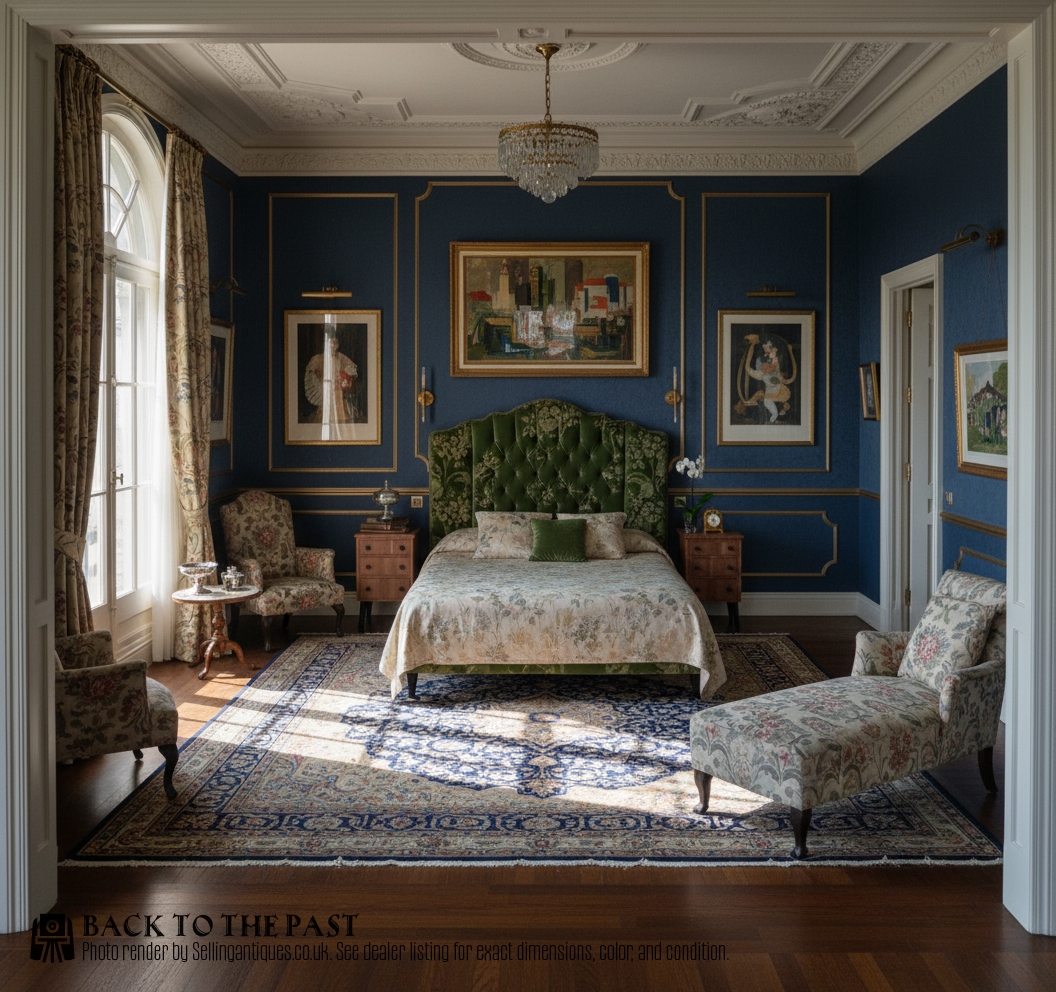
Art Deco Walnut Bedsides
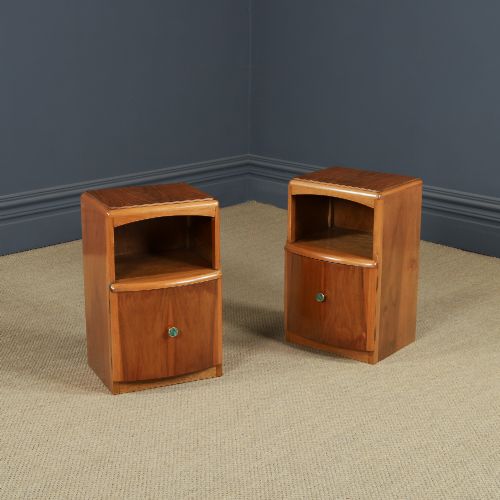
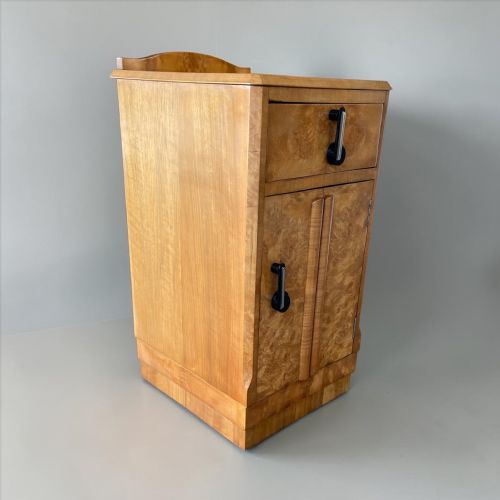
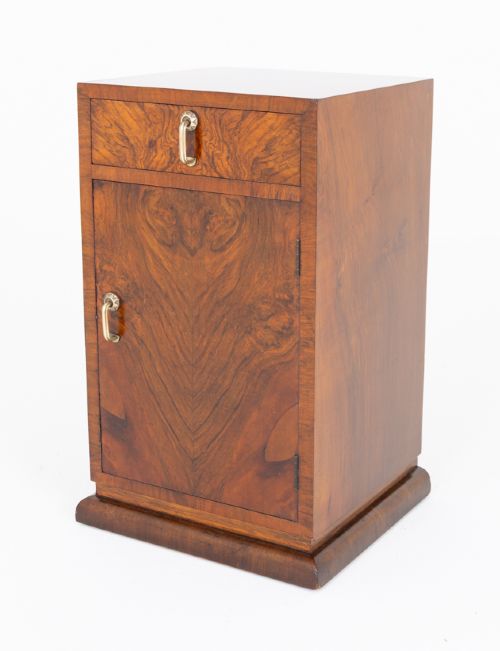
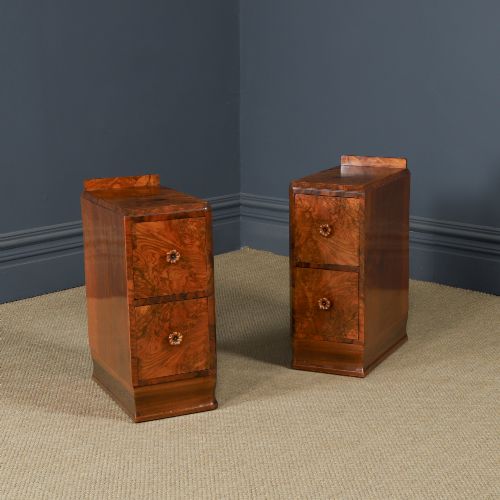
Art deco walnut bedsides encompass bedside cabinets, nightstands, and small chests designed primarily during the 1930s, alongside examples from the 1920s and 1940s. These pieces frequently appear in pairs, built to flank a bed with symmetrical storage incorporating cupboards, open areas, or drawers.
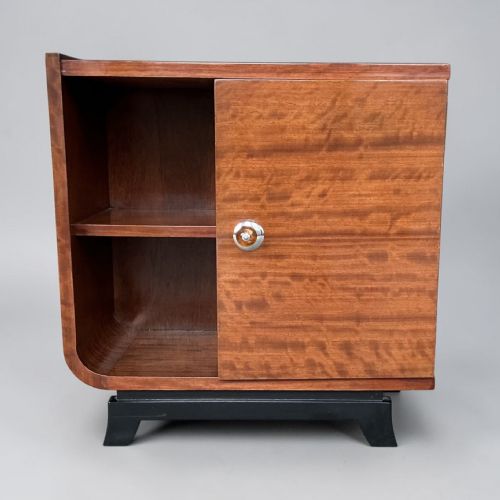
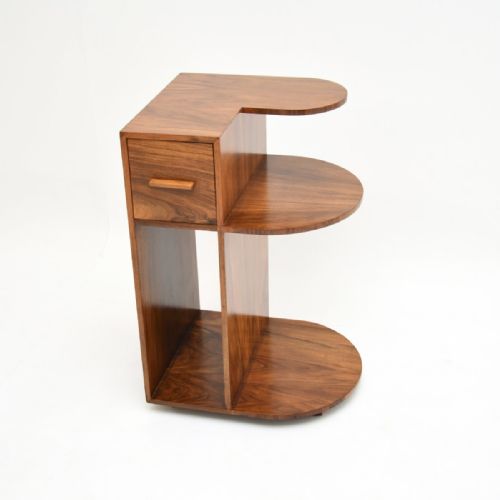
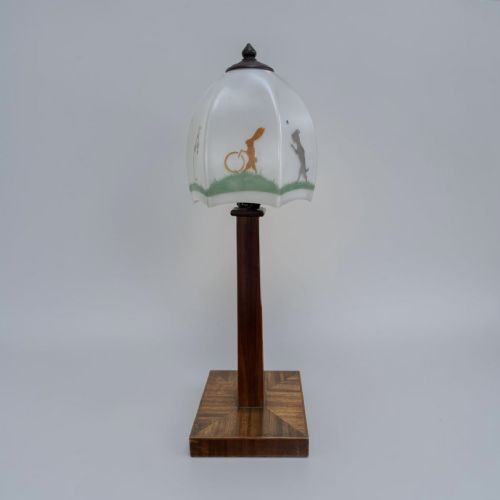
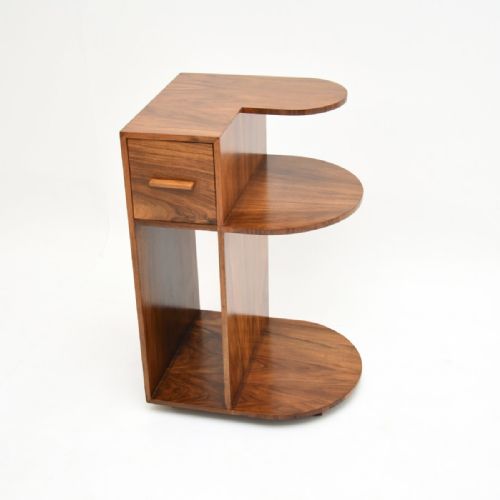
The form spans English, French, and Italian origins, ranging from standalone drum-shaped cabinets to headboards with integral attached bedside tables. Buyers encountering this category meet distinct variations, including side tables, lamp tables, and two-tier occasional tables sharing the same vocabulary of form.
Materials and Construction
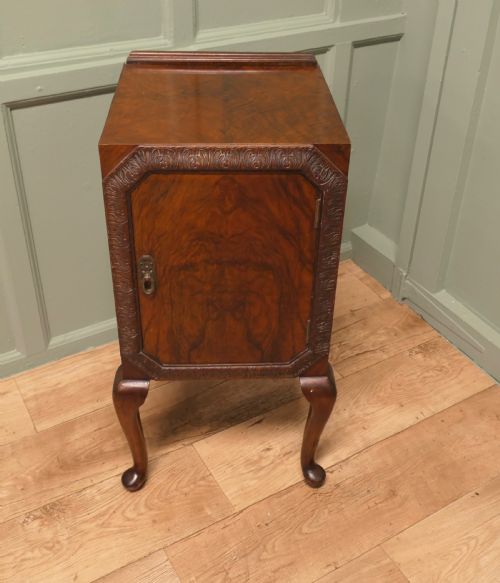
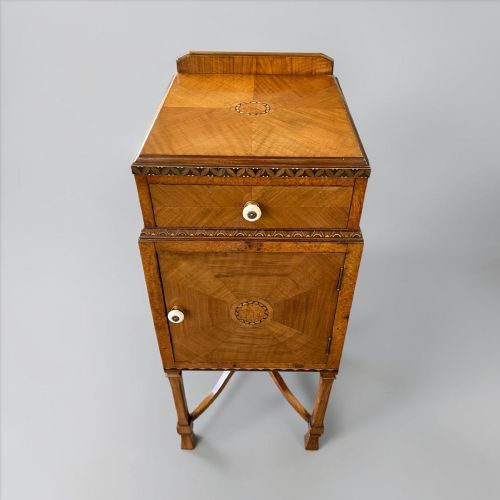
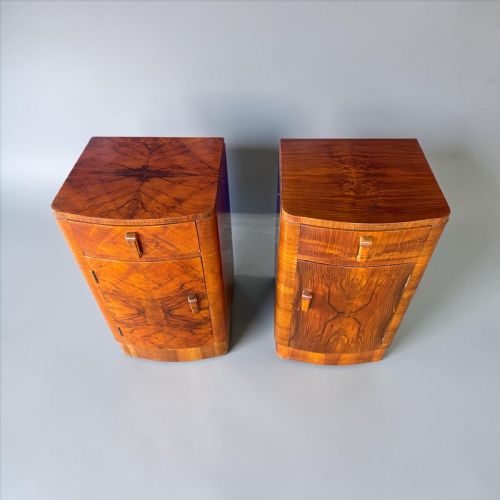
Cabinet makers utilised walnut and burr walnut veneers applied over solid wood foundations, selecting highly figured sections of timber to create dramatic grain patterns across drawer fronts and cabinet doors. This technique allowed workshops to display the natural movement of the wood in geometric arrangements.
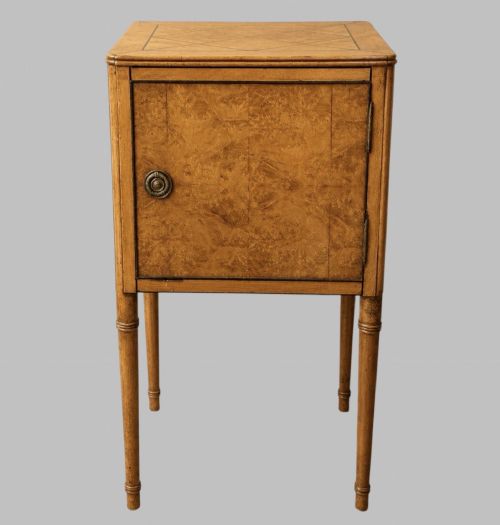
Metal and brass hardware, alongside occasional glass or mirror tops, complete the construction. Pieces combine these elements with auxiliary timbers such as satinwood, mahogany, or birds eye maple, depending on the regional workshop origins.
Listings feature pieces spanning the 1920s to the 1940s, constructed primarily in walnut, burr walnut veneer, and brass.
Assessing Quality and Execution
The distinction between tiers rests upon the choice of veneer and the precision of its layout. Highly figured burr walnut and book-matched grain patterns demonstrate superior selection by the maker, whereas plain timber surfaces offer a subdued visual weight.
Construction methods determine durability, visible in the integration of drawers, open compartments, and fitted hardware. Maker attribution, through documented workshops or distinctive regional proportions, elevates individual pieces above standard production items.
Walter Carter Harrods·Maurice Adams·Harry and Lou Epstein
The Art Deco Walnut Bedsides Glossary
- Burr Walnut
- A specialised wood veneer taken from the warted excrescences of a walnut tree. It yields intricate, swirling grain patterns prized by furniture designers.
- Art Deco
- A design style dominant between the First and Second World Wars. It emphasises streamlined geometric shapes, symmetry, and modern industrial materials.
- Nightstand
- A small low table or cabinet placed beside a bed. These units provide surface space for lamps and enclosed storage for personal items.
- Veneer
- A thin slice of superior wood glued to a base material. This method permits the display of decorative grain without relying entirely on solid scarce timber.
Art Deco Walnut Bedsides: Frequently Asked Questions
Are art deco walnut bedsides usually sold as pairs?
Many examples survive as matching pairs intended to flank a bed symmetrically. Single cabinets also appear frequently.
Buyers often find individual side tables or nightstands that match the broader suite of bedroom furniture.
What storage options do these bedside cabinets offer?
Most configurations include enclosed cupboards, drawers, or open display areas for books and nighttime essentials. Some variations incorporate multiple drawers or combined open shelving.
Integrated designs link the bedside tables directly to headboards or bed frames.
How do French and English styles differ?
English pieces often feature structured rectilinear or drum-shaped forms with practical drawer and cupboard arrangements. French examples tend to showcase sweeping curves and dramatic grain presentation.
Both regional traditions utilise burr walnut veneers to achieve strong visual presence.
What other furniture matches these bedside cabinets?
Bedside tables frequently form part of larger bedroom suites that include wardrobes and dressing tables. Occasional tables and lamp tables share the same wood finishes and decorative vocabulary.
Matching headboards with attached units complete coordinated bedroom schemes.