

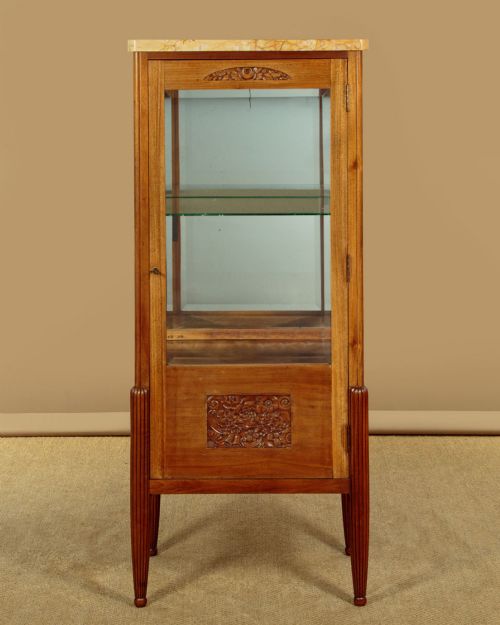
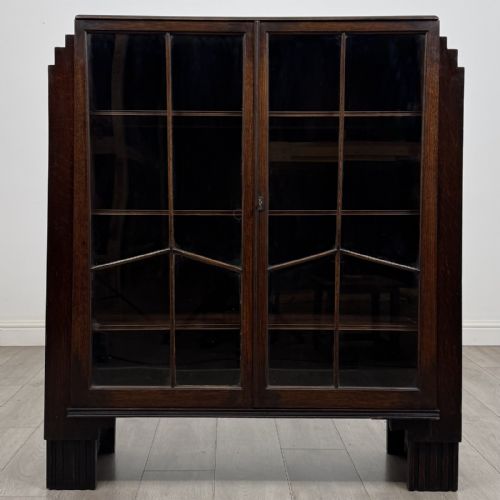
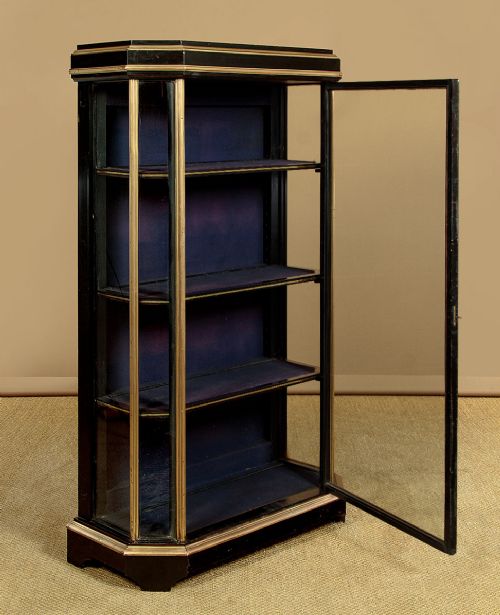
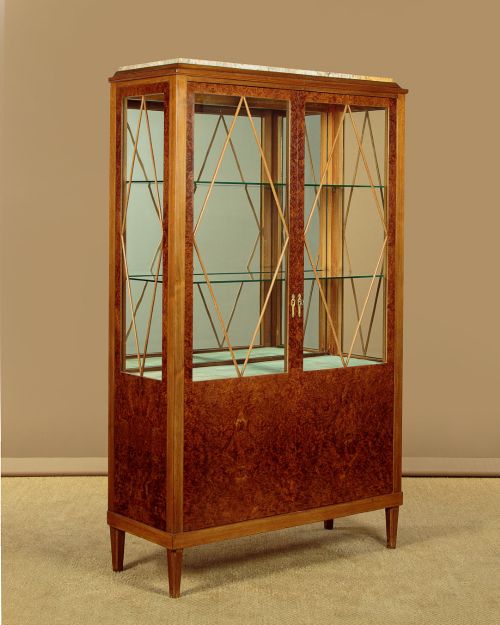
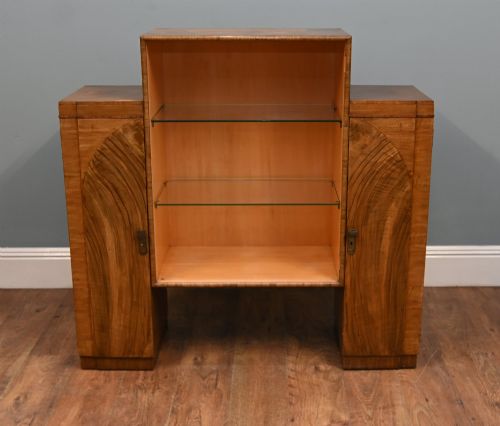
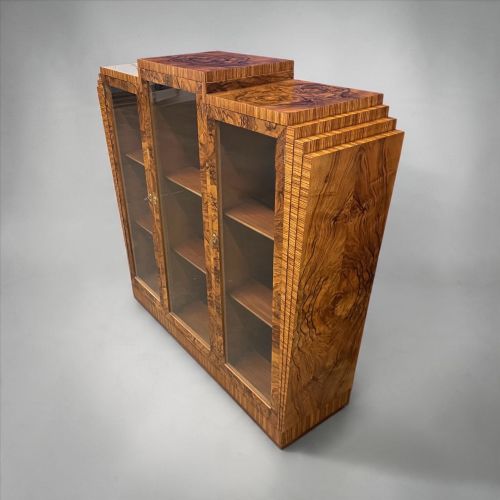
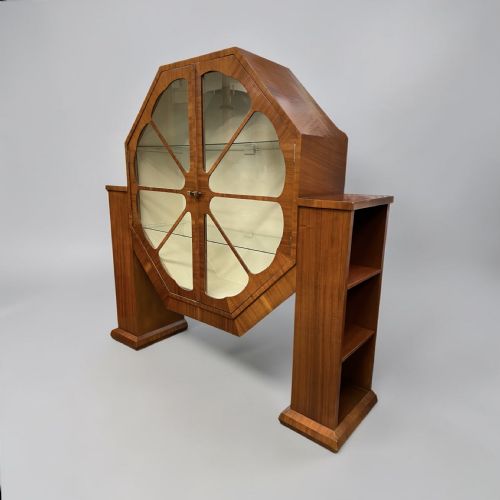
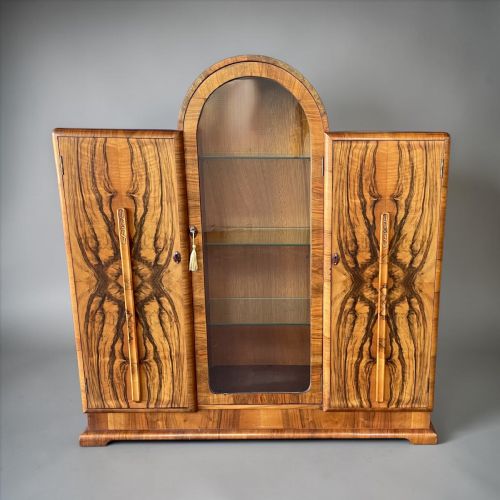
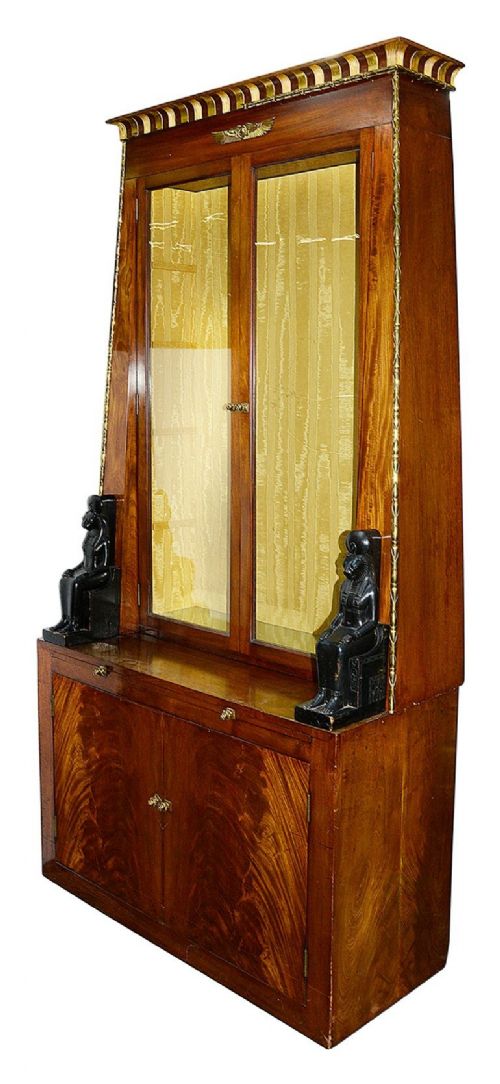
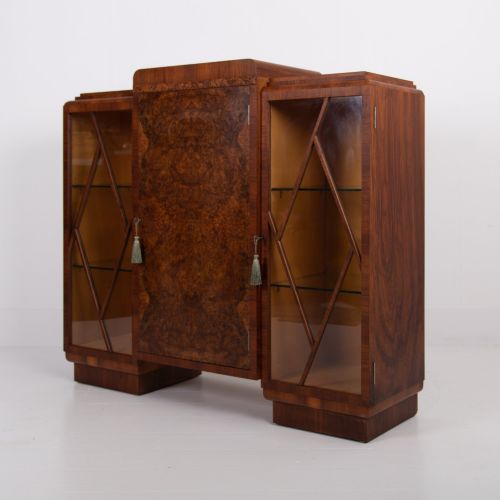
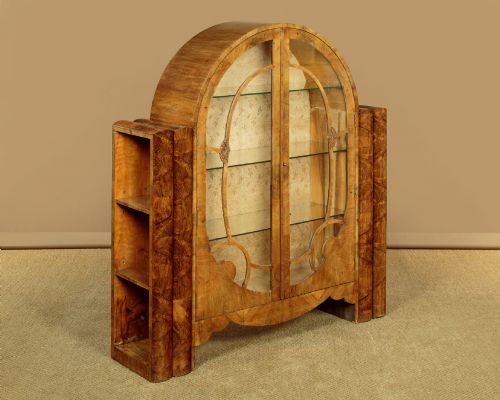

Art Deco Vitrine Cabinet
An art deco vitrine cabinet holds collections behind glass panes with the bold geometric forms characteristic of interwar design.
Art Deco Vitrine Cabinet
An art deco vitrine cabinet brings together the display function of a cabinet with the architectural lines typical of the nineteen twenties and thirties. Buyers seek these pieces to house china, books or objects while introducing period character into a room.
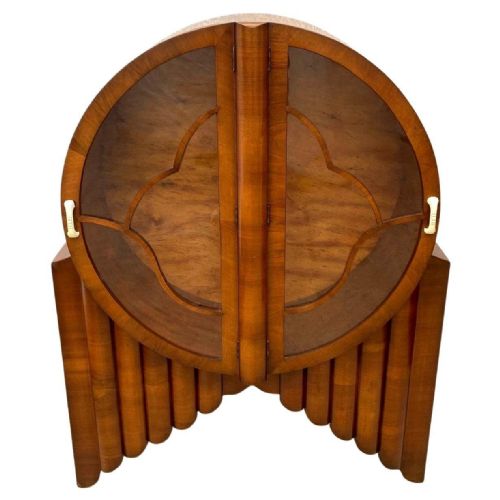
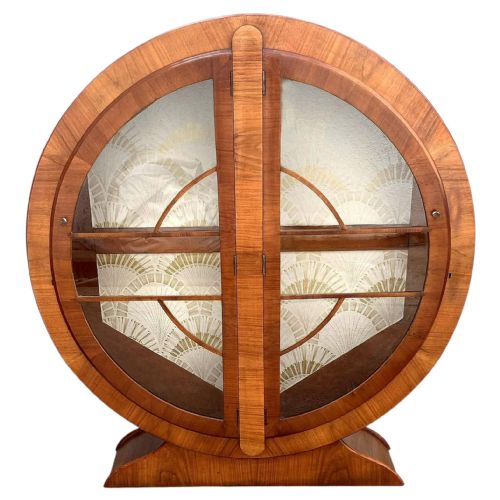
The version most commonly encountered on this page dates from around nineteen thirty, taking forms that range from circular and oval shapes to the distinctive vertical rocket and cathedral designs. Materials span solid and veneered timbers alongside glass and occasional metal mounts.
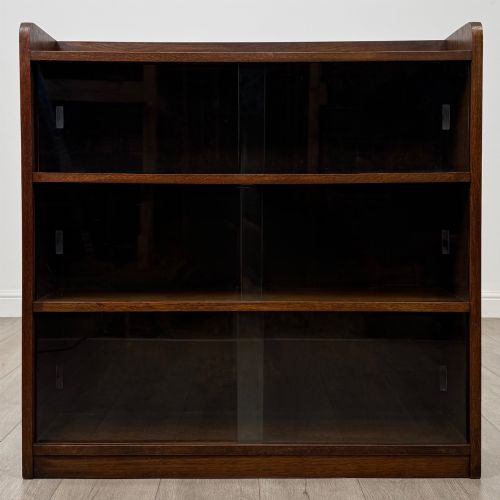
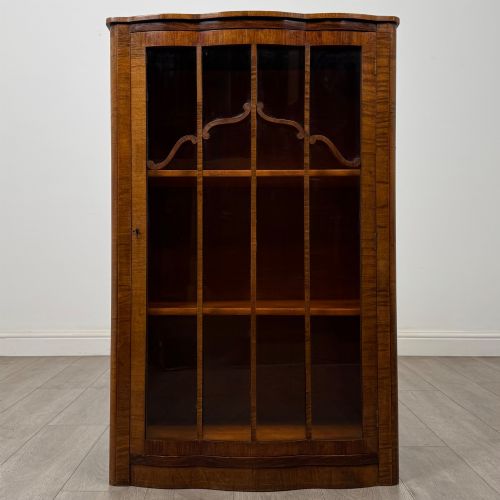
Alongside interwar examples, pieces from the Edwardian era occasionally appear, bridging traditional craftsmanship with early twentieth century design shifts. Formats include corner cabinets, sideboards combined with display space, and freestanding glazed bookcases.
Materials and Construction
Walnut and burr walnut dominate the construction of these cabinets, frequently deployed as dramatic veneers over secondary woods to create swirling grain patterns across curved doors and panels. Oak, mahogany and ebonised wood also provide structural integrity for both rectangular and shaped carcasses.
Glass panels take straight, curved or leaded configurations to enclose the display area, while brass hardware and occasional steel or leather elements provide contrast. Cabinetmakers shaped these materials into complex geometric silhouettes, including clove and circular profiles that required advanced joinery skills.
Art Deco Vitrine Cabinet Retail Price Guide 2026
Typical asking prices for art deco vitrine cabinet among the pieces listed under this phrase on Sellingantiques today, from the lower quarter to the upper quarter. They describe what is for sale here now, not the wider market.
Listings feature walnut, burr walnut, oak, mahogany, ebonised wood, glass, brass, steel, fabric and leather across the interwar and Edwardian periods.
Design and Execution
Quality separates cabinets by the ambition of their silhouette and the precision of their timber selection. Pieces at the upper end utilise figured burr walnut veneers matched symmetrically across curved doors, paired with specialised glass forms such as leaded or curved panes.
Construction methods also distinguish standard production from exceptional examples, seen in the fluency of circular or rocket shapes and the integration of secondary woods like sycamore. Maker attribution to known workshops elevates certain interwar pieces through superior joinery and distinctive proportions.
Rurka·Maurice Adams·Epstein
The Art Deco Vitrine Cabinet Glossary
- Vitrine
- A glass-fronted cabinet designed specifically for the display of objects or collections. These pieces rely heavily on glazed panels to maximise visibility from multiple angles.
- Burr walnut
- A wood harvested from the warted growths of walnut trees, yielding intricate, swirling grain patterns. Cabinetmakers prize this material for decorative veneer work on prominent exterior surfaces.
- Rocket cabinet
- A tall, tapered display cabinet configuration associated with interwar design. The silhouette narrows distinctively towards the top or bottom.
- Leadlight
- Glass panels held together by strips of lead came, creating geometric or stylistic patterns across cabinet doors. This technique appears frequently on interwar glazed furniture.
- Ebonised wood
- Timber treated with a dark finish to imitate ebony. This process provides high contrast when combined with brass mounts or lighter woods.
Art Deco Vitrine Cabinet: Frequently Asked Questions
What is an art deco vitrine cabinet?
An art deco vitrine cabinet is a glazed display piece originating mainly from the nineteen twenties and nineteen thirties, characterised by geometric forms and decorative wood veneers. These cabinets were designed to showcase valued objects while serving as sculptural furniture in domestic interiors.
Today, they function as focal points in living spaces, combining transparent display areas with enclosed storage compartments. Their forms range from upright rectangular cases to curved circular and rocket shapes.
How do I date an art deco vitrine?
Dating relies on stylistic markers, construction methods, and materials recorded across the interwar period. Cabinets from around nineteen thirty typically feature waterfall edges, burr walnut veneers, and symmetrical geometric door arrangements.
Earlier transitional pieces draw on Edwardian traditions using heavier oak or mahogany. Examining the interior construction and glass type helps clarify the exact decade of manufacture.
Where should I place a circular vitrine?
Circular and curved cabinets suit corners or open wall spaces where their three-dimensional form remains visible from multiple angles. Because glass wraps around the sides, adequate clearance allows light to penetrate the interior shelves.
Placing these pieces away from direct heat sources protects sensitive timber veneers and historical finishes. Their distinct silhouettes work effectively as standalone statement furniture.
What woods were used in these cabinets?
Makers primarily employed walnut and burr walnut for decorative surfaces, supported by oak, mahogany and ebonised wood for structural frames. Sycamore frequently appears as a contrasting interior timber in higher-end interwar pieces.
Metal elements like brass and steel appear alongside leather on specific modern-influenced designs. Veneered surfaces showcase deliberate grain matching across the curved cabinet doors.