
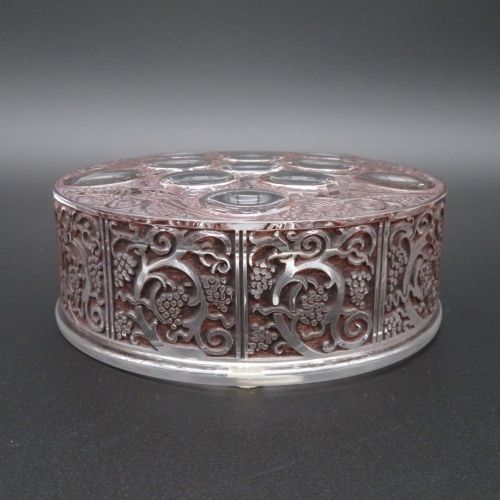


Art Deco Vanity Container
An art deco vanity container brings geometric sharpness and dressing-table elegance to your collection.
Art Deco Vanity Container
When you search for an art deco vanity container, you find a dressing-table accessory designed to hold powder, trinkets, or rouge. These pieces span the 1920s and 1930s, capturing the clean lines and stylised motifs of the period.
The versions most common on this page include glass and crystal powder boxes, sterling silver-mounted jars, and ceramic figural bowls. Many examples feature geometric patterns or incorporate figures such as flappers, jesters, and half dolls.
Origins vary across England, France, Germany, and Austria, reflecting international manufacturing centres of the interwar years. Makers range from renowned glassworks to regional porcelain factories and specialist silversmiths.
Assessing quality in art deco vanity containers
Quality rests upon the crispness of the moulding in glass and crystal pieces, alongside the precision of the silver mounts and hinges. Finer examples display meticulous hand-finishing on porcelain figures and detailed guilloche enamel work.
The integration of materials also defines the tier of the piece, where heavy cut glass combined with solid silver or marked maker attributions elevates the manufacture. Lesser pieces rely on simpler ceramic casting or unmarked metal fittings without intricate surface decoration.
An enthusiastic ceramic jester stares out from a powder box lid, keeping watch over stray trinkets and loose face powder.
René Lalique·Hasset and Harper
The Art Deco Vanity Container Glossary
- Guilloche enamel
- A decorative technique where an engraved metal surface is covered with transparent translucent enamel. This creates repetitive geometric patterns that catch the light beneath the colour.
- Rouge pot
- A small lidded container specifically intended to hold cosmetic rouge. These vessels often feature glass or ceramic bodies with precious metal mounts.
- Half doll
- A ceramic torso used widely in the 1920s and 1930s as a decorative topper for powder jars and boudoir brushes. They typically depict stylish women or flapper figures.
- Assay mark
- A stamp or series of stamps applied to precious metals to indicate purity and the testing office. Birmingham hallmarks frequently appear on silver mounts from this era.
Art Deco Vanity Container: Frequently Asked Questions
How were these containers used on a dressing table?
These containers held loose face powder, rouge, hairpins, and small items of jewellery during daily grooming.
Their decorative lids protected cosmetics from dust while displaying the bold designs of the period.
How do I distinguish 1920s pieces from 1930s examples?
Pieces from the 1920s often retain ornate Edwardian crossover styles alongside early geometric motifs.
By contrast, 1930s items lean into streamlined, symmetrical forms and starker industrial silhouettes.
Are figural powder jars functional or purely decorative?
Figural jars combined display with utility, functioning as containers while showcasing modelled ceramic figures on the lids.
The lower bowl held powder or trinkets beneath the porcelain or glass topper.
What is the best way to care for enamel and silver?
Silver mounts require gentle cleaning with a soft cloth to preserve hallmarks and prevent tarnish buildup.
Enamel surfaces benefit from keeping away from moisture and harsh chemicals to maintain the coloured glaze.