

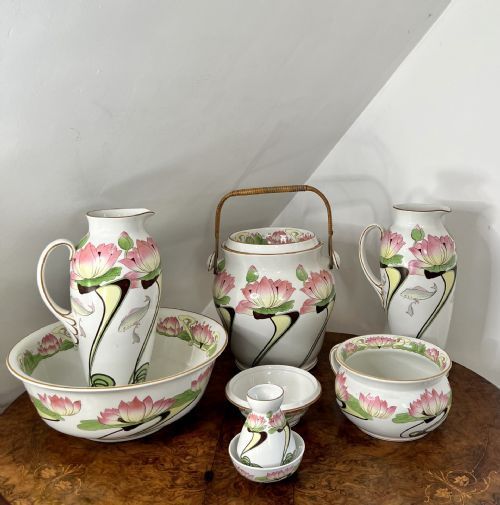
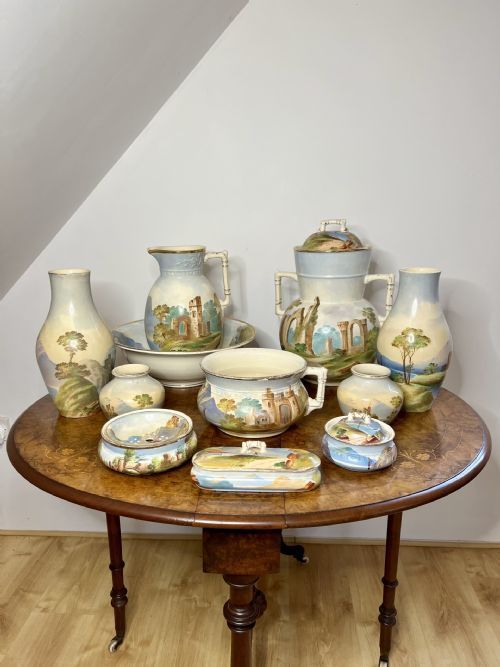


Ceramic Vanity Pot
These ceramic vanity pot pieces are dressing table vessels designed for personal cosmetics, offering practical storage with distinct period character.
Ceramic Vanity Pot
A ceramic vanity pot encompasses lidded containers, powder boxes, powder bowls, trinket boxes, and larger wash sets used in domestic dressing routines. The pieces seen here stretch from Edwardian washstand sets down to Art Deco powder jars featuring flapper girls and half dolls.
Buyers meet objects spanning the 1900s, 1910s, and 1930s periods, originating from English, French, German, and Austrian makers. Forms range from simple lidded jars to novelty bathing belle bowls and detailed porcelain boxes with gilt detailing.
Judging quality and execution
Execution of the hand-painted motifs separates standard production from finer output, visible in the precision of brushwork on floral designs, figures, and gilt detailing. Superior pieces display crisp moulding on figural half dolls and cleanly applied enamel.
The clarity of the glaze and the precision of fit between lid and base indicate the care taken during production. Well-preserved gilding and intact hand-painted details maintain the visual integrity of the original design.
The documented periods span the Edwardian era, the early twentieth century, and the 1930s Art Deco movement.
Mark Jones & Sons·Meissen·Royal Worcester·Limoges
The Ceramic Vanity Pot Glossary
- Porcelain
- A hard, fine-grained ceramic material fired at high temperatures. It forms the white, translucent body common in fine vanity pots and dressing table sets.
- Earthenware
- A porous pottery body fired at lower temperatures than porcelain. It requires a glaze to become impermeable and appears frequently in mid-century and earlier decorative containers.
- Gilt
- A thin layer of gold applied to the surface of ceramics or metal mounts. It provides metallic ornamentation around the rims and panels of boxes.
- Half doll
- A ceramic upper torso popular in the early twentieth century. These figures served as decorative lids for powder boxes and brushes on dressing tables.
- Blush ivory
- A soft, creamy porcelain finish developed by Victorian potteries. It imitates the tone of ivory and serves as a subtle ground for floral decoration.
Ceramic Vanity Pot: Frequently Asked Questions
What are ceramic vanity pots used for?
These vessels served to hold loose powder, cosmetics, pins, and small trinkets on dressing tables and washstands.
They kept personal items organised and protected from dust in domestic bedrooms.
How do I date a ceramic vanity pot?
Dating relies on stylistic markers such as Art Deco geometric forms or Edwardian floral patterns, alongside maker marks.
Period details like flapper girl figures point specifically to the 1930s production era.
Are these pots fragile for daily use?
Porcelain and ceramic construction requires careful handling to prevent chipping on lids and rims.
Normal care on a dressing table keeps the glazed surfaces and gilt decoration intact.
What is a half doll powder box?
A half doll is a ceramic upper figure attached to the fabric skirts or ceramic bowl underneath.
These novelty items functioned as decorative powder jars on 1930s dressing tables.