
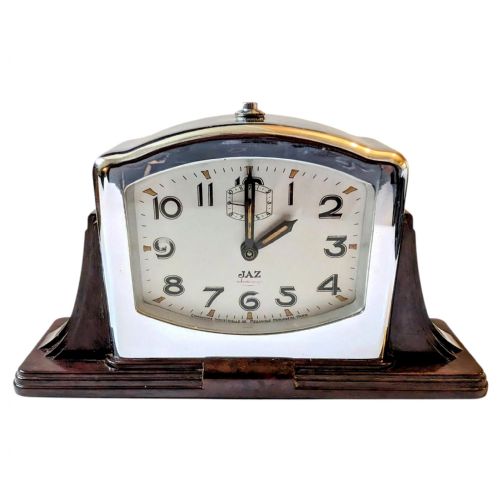
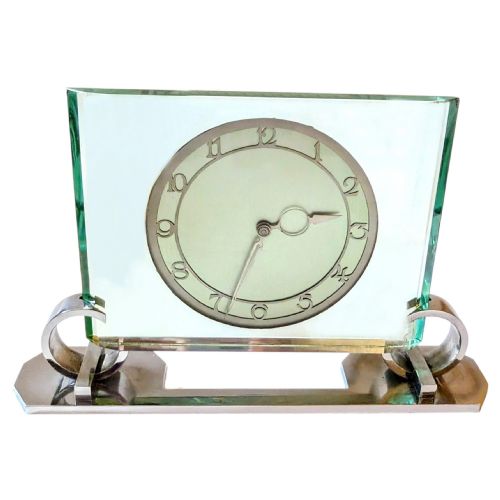
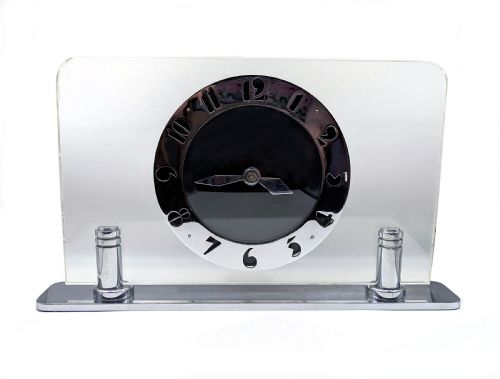
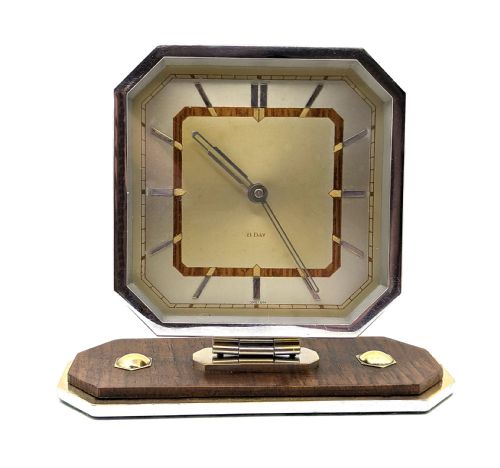


Art Deco Table Timepiece
An art deco table timepiece brings precision engineering together with geometric elegance on a desk or mantel.
Art Deco Table Timepiece
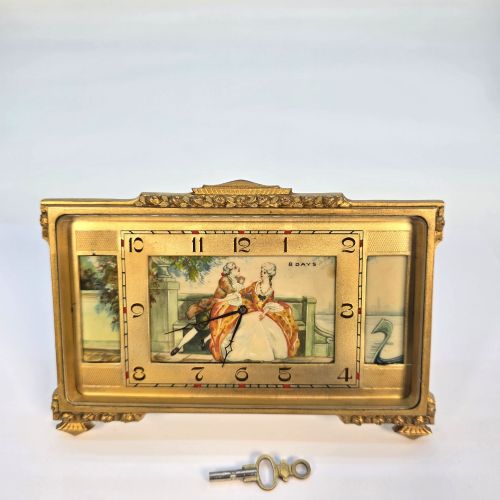
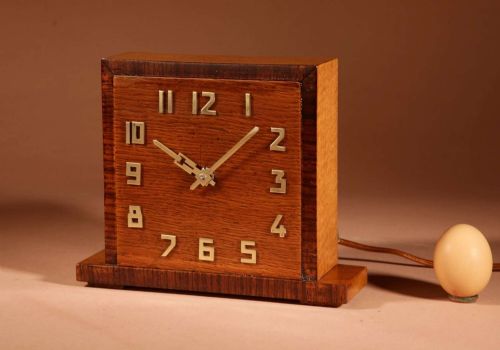
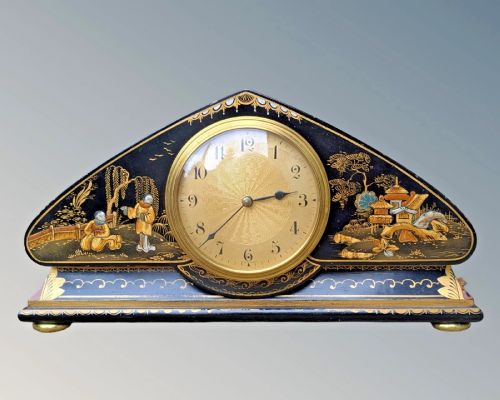
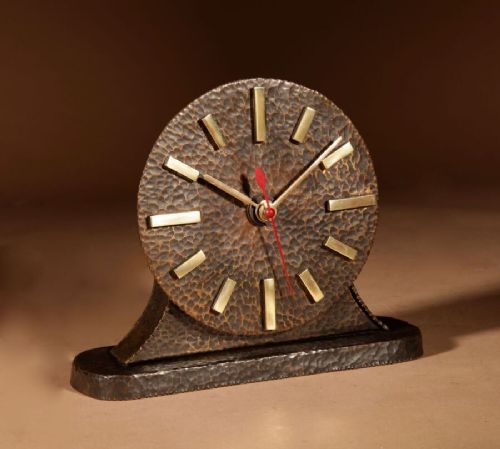
An art deco table timepiece sits on a desk, table, or mantel, functioning primarily as a portable clock rather than a large wall or floor piece. These objects span periods from the Edwardian era through the 1960s, though the majority emerge from the 1920s and 1930s with distinct modernist lines.
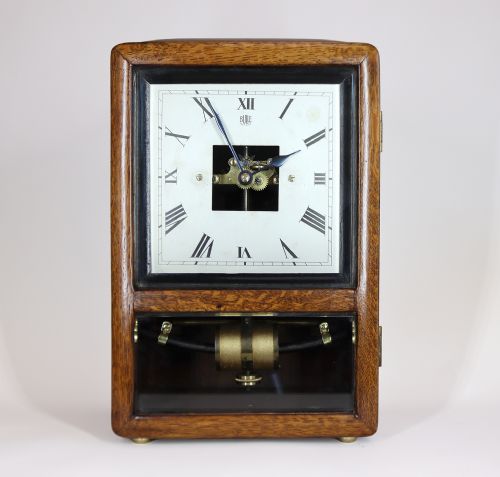
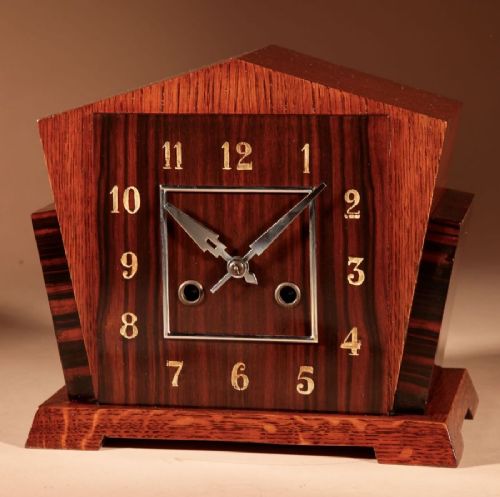
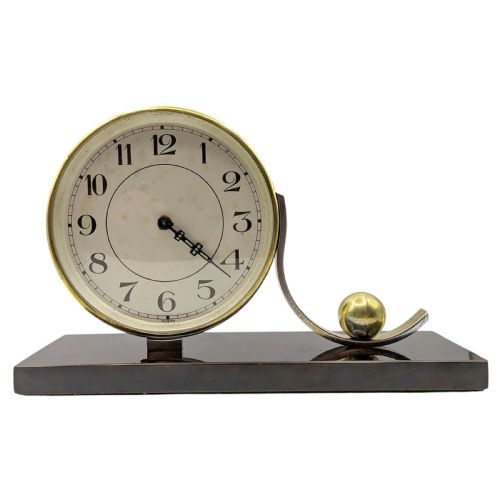
The assortment on this page covers varied forms including mantel clocks, desk clocks, travel clocks, and strut easel clocks. Structural silhouettes range from architectural skyscraper designs to streamlined horizontal housings intended for office and domestic interiors.
Materials and construction methods
Casings frequently incorporate moulded bakelite, marble, green onyx, and champlevé enamel to achieve contrasting textures. Movements vary from early electrical systems and Bulle mechanisms to standard eight-day and thirty-hour mechanical wind-up calibres supplied by specialised makers.
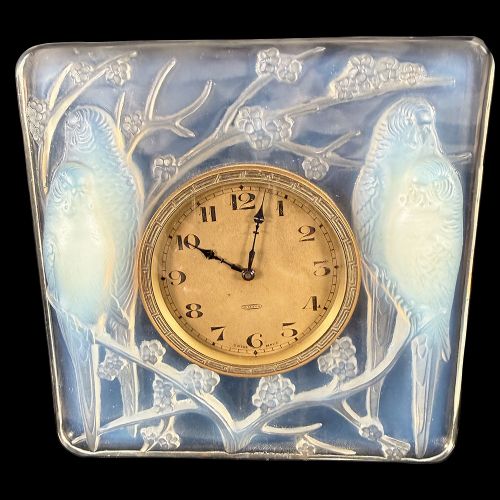
Materials span industrial chrome and bakelite alongside natural oak, marble, green onyx, and moulded opalescent glass.
Judging execution and design
Quality rests in the harmony of materials and the sophistication of the architectural casing, distinguishing mass production from distinct modernist creations. Superior pieces display thoughtful combinations such as polished chrome matched with coloured glass or precise marquetry woodwork.
The integration of the movement dictates mechanical excellence, separating standard wind-up calibres from complex early electrical systems or high-grade eight-day movements. Original dials, signed maker plates, and intact decorative elements preserve the integrity of the object.
R Lalique·Jaz France·Smiths Clockmakers·Mappin And Webb·Harrods Of London·Asprey·Blangy Clockmakers·Bravingtons Ltd Of London·Elliott Of London·Maurice And Marcel Moulin Favre Bulle
The Art Deco Table Timepiece Glossary
- Bakelite
- A form of early synthetic thermosetting plastic moulded into smooth, durable clock housings during the period.
- Bulle clock
- An electrically driven clock mechanism utilising an electromagnetic pendulum swinging inside a magnetic field.
- Strut clock
- A timepiece supported by a hinged prop or easel leg attached to the rear of the case for desk placement.
- Champlevé enamel
- A technique where troughs are carved into metal surfaces and filled with vitreous enamel before firing.
- Opalescent glass
- A milky, translucent glass that diffuses light and displays changing colour tones across the surface.
Art Deco Table Timepiece: Frequently Asked Questions
How do I wind an art deco table timepiece?
Mechanical models require a key or built-in winder turned gently until resistance signals full tension. Care must be taken not to overwind older springs.
Electric or battery-driven versions require checking the internal electrical contacts and modern power adaptations rather than manual spring tension.
Where should I place a desk clock?
Position the piece on a stable flat surface away from direct sunlight and extreme temperature shifts that affect timber and glass casings. Desks, sideboards, and mantelpieces provide ideal viewing angles.
Ensure strut clocks have adequate rear support so the easel mechanism bears the weight securely without slipping.
How do I identify a 1930s movement?
Inspect the dial typography and the casing geometry for characteristic modernist skyscraper steps or streamlined chrome curves. Examining the backplate often reveals stamped maker names or patent numbers.
Movements range from traditional mechanical escapements to early electrical configurations developed during the period.
Are these clocks suitable for daily use?
Many examples function reliably for daily timekeeping, particularly those equipped with serviced mechanical or electrical movements. Regular maintenance by a clockmaker preserves the internal components.
Careful handling during winding or moving protects delicate materials such as bakelite, enamel, and coloured glass from impact.