




Antique Chrome Shelf Clock
An antique chrome shelf clock brings the striking geometry of the Art Deco era straight to your mantelpiece.
Antique Chrome Shelf Clock
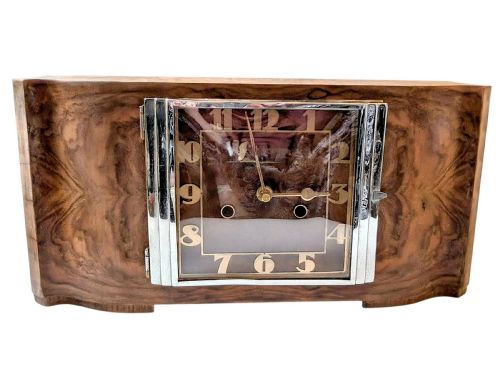
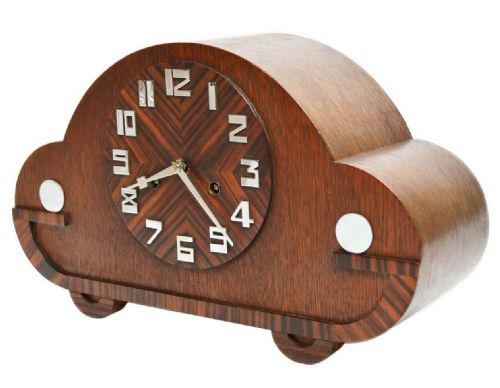
An antique chrome shelf clock is typically encountered as a mantel or desk clock originating from the 1920s and 1930s. These pieces define the Art Deco style, combining polished metal with materials like walnut, burr walnut, glass, and marble. You will regularly find English, French, and German examples designed to sit prominently on a shelf or surface.
The form stretches from geometric wooden bodies accented with chrome to striking designs executed entirely in glass and metal. Many incorporate eight-day movements or Westminster chimes, reflecting the functional sophistication of the period. Makers such as Smiths, Bravingtons Ltd of London, and Pfeilkreuz Junghans appear among these offerings.
How they were made
Makers utilised chrome plating over base metals to achieve a bright, modern finish that resisted tarnishing. This metallic sheen was frequently contrasted against rich cabinet timbers like walnut and burr walnut, or paired with opaline and uranium glass.
Clock housings also incorporated marble and two-tone woods to build up the layered geometric silhouettes characteristic of the Bauhaus and wider Art Deco movements. Mechanical movements were housed securely behind glass faces, often featuring distinct metallic bezels and numerals.
Materials documented across the inventory include chrome, glass, walnut, burr walnut, brass, uranium glass, and opaline glass.
What varies in quality
Quality reveals itself in the harmony of mixed materials and the precision of the cabinetwork. Pieces that successfully integrate chrome with burr walnut or coloured glass show a superior command of Art Deco design.
The reputation of the maker also dictates distinction, with signed works from established houses holding particular interest. Furthermore, the complexity of the movement, such as Westminster chiming mechanisms, elevates the standing of an individual clock.
Smiths·Bravingtons Ltd of London·Pfeilkreuz Junghans
The Antique Chrome Shelf Clock Glossary
- Art Deco
- A design style of the 1920s and 1930s characterised by sleek geometric shapes, streamlined forms, and modern industrial materials. It discarded Victorian ornamentation in favour of bold visual impact.
- Uranium glass
- Glass heightened with uranium dioxide to produce a distinctive yellow or green hue that glows under ultraviolet light. It was frequently utilised in modernist decorative objects and clock faces.
- Opaline glass
- An opaque or translucent glass, often found in pastel shades, popular in decorative accessories of the interwar period. It provides a smooth, milky contrast to polished chrome.
- Burr walnut
- A highly figured wood grain prized by cabinet makers for its swirling patterns. It forms a luxurious backdrop to linear chrome and metal mounts.
- Westminster chime
- A melodic four-note chime sequence commonly incorporated into better quality mantel clocks of the period. It marks the quarters of the hour.
Antique Chrome Shelf Clock: Frequently Asked Questions
Where should I place a shelf clock?
These clocks are proportioned for mantels, sideboards, and desks where their geometric profiles can be fully appreciated.
Ensure they sit on a stable surface away from direct moisture to protect the wooden cases and metal finishes.
How do I wind an eight day clock?
An eight day movement requires winding via the dial holes using a matching key approximately once a week.
Care should be taken not to overwind the mainsprings to preserve the internal mechanism.
What periods do these clocks come from?
The selection spans the 1920s and 1930s, capturing the height of the Art Deco movement across Britain, France, and Germany.
During this time, modernist design principles heavily influenced domestic clock production.
Are these clocks mechanical?
Yes, the examples from this era rely on mechanical movements, some featuring specialised chiming capabilities.
Regular servicing by a professional horologist helps keep the internal gears running smoothly.