


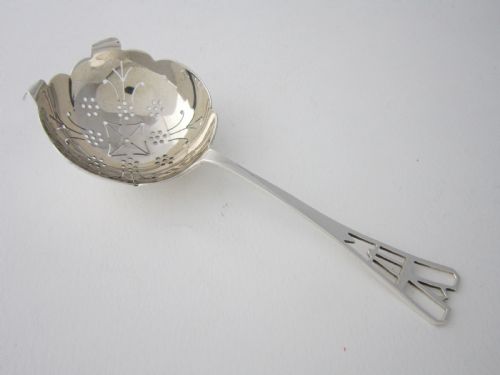


Art Deco Silver Tea
Art deco silver tea pieces bring clean geometric lines and modernist elegance to the table.
Art Deco Silver Tea
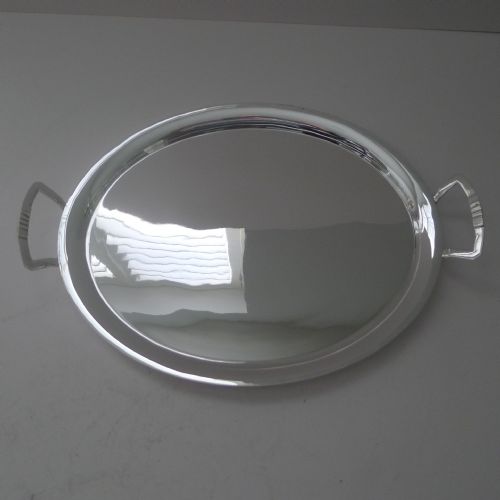
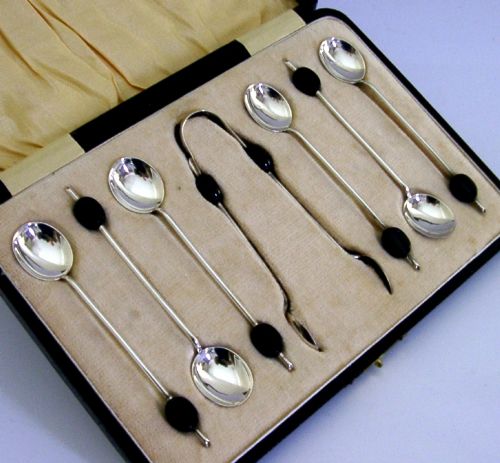
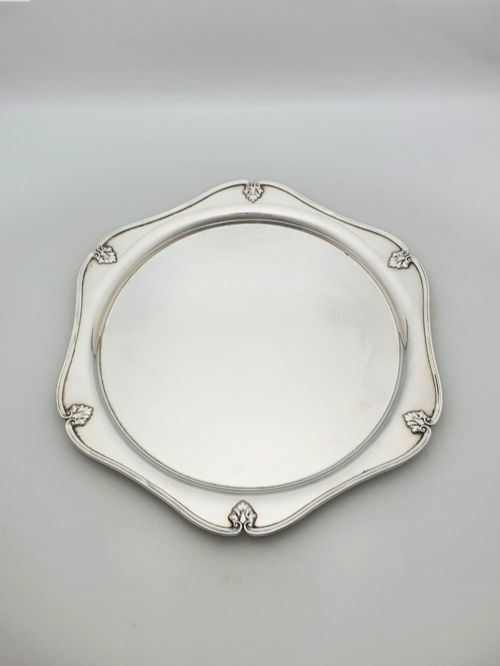
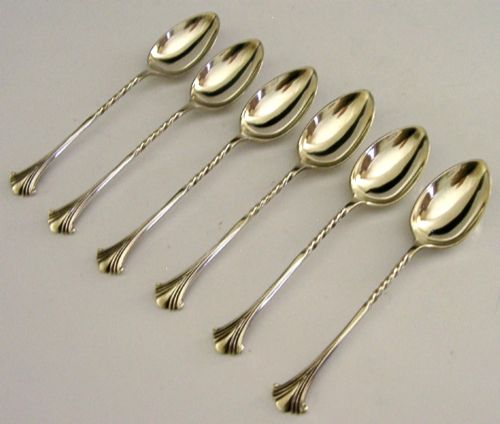
When buyers search for art deco silver tea, they encounter an array of tableware spanning trays, teapots, caddies, and small spoons. The selection on this page leans heavily into serving trays, teaspoons, and drinks trolleys produced across the nineteen twenties, thirties, and forties. Pieces often bear the hallmarks of George V or George VI reigns, alongside continental and modernist designs.
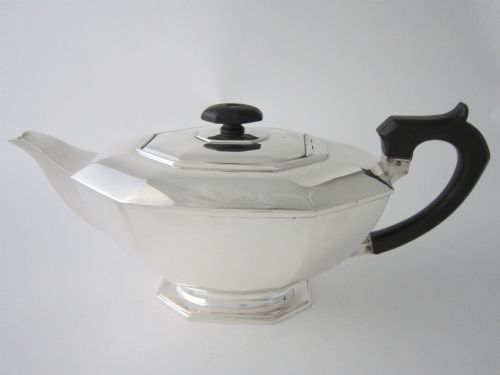
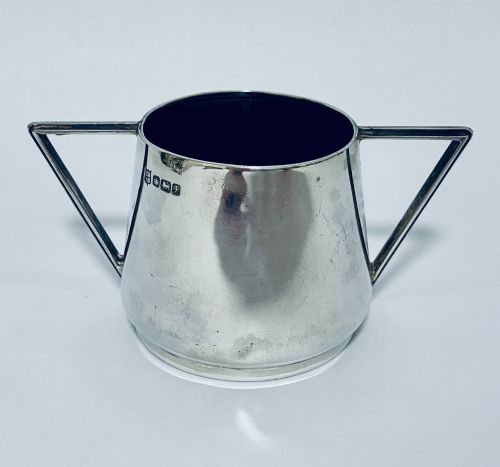
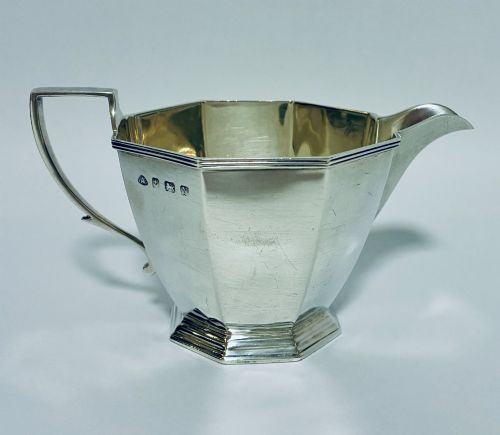
Teapots, sugar bowls, milk jugs, and complete tea sets form the core of the functional items, frequently paired with silver plated or sterling silver cocktail trays. Alongside these are specialised implements including tea strainers, cake forks, and novelty caddies. The overall aesthetic unites utilitarian function with the sleek geometries characteristic of the period.
Materials and Techniques
Makers utilised sterling silver and silver plate as the primary metals for teapots, trays, and spoons, often adding coloured enamel highlights to teaspoons and coffee spoons. Chrome and mirror glass frequently appeared in modernist hostess trolleys and serving carts from the nineteen thirties. Bakelite served as a durable material for handles on bridge spoons and specific tableware components.
Metalsmiths employed traditional smithing and casting alongside machine rolling and plating techniques to achieve clean angles and smooth circular rims. Enamelling required meticulous hand application of vitreous pastes fired onto silver grounds. Glass trays and mirrors were integrated securely into metal frames for drinks trolleys and serving accessories.
Art Deco Silver Tea Retail Price Guide 2026
Typical asking prices for art deco silver tea among the pieces listed under this phrase on Sellingantiques today, from the lower quarter to the upper quarter. They describe what is for sale here now, not the wider market.
Materials span sterling silver, silver plate, chrome, glass, enamel, satin, velvet, aluminium, and Bakelite.
Distinctions in Quality
Distinctions in quality often rest upon the weight of the silver used, the crispness of the geometric stamping, and the integrity of any applied enamel work. Maker attribution plays a significant role, with recognised firms delivering heavier gauges of metal and superior finishing on handles and rims. Original fitted boxes and intact mirror or glass panels elevate the standing of sets and trays.
The precision of the hallmarks and the preservation of silver plating or chrome surfaces distinguish finer examples from standard production. Enamelled items show quality through the absence of chipping and the vibrancy of the colour work. Caddies and trolleys demonstrate superior craftsmanship via robust joinery and smooth mechanical operation.
Georg Jensen·Mappin & Webb·Asprey & Co·James Dixon & Sons·Walker & Hall
The Art Deco Silver Tea Glossary
- Hallmark
- Official marks stamped on precious metals to indicate purity, maker, and assay office. These stamps provide a reliable method for dating silver teaware.
- Silver Plate
- A thin layer of silver bonded to a base metal substrate. This technique allowed manufacturers to produce affordable teapots and trays during the twentieth century.
- Tea Strainer
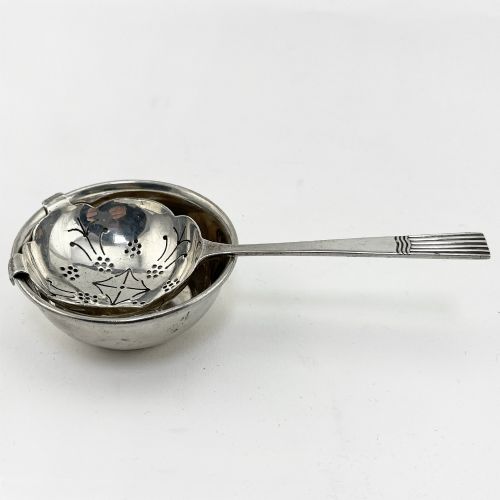
- A small perforated utensil placed over a cup to catch loose leaves during pouring. Many examples from this era feature matching stands and decorative handles.
- Hostess Trolley
- A mobile serving cart designed for drinks and tea service, typically constructed from chrome, aluminium, or wood with glass or mirror shelves.
Art Deco Silver Tea: Frequently Asked Questions
How do I clean silver tea items?
Clean silver items using a soft cloth and a specialised silver polish designed to remove tarnish without scratching the surface. Avoid harsh abrasives, particularly on pieces with enamel or delicate plating.
Rinse the items thoroughly in warm water and dry them completely with a lint-free cloth to maintain their lustre. Store them in dry conditions away from direct sunlight.
What is a tea caddy?
A tea caddy is a small container designed to store loose tea leaves securely before brewing. Novelty versions from this period often took whimsical shapes like paint tins.
These containers kept the tea fresh and dry in an era before standard paper or foil packaging. Collectors prize unusual novelty forms for their craftsmanship and playful design.
How do I identify nineteen thirties style?
Nineteen thirties silver and tableware favour streamlined curves, stepped motifs, and geometric silhouettes over ornate Victorian decoration. Chrome and mirror glass often accompany silver in these modern designs.
Look for clean lines on trays and teapots that reflect industrial progress and modernist art movements. Makers embraced minimalism alongside vibrant enamel accents.