



Art Deco Silver Mixer
An art deco silver mixer brings kinetic geometry and functional elegance to the home bar.
Art Deco Silver Mixer
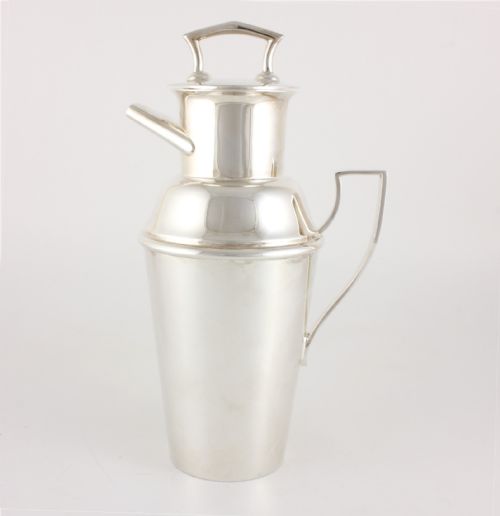
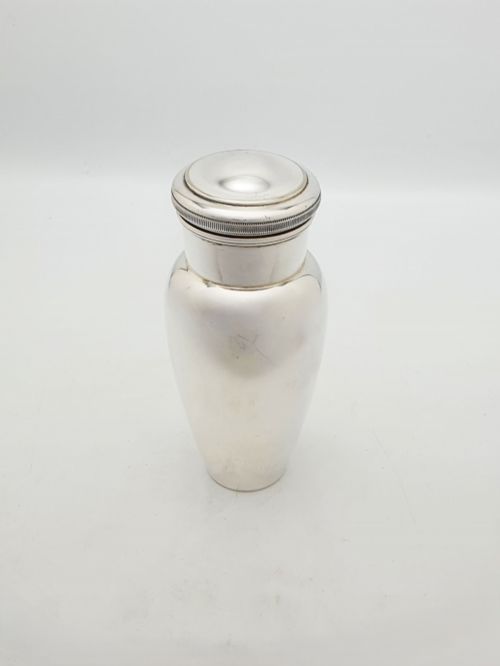
When you search for an art deco silver mixer, you encounter cocktail shakers and barware produced primarily during the 1920s, 1930s, and 1940s. These pieces embody the sleek, geometric ethos of the period, often taking the form of vertical cylinders, milk churns, or streamlined bullets.
The most common version met on this page is the silver-plated cocktail shaker, frequently manufactured in England, France, Italy, and Germany. Many examples incorporate practical elements such as built-in lemon squeezers, ice breakers, or rotating recipe bands.
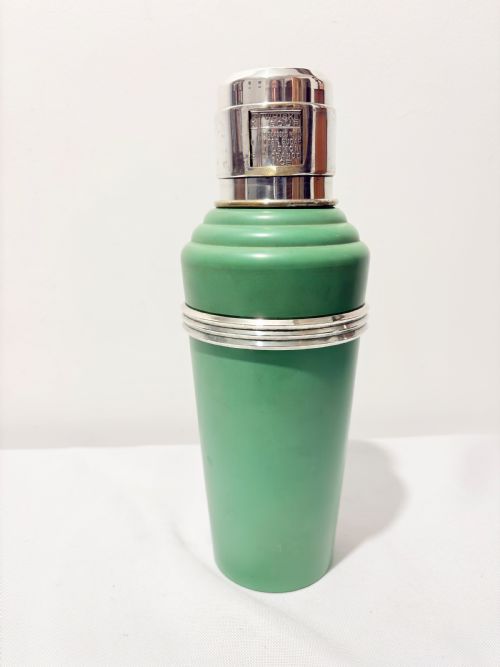
Makers utilised various metals alongside silver plate, including electroplated nickel silver, sterling silver, brass, and glass. The designs range from plain engine-turned finishes to novelties adorned with green bakelite or enamelled cockerels.
How they were made
The construction relies heavily on silver plating over base metals like electroplated nickel silver, brass, or standard metal alloys. Manufacturers also shaped solid sterling silver or 800 solid silver for high-end commissions.
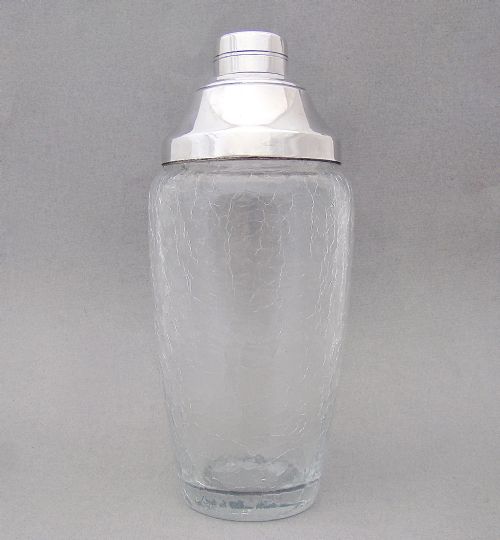
Glass bodies appear frequently, paired with silver-plated or sterling silver tops, cork stoppers, and crackle glass or enamelled glass treatments. Mechanical ingenuity governed functional additions, integrating internal pump-action mechanisms, swizzle sticks, and rotating recipe cylinders into the metalwork.
Some industrious hosts relied on built-in lemon squeezers hidden right inside the lid to keep citrus seeds out of the martini.
What varies in quality
Quality rests upon the weight of the metal, the precision of the engineering, and the renown of the silversmith or manufacturer. Substantial gauge silver plate and solid silver construction provide a satisfying heft absent in lighter tourist pieces.
Intricate mechanical functions, such as smooth rotating recipe bands, integrated lemon squeezers, and tight-fitting cork or metal seals, separate standard production items from superior workshop output.
Asprey & Co·Keith Murray·Hukin & Heath·J. B. Chatterley & Sons·James Dixon & Sons·William Suckling·C S Green & Co·Adie Brothers·Gaskell & Chambers·Carl Deffner·Elkington & Co
The Art Deco Silver Mixer Glossary
- Silver Plate
- A layer of silver bonded to a base metal core such as nickel silver or copper. This method allowed makers to achieve the visual appeal of solid silver at a lower production cost.
- Electroplated Nickel Silver
- Commonly abbreviated as EPNS, this durable alloy served as the foundational metal for numerous cocktail shakers. The silver coating was applied through an electrolytic process.
- Engine Turned
- A decorative technique involving precise geometric patterns engraved into the metal surface by a lathe. It creates a textured, light-reflecting finish characteristic of the era.
- Bakelite
- An early synthetic plastic utilised for handles, knobs, and decorative accents. Its vibrant colours, particularly green, contrast sharply against polished silver surfaces.
- Swizzle Stick
- A slender utensil inserted into the mixer or used separately to agitate and carbonate drinks. Some examples incorporated pump-action mechanisms for automated mixing.
Art Deco Silver Mixer: Frequently Asked Questions
How do you use a vintage cocktail shaker?
Most vintage shakers operate as three-piece sets comprising a main body, a straining lid, and a cap. Ingredients and ice go into the vessel before shaking.
Specialist variants may include rotating bands to display cocktail recipes or internal pumps for mixing.
Are these mixers made of solid silver?
The vast majority of these pieces are silver-plated or made from electroplated nickel silver over a base metal. Solid sterling silver and 800 solid silver examples do exist but are less common.
Maker marks and hallmarks stamped on the base usually indicate the exact metal composition.
How do I identify a 1930s cocktail shaker?
Identifications rely on stylistic cues like clean vertical lines, stepped motifs, and engine-turned surface patterns. Manufacturers often stamped their company names or trademark symbols directly onto the base of the metal.
Materials like crackle glass and green bakelite also point directly to interwar manufacturing trends.