


Art Deco Silver Earrings
Art deco silver earrings combine geometric metalwork with sparkling stones, offering a distinct design that completes period attire.
Art Deco Silver Earrings
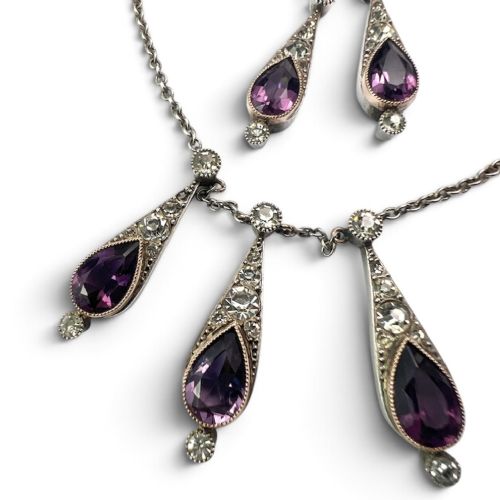
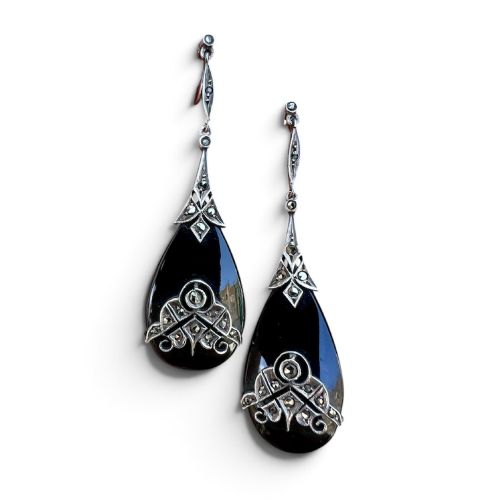
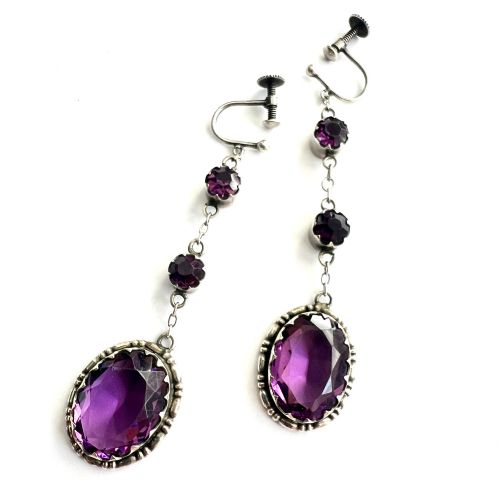
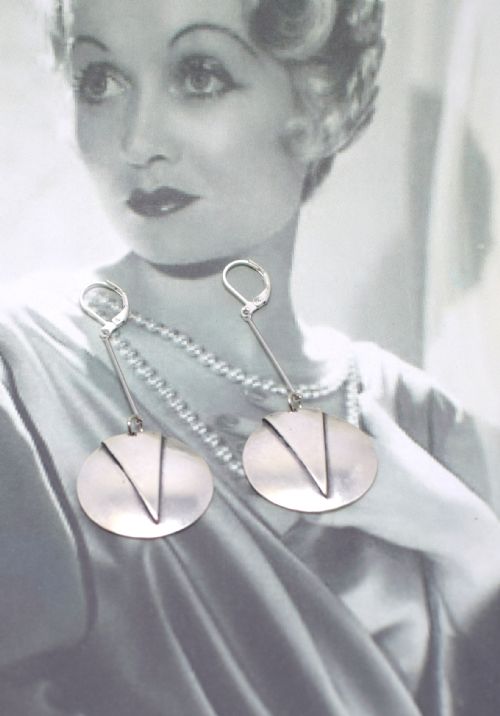
Art deco silver earrings span drop designs, teardrop shapes, and screwback fittings originating primarily from the 1920s and 1930s. These pieces often feature symmetrical geometry and clean lines characteristic of the period style.
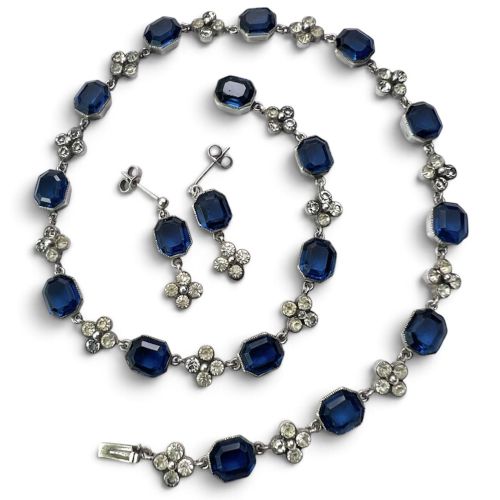
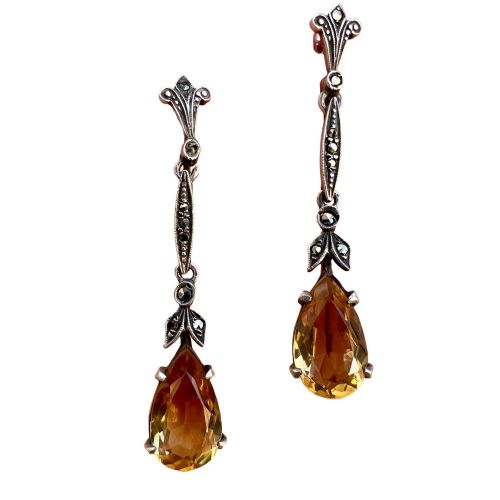
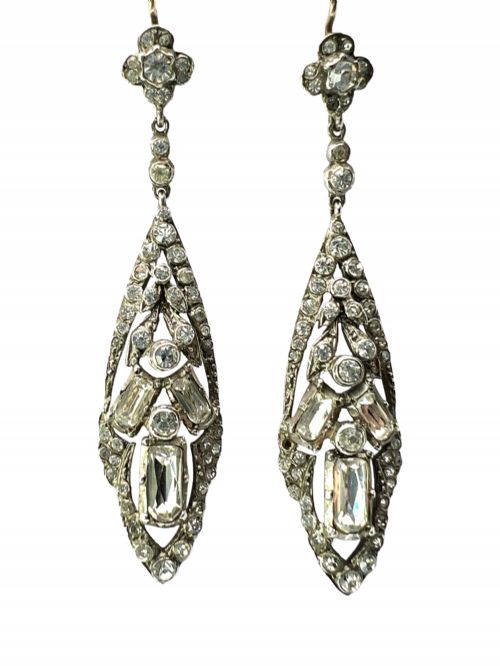
Many examples pair silver with paste glass, marcasite, and stones such as onyx, jade glass, or chrysoprase. Buyers frequently encounter screwback fastenings and drops alongside matching necklace sets.
Mid-century iterations and occasional nineteenth-century styles also appear, though the core of the selection remains firmly rooted in the interwar decades.
Materials and construction methods
Silversmiths utilised sterling or plated silver as the primary metal base, frequently combining it with gold accents or platinum settings for diamond clusters. Marcasite crystals were tightly set to create a glittering border around central stones.
Paste glass and coloured stones were cut into baguettes or teardrops to mimic precious gems, secured in prong or bezel settings. Screwback and lever-back mechanisms provided the fastenings for non-pierced and pierced ears alike.
The inventory includes matching necklace sets alongside standalone drop and screwback configurations.
Quality factors in period earrings
The precision of the metalwork and the uniformity of the stone settings distinguish finer examples from standard production. Intricate Modernist framing and well-matched paste or diamond stones indicate higher workshop standards.
The condition of the marcasite inlay and the originality of the screwback or drop components influence the integrity of the piece. Clean silver patination and secure stone retention show careful preservation over time.
CIRO SCP
The Art Deco Silver Earrings Glossary
- Marcasite
- Pyrite crystals cut and polished into small facets, then glued or metal-set into silver jewellery to provide a metallic sparkle. This material defines many interwar decorative pieces.
- Paste glass
- Hand-cut and polished glass designed to imitate precious gemstones like diamonds, sapphires, or amethysts. It appears frequently in period drop and chandelier designs.
- Screwback
- A mechanical fastening utilising a threaded post and screw mechanism to secure earrings without requiring pierced lobes. It is common on vintage and antique pairs.
- Teardrop
- A drop silhouette shaped like a falling tear, popular in nineteen-twenties and thirties dangle earrings. This form accentuates the linear movement of the jewellery.
- Baguette
- A rectangular cut used for diamonds and paste stones, favoured in geometric settings for its clean parallel edges. It anchors many linear compositions.
Art Deco Silver Earrings: Frequently Asked Questions
How do I care for silver earrings?
Store them in dry conditions away from moisture to protect the silver and set stones.
Clean gently with a soft cloth, avoiding harsh chemical dips that damage marcasite or paste glass.
Are screwback earrings comfortable to wear?
Screwbacks allow the wearer to adjust the pressure precisely on the earlobe for a secure fit.
They sit firmly without needing pierced ears, though proper adjustment prevents pinching.
What distinguishes nineteen-twenties designs?
Nineteen-twenties pairs lean towards linear drops, contrasting paste colours, and intricate marcasite patterns.
They reflect the early rise of geometric modernism in jewellery manufacture.
Can I wear these pieces daily?
Interwar silver jewellery withstands careful regular wear provided settings remain secure.
Owners should remove them before swimming or sleeping to protect delicate drops and stones.