



Art Deco Pendant Earrings
Art deco pendant earrings combine geometric symmetry with swinging motion, offering the authentic glamour of the interwar period.
Art Deco Pendant Earrings
Art deco pendant earrings span drop, dangle, and cluster silhouettes created primarily across the 1920s, 1930s, and 1940s. These pieces drop below the earlobe, utilising articulated sections that catch the light with every turn of the head.
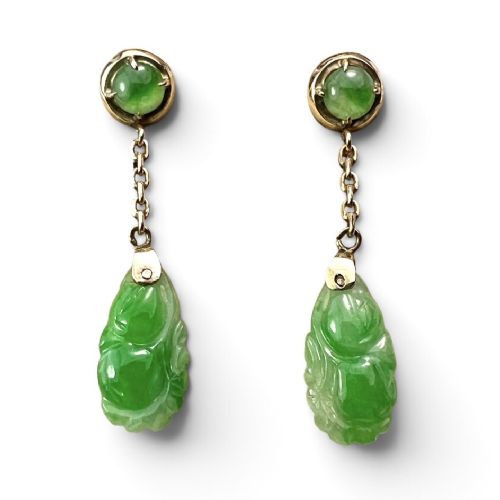
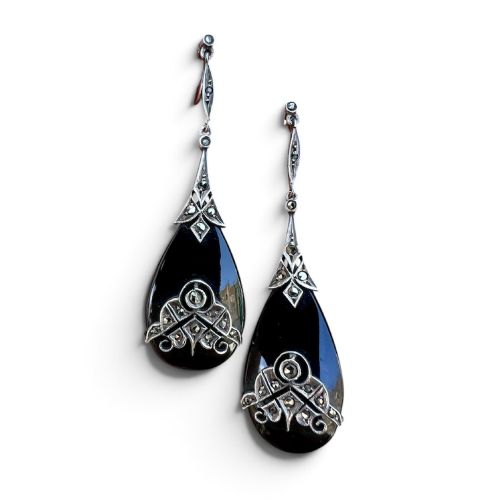
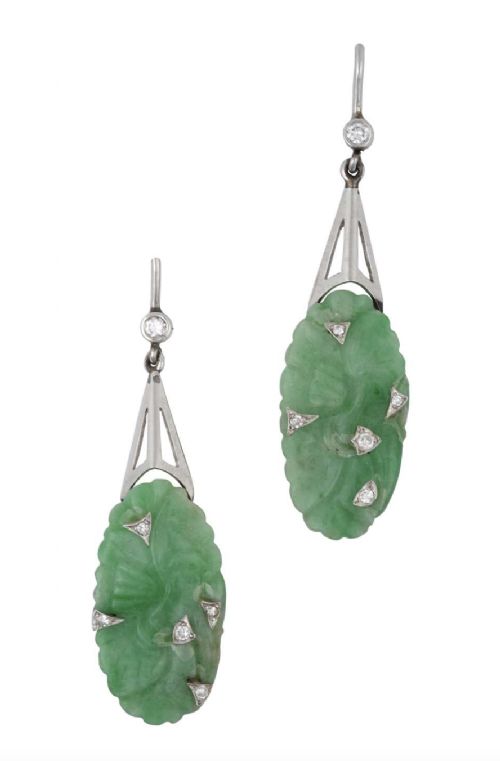
The selections encountered here range from platinum and diamond cluster configurations to silver-plated and green glass modernist variants. Buyers frequently discover pairs set with aquamarine, jadeite, onyx, and moonstone alongside classic white metals.
Materials and construction methods
Platinum and 18ct white gold provide the robust yet fine framework necessary for securing small, precise pavé and rose cut diamonds. These precious metals allow for intricate pierce-work and geometric drops without adding heavy weight to the earlobe.
Alternative pieces utilise sterling silver, 9ct gold, and chrome paired with organic stones like pearl and jadeite, or colourful accents including peridot, amethyst, and green glass. Artisans of the era balanced these diverse materials to emphasise clean lines and contrasting tones.
Some pairs swap precious gems for green glass and chrome, proving that mid-century ingenuity valued a sharp silhouette over the price tag.
Distinguishing quality in period drops
Quality rests in the precision of the articulation and the crispness of the geometric mounts, ensuring each section moves fluidly without stiffness. Superior pairs display secure setting work where precious stones are neatly integrated into the overall architectural design.
The choice of materials also defines the tier of a piece, moving from silver-plated and glass iterations up to heavy platinum frameworks set with substantial aquamarines and matched diamonds.
The Art Deco Pendant Earrings Glossary
- Articulated drop
- A design featuring connected sections that pivot independently. This construction allows the earrings to swing freely and catch the light from multiple angles.
- Rose cut diamond
- A stone faceted with a flat base and a domed crown rising to a point. This historic cut produces a soft, wide-flash reflection rather than intense brilliant fire.
- Jadeite
- A dense mineral utilised in carved drops and plaques. It ranges from translucent green to mottled white and green hues.
- Marcasite
- Small, faceted polished pyrite stones set into silver. They provide a subtle metallic sparkle reminiscent of dark steel.
Art Deco Pendant Earrings: Frequently Asked Questions
How do I wear drop earrings safely?
Ensure the fittings match the weight of the design, opting for secure screw-backs or robust post fittings where necessary. Heavier platinum and diamond variants require supportive butterfly backs to keep the motif properly oriented on the lobe.
Store each pair separately in a lined box to prevent the articulated drops from tangling or scratching adjacent pieces.
Are these earrings comfortable for daily wear?
Lighter silver, chrome, and 9ct gold pairs sit comfortably through a full day without pulling on the earlobe. Articulated designs add gentle motion that remains unobtrusive during regular activities.
Substantial platinum and multi-carat diamond clusters carry more weight and suit evening occasions or shorter durations better.
How do I date an art deco pair?
Pieces from the 1920s often rely on platinum and intricate Edwardian-influenced filigree alongside bold geometric motifs. Items marked to the 1930s frequently introduce streamlined modernist chrome, white gold, and step-cut stones.
Later variations extending into the 1940s and 1960s employ heavier 9ct or 14ct gold settings with carved jadeite or onyx.
What is the difference between drop and dangle earrings?
Drop earrings generally hang a short, fixed distance below the earlobe with minimal independent movement. They maintain a structured silhouette that follows the jawline closely.
Dangle earrings incorporate multiple articulated joints that sway significantly with movement, creating a more dynamic visual effect.