

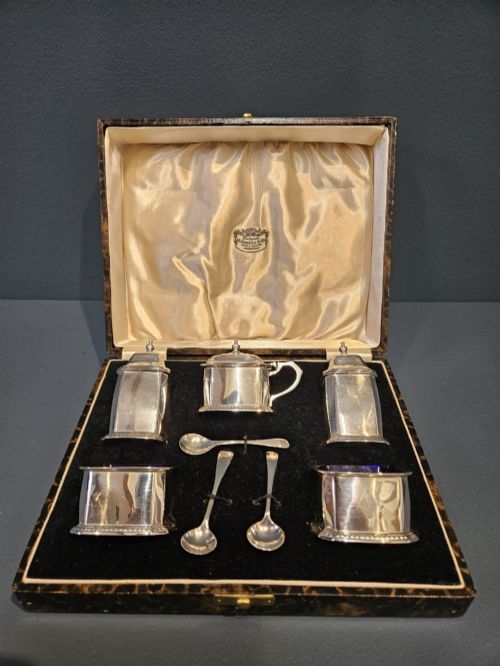


Art Deco Silver Condiment Set
An art deco silver condiment set brings geometric rigour and bright metals to the table, combining functional salt cellars, pepper shakers, and mustard pots in distinct modernist forms.
Art Deco Silver Condiment Set
An art deco silver condiment set comprises matching vessels designed to hold salt, pepper, and mustard for the dining table. The pieces found here span the 1920s, 1930s, and 1940s, originating from British workshops and Scandinavian makers.
Cruet sets and salt cellars form the core of what appears on this page, often accompanied by sugar and creamer sets or preserve dishes. Most examples adhere strictly to the geometric aesthetics of the period.
Buyers encounter individual cruet sets housed in fitted cases as well as open collections arranged on matching trays. The vessels frequently incorporate contrasting liners or distinct architectural silhouettes.
Materials and construction
Makers utilised sterling silver and silver plate for the primary frames, shaping the metal into clean lines and angular mounts. Glass liners in cobalt blue or clear cut glass provide a sharp visual contrast against the polished metal surfaces.
Enamel work appears on select pieces, adding vivid blocks of colour to the metal framework. Interiors occasionally utilise fabric or velvet within fitted presentation cases to secure the individual components.
Art Deco Silver Condiment Set Retail Price Guide 2026
Typical asking prices for art deco silver condiment set among the pieces listed under this phrase on Sellingantiques today, from the lower quarter to the upper quarter. They describe what is for sale here now, not the wider market.
Listings feature sterling silver and silver plate alongside glass, velvet, and enamel across the 1920s and 1930s.
Assessing quality and execution
The distinction between standard production and superior execution lies in the weight of the metal and the precision of the geometric joints. Heavier gauges of sterling silver impart durability and substance to the cruet frames.
Finer sets demonstrate crisp hallmarks, undamaged glass liners, and secure enamel work without chipping. Complete cased sets retaining their original spoons and fitted interiors represent a higher tier of preservation.
William Neale·Mappin & Webb·Wilmot Manufacturing Co·Elkington And Company
The Art Deco Silver Condiment Set Glossary
- Cruet set
- A collection of small bottles, casters, or open cellars designed to hold condiments at the dining table. These sets typically include mustard pots alongside salt and pepper containers.
- Salt cellar
- An open vessel used to hold salt before the widespread adoption of individual shakers. They frequently require glass liners to protect the metal from corrosion.
- Silver plate
- A base metal coated with a thin layer of silver through electroplating. This technique allowed manufacturers to produce decorative tableware at a lower cost than solid sterling silver.
- Cobalt glass
- Deep blue glass commonly utilised for interior liners within salt cellars and condiment pots. The rich hue shows clearly through pierced or openwork silver frames.
- Hallmark
- An official stamp applied to precious metals indicating the standard of purity, the maker, and the assay office. British pieces carry distinct letters and symbols denoting the year of manufacture.
Art Deco Silver Condiment Set: Frequently Asked Questions
What is included in a typical condiment set?
A standard set combines open salt cellars, pepper shakers, and lidded mustard pots, often accompanied by matching spoons. Many configurations sit together upon a dedicated silver base or tray.
Some variations extend to oil and vinegar cruets or preserve dishes designed to match the principal condiment vessels.
How do I care for silver condiment pieces?
Clean sterling silver and silver plate gently using a specialised cloth to remove tarnish without abrading the surface. Avoid harsh chemical dips that strip away the original finish and darken recessed details.
Remove glass and enamel liners before cleaning the metal frames to prevent moisture from becoming trapped underneath. Store the pieces in dry conditions away from direct sunlight.
How do I identify the date of manufacture?
British silver relies on an official system of hallmarking stamped directly onto the metal surface. These marks indicate the assay office, the purity standard, and a specific date letter corresponding to the year of production.
Stylistic cues such as stepped geometric mounts and enamel accents point toward the 1920s and 1930s. Documentation and maker records help confirm the exact decade.
Can these sets still be used for dining?
These pieces function well for modern dining provided the interior glass liners remain intact and clean. Cobalt glass liners protect the metal framework from the corrosive effects of salt and mustard.
Wash liners by hand in warm water rather than placing them in a mechanical dishwasher. Take care with enamel and delicate hinges on lidded mustard pots during daily use.