


Art Deco Sideboard Cabinet
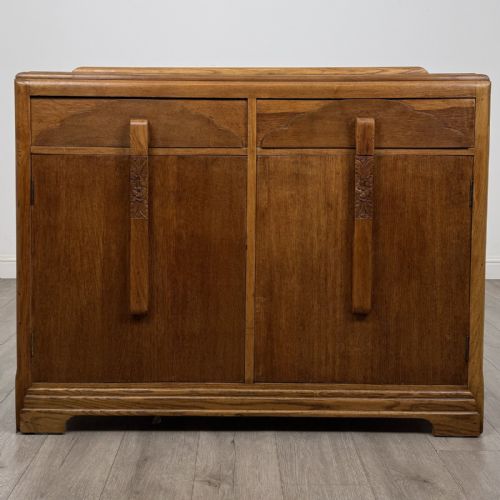
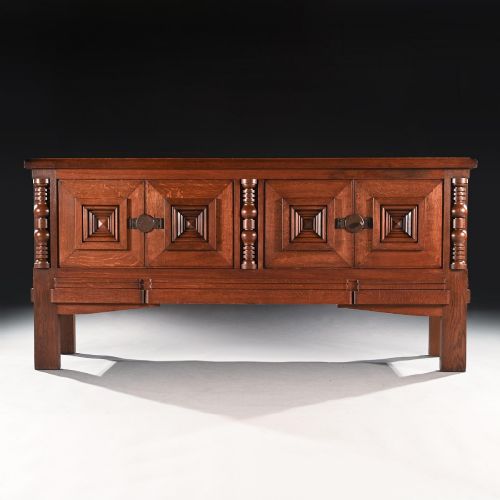
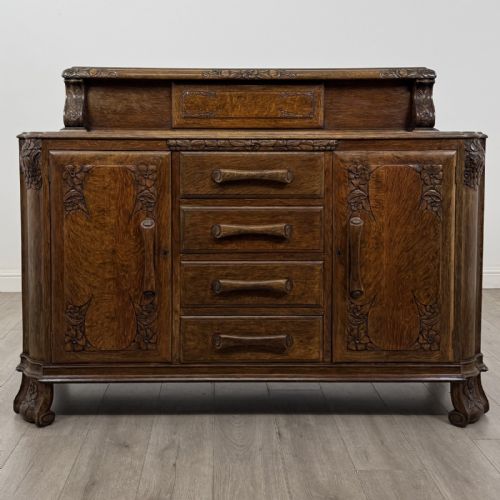
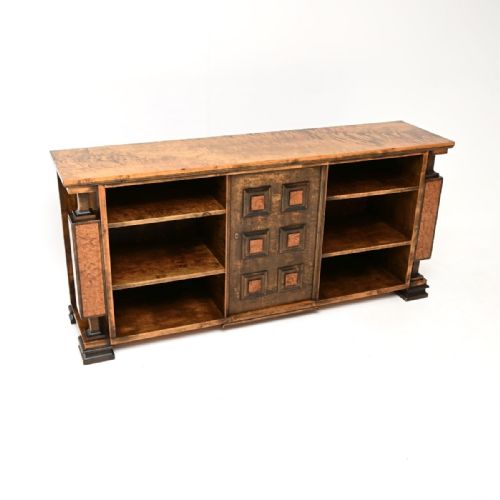
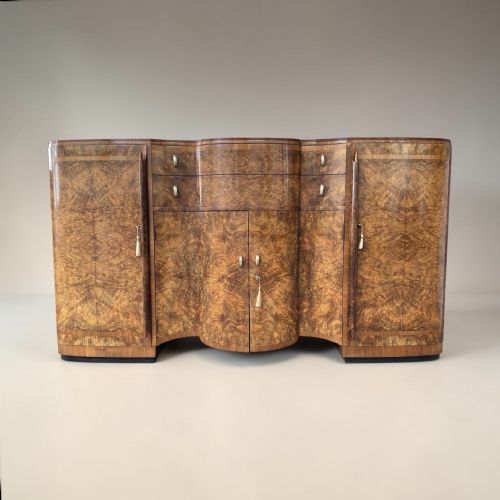
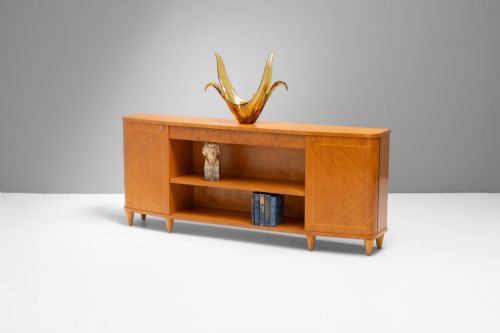
An art deco sideboard cabinet brings structured geometric forms and rich figured veneers into a room, serving as a striking focal point for storage and display.
Art Deco Sideboard Cabinet
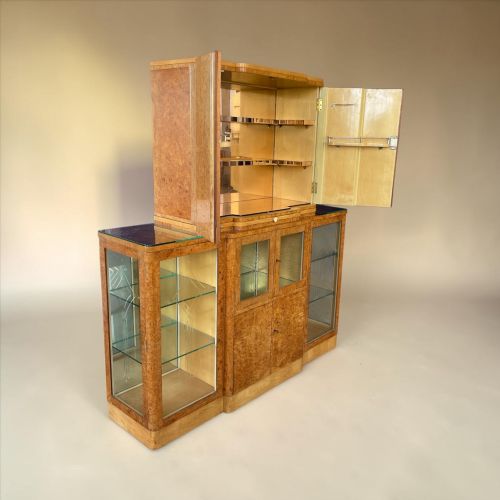
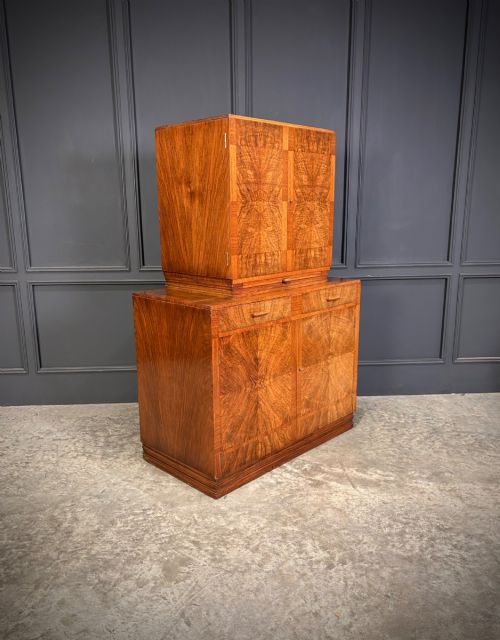
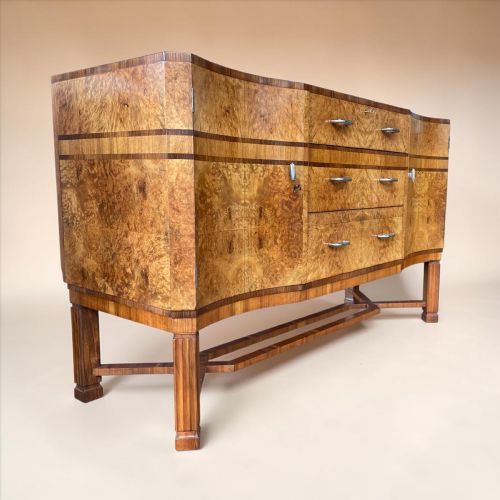
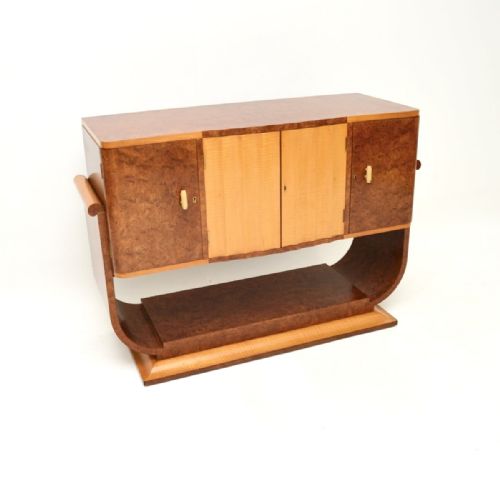
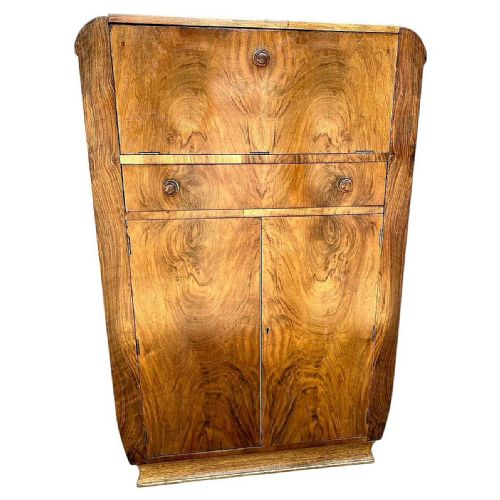
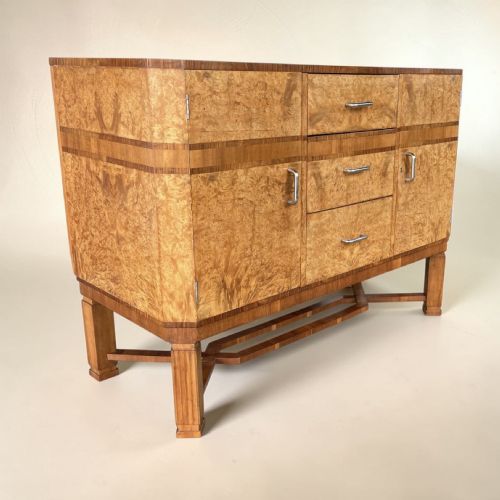
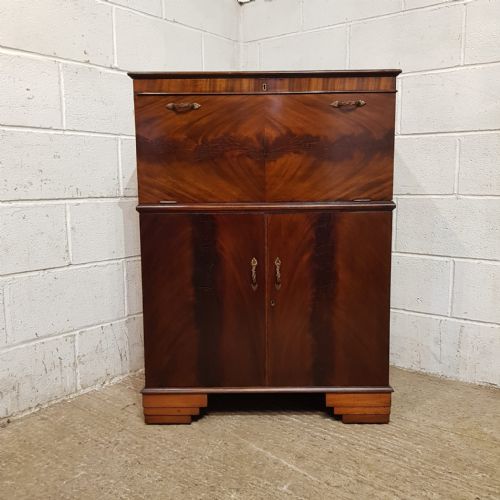
When searching for an art deco sideboard cabinet, a buyer encounters substantial dining room pieces, smaller cocktail units, and specialised drinks cabinets designed for storage and entertaining. The majority date from the nineteen-thirties, embodying the period's preference for clean architectural lines and impressive scale.
Forms range from traditional rectangular sideboards and credenzas to dramatic double bow fronts, cloud shapes, and vertical skyscraper profiles. Alongside British iterations, French and Swedish examples appear frequently, each bringing distinct regional proportions and surface treatments to the typology.
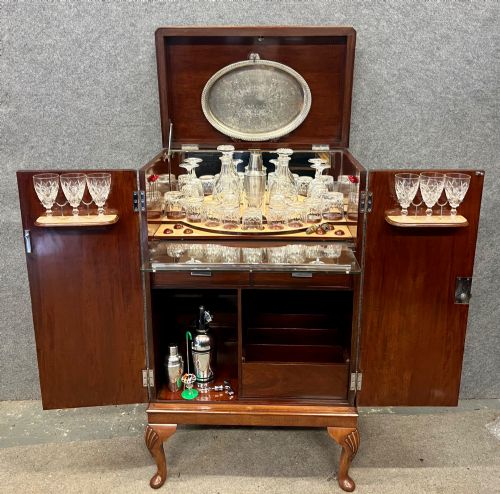
While primarily functioning as dining room storage for tableware, many variants include fitted cocktail sections with mirrored interiors, pull-out shelves, and specialist compartments for glasses and bottles. The selection balances utilitarian storage with bold decorative presence through contrasting timber grains and hardware.
Materials and construction
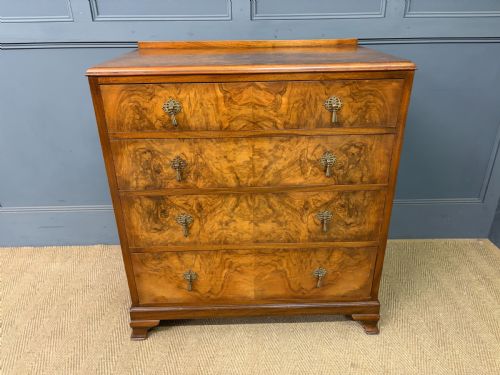
Cabinet makers utilised dense timber foundations overlaid with decorative wood veneers such as burr walnut, amboyna, maple, and mahogany to create striking grain patterns across large surfaces. These veneers were meticulously matched and book-ended symmetrically across drawer fronts and cupboard doors to emphasise the natural figure of the wood.
Solid secondary timbers such as oak and mahogany formed the internal carcass and framing, whilst decorative details incorporated contrasting woods like sycamore, satinwood, and ebony. Metal elements including brass handles, hinges, and occasional electric lighting fittings completed the interior design of sophisticated drinks cabinets.
Art Deco Sideboard Cabinet Retail Price Guide 2026
Typical asking prices for art deco sideboard cabinet among the pieces listed under this phrase on Sellingantiques today, from the lower quarter to the upper quarter. They describe what is for sale here now, not the wider market.
Listings demonstrate that burr walnut remains the dominant timber choice for art deco sideboards, frequently paired with sycamore details.
Indicators of quality
Makers known for exceptional craftsmanship invested heavily in concealed engineering, such as smooth-running tambour doors, fitted cocktail interiors with pull-out mixing trays, and robust structural joinery that maintains rigid alignment across large double bow fronts.
Maurice Adams·Harry and Lou Epstein·Gomme·Hille·Hamptons of Pall Mall London·The Bowman Brothers·Leemings of Halifax·Charles A. Richter
The Art Deco Sideboard Cabinet Glossary
- Book-matching
- A technique where two adjacent veneer leaves are opened like a page to create a symmetrical mirror-image pattern across a cabinet door. This method showcases the natural grain of burr walnut or mahogany to maximum decorative effect.
- Skyscraper
- A vertical furniture style popular during the interwar period, characterised by stepped architectural silhouettes reminiscent of metropolitan high-rise buildings. These tall cabinets maximise vertical presence while retaining compact floor footprints.
- Veneer
- A thin layer of highly figured or exotic wood applied over a more stable secondary timber carcass. This practice allowed makers to display expensive timbers like satin birch or rosewood efficiently.
- Tambour
- A flexible sliding door constructed from narrow vertical strips of wood glued to a canvas or leather backing. It allows smooth operation around curved cabinet corners without projecting into the room.
Art Deco Sideboard Cabinet: Frequently Asked Questions
How do I identify an original art deco piece?
Original pieces display period construction methods, traditional timber choices like walnut or oak, and characteristic geometric or symmetrical veneer layouts rather than modern machine-pressed laminates.
Examining the interior linings, drawer dovetails, and backboards helps confirm period authenticity against later reproductions.
Were these cabinets used for drinks or dining?
Many large sideboards were built primarily to store dining silver, linen, and tableware within dedicated internal drawers and cupboards.
Specialist cocktail variants feature mirrored back panels, bottle shelves, and glass racks specifically designed for home entertaining.
How do I care for a walnut veneer surface?
Keep wooden cabinets away from direct sunlight and heat sources to prevent the underlying veneers from drying out, cracking, or fading over time.
Regular dusting with a soft, dry cloth and occasional application of appropriate furniture wax maintains the natural sheen of the timber.