



Art Deco Sapphire Cocktail Ring
An art deco sapphire cocktail ring brings bold geometric lines and vibrant colour together in a statement piece designed to draw the eye.
Art Deco Sapphire Cocktail Ring
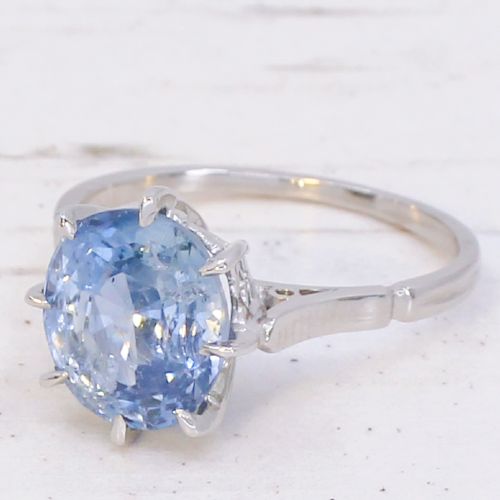
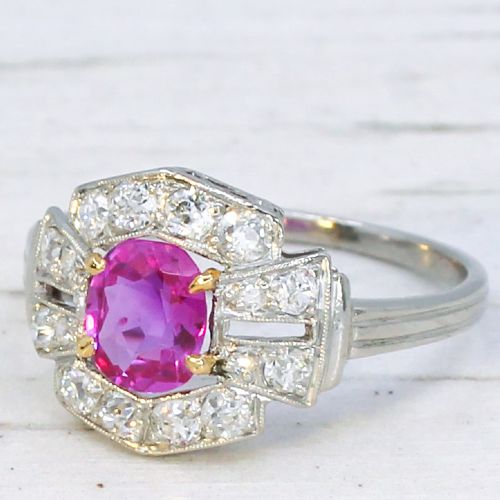
When you search for an art deco sapphire cocktail ring, you enter a world of vibrant blue, pink, yellow, and green stones set into striking geometric silhouettes. These pieces served originally to signal bold fashion choices during evening gatherings and large social events.
The versions you meet most frequently on this page belong predominantly to the 1920s and 1930s, alongside complementary designs spanning the Edwardian era through to the mid-century. They appear primarily as rings, dress rings, and dedicated cocktail rings designed for maximum visual impact.
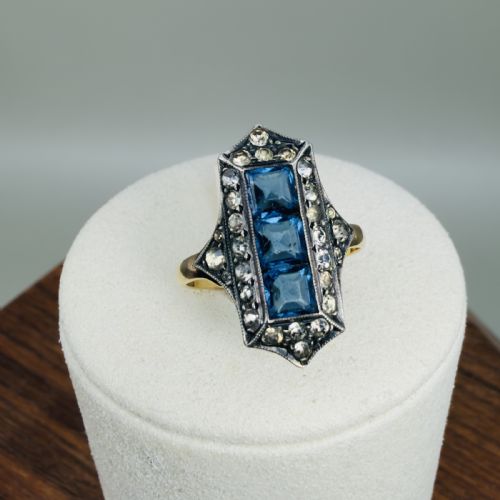
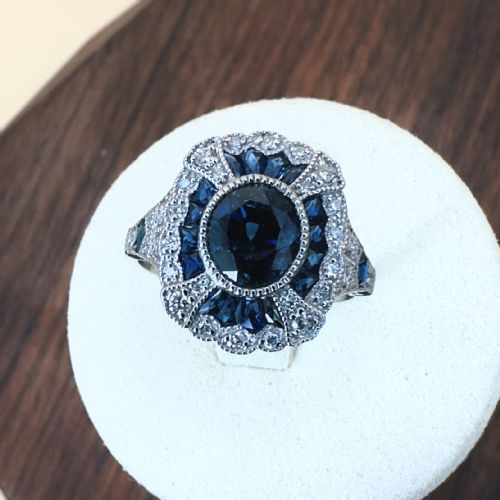
Makers shaped these jewels into distinct formats such as cluster, navette, target, plaque, and chequer configurations. Each format highlights the central gemstone through careful arrangement of surrounding stones and structural metalwork.
Materials and Techniques
Goldsmiths utilised platinum and various carats of gold, including 18ct white gold, 18ct yellow gold, and occasionally 9ct gold, to build robust yet intricate frameworks. Platinum provided the strength needed for exceptionally fine millegrain edges and delicate openwork without adding excessive bulk.
Sapphires in blue, pink, yellow, and orange paired frequently with diamonds and white paste stones to create high-contrast face-ups. Stones were shaped using calibré cutting to fit tightly into geometric channels alongside old-cut diamonds.
The listings span multiple decades, incorporating pieces from the 1910s, 1920s, 1930s, 1940s, 1950s, and 1960s.
Elements of Quality
The calibre of an art deco sapphire cocktail ring rests heavily on the origin and treatment status of the central sapphire, with unheated stones from locations like Ceylon or Burma commanding particular attention. Natural colour saturation and clarity without artificial enhancement elevate certain examples above standard commercial grades.
Execution of the metalwork also divides the range, distinguishing simple commercial production from master craftsmanship that utilised platinum to achieve razor-sharp geometric lines and precise stone alignment. The integration of well-matched old-cut diamonds further separates standard pieces from exceptional collector items.
The Art Deco Sapphire Cocktail Ring Glossary
- Calibré cut
- Small gemstones precisely cut into specific geometric shapes such as squares, triangles, or trapezoids to fit tightly together within a channel or border.
- Navette
- A boat-shaped gemstone or ring setting that tapers to a sharp point at both ends, also known as a marquise shape.
- Target ring
- A circular cluster design featuring a central gemstone surrounded by one or more concentric rings of contrasting smaller stones, resembling a target.
- Millegrain
- A decorative technique featuring a row of tiny raised metal beads along the edges of a setting, common in period jewellery.
- Plaque ring
- A ring featuring a flat, broad face, often pierced with openwork patterns and covered in smaller gemstones.
Art Deco Sapphire Cocktail Ring: Frequently Asked Questions
How do I care for my ring?
Clean your sapphire ring gently using warm water, mild soap, and a soft-bristled brush to remove daily oils from beneath the stones. Avoid harsh chemical cleaners or ultrasonic baths that might compromise older settings.
Store the piece individually in a fabric-lined box to prevent the diamonds and sapphires from scratching softer metals or other items in your collection. Regular professional inspection of the claws and platinum channels ensures the stones remain secure during daily wear.
Were these rings worn daily?
Original owners reserved these bold pieces primarily for evening wear, dinners, and large social gatherings where the vibrant stones and large silhouettes could catch the light. They were statements of modern fashion rather than understated daytime accessories.
Modern wearers often enjoy them as daily signature pieces, though taking them off during heavy manual tasks protects the delicate platinum work and stone settings from unnecessary impacts.
What defines the style?
The style relies on strict symmetry, strong geometric arrangements, and high-contrast colour combinations such as deep blue sapphires paired with bright white diamonds. Platinum settings allowed makers to construct flat plaque surfaces and sharp angular motifs.
Instead of flowing organic curves, the design emphasises clean lines, stepped terraces, and architectural silhouettes that reflect the modernist movements of the early twentieth century.
How can I tell the period?
Examine the construction methods, metal choices, and cut of the surrounding diamonds to determine the era of manufacture. Pieces from the 1920s and 1930s frequently employ platinum alongside white gold, utilising old-cut diamonds and specific calibré-cut sapphires.
Edwardian precursors often show lighter, more lace-like platinum work, while mid-century examples from the 1950s and 1960s introduce heavier yellow gold settings and different cluster proportions.