


Art Deco Pearls
Art deco pearls bring together organic lustre and geometric platinum or gold work from the 1920s and 1930s, offering buyers a sophisticated piece of period jewellery.
Art Deco Pearls
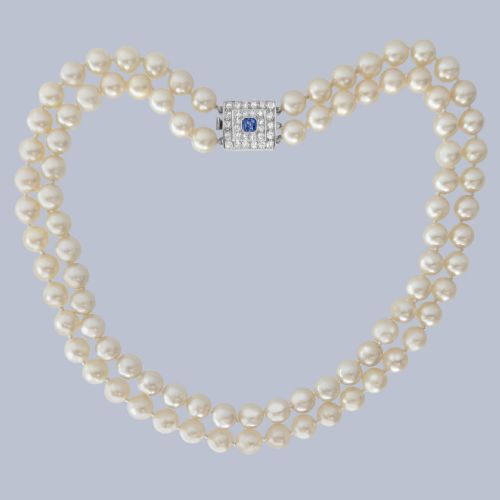
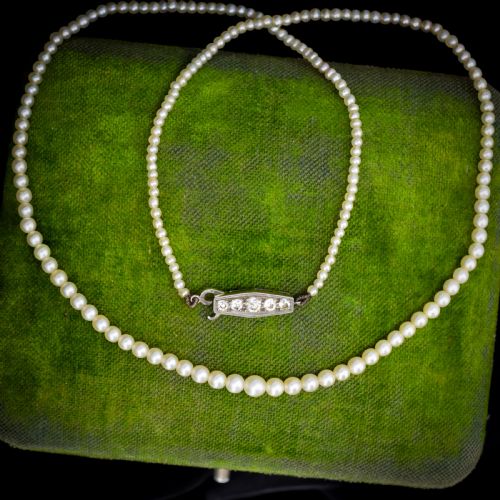
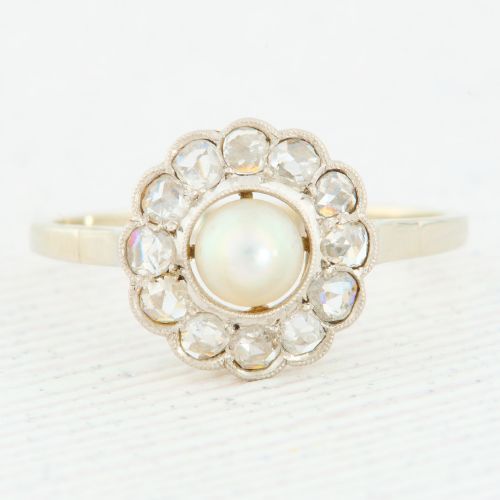
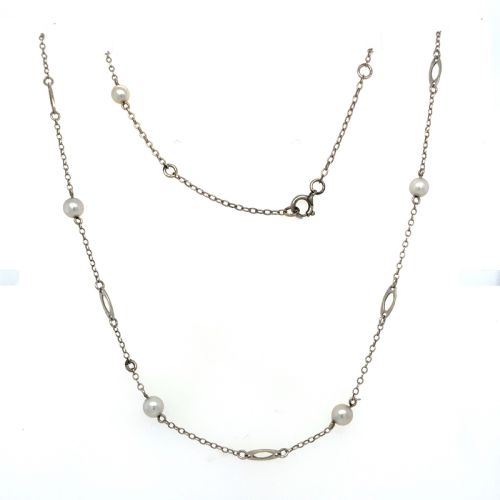
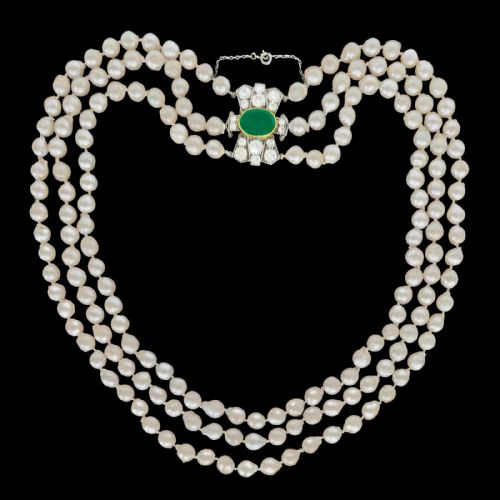
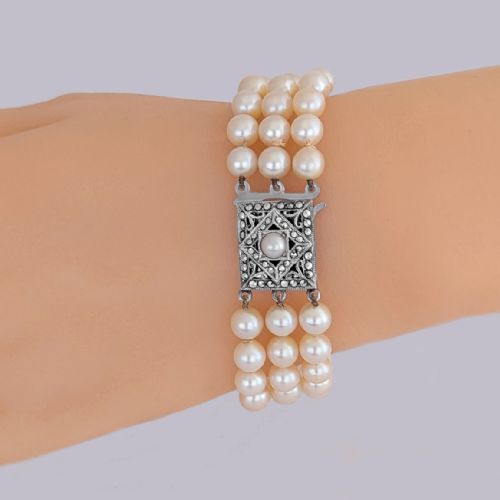
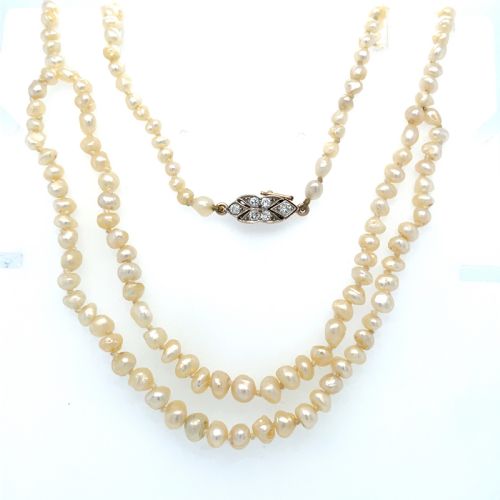
Art deco pearls encompass necklaces, rings, bracelets, earrings, and pendants originating primarily from the 1920s and 1930s, alongside Edwardian and mid-century interpretations. Single, double, and triple strand necklaces dominate the selection, frequently secured by ornate gemstone-set clasps.
Buyers will encounter both natural saltwater pearls and cultured pearls, often paired with contrasting materials such as diamonds, sapphires, emeralds, and jadeite. The aesthetic bridges organic gem forms with the sharp symmetry characteristic of the period.
How they were made
The metalwork relies heavily on platinum and various caratages of white and yellow gold, providing a durable yet refined framework for delicate stones. Platinum was favoured for its strength, allowing intricate pierced settings that held diamonds securely alongside the pearls.
Clasps and mounts incorporate rose-cut and old-cut diamonds, calibré-cut sapphires, and marcasite, showing meticulous hand assembly. Strands are typically strung with knotted silk between individual pearls to protect the organic nacre from friction.
Listings feature platinum and gold mounts from the 1890s through the 1960s, spanning Edwardian, art deco, and mid-century styles.
What varies in quality
Quality rests in the uniformity, orient, and origin of the pearls, distinguishing natural saltwater specimens from later cultured alternatives. Certified origin reports and untouched original clasps elevate the standing of a necklace or bracelet.
The sophistication of the metal smithing and the calibre of supporting gemstones, such as matched diamonds and carved jadeite or emeralds, separate standard commercial output from exceptional jewellers' work.
Knoll and Pregizer·Daisy Makeig-Jones Wedgwood
The Art Deco Pearls Glossary
- Cultured pearl
- A pearl formed with human intervention by inserting a nucleus into an oyster, resulting in cultivated nacre layers. These became widely utilised alongside natural saltwater varieties during the twentieth century.
- Calibré-cut
- Small gemstones cut precisely to fit a specific geometric channel in a mounting. This technique defines much of the linear precision seen in jewellery from the period.
- Rose-cut
- A vintage diamond cut featuring a flat base and a domed crown with triangular facets. It imparts a soft, candlelit glimmer rather than the brilliant sparkle of modern cuts.
- Marcasite
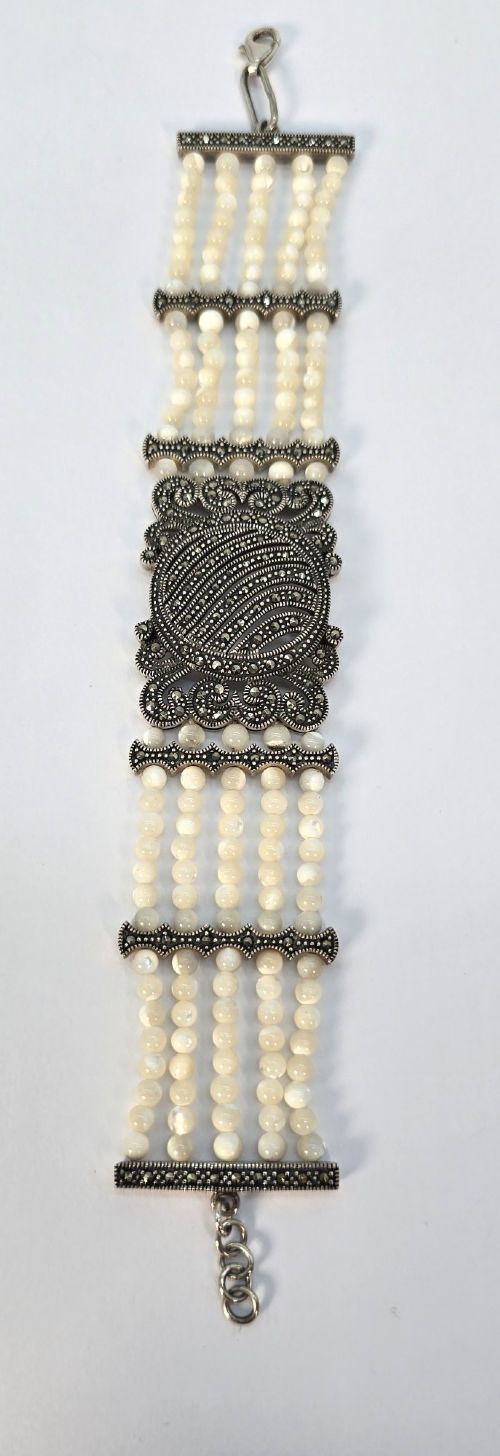
- Small faceted pieces of iron pyrites set into silver mounts to resemble glittering steel. It provides a dark, metallic contrast to luminous white pearls.
- Blister pearl
- A pearl that has grown attached to the inside shell of an oyster rather than within the tissue. These form distinctive dome shapes often utilised in dress rings and pendants.
Art Deco Pearls: Frequently Asked Questions
Are art deco pearls natural or cultured?
The selection includes both natural saltwater pearls and cultured pearls depending on the specific piece and period. Gemmological certificates often accompany the finer items to confirm their exact origin.
Buyers should examine specific listings and assay reports to verify whether the strands consist of natural saltwater gems or cultured alternatives.
How should I care for antique pearls?
Pearls are organic gems with delicate nacre that requires gentle handling away from harsh chemicals, perfumes, and cosmetics. Wiping them with a soft cloth after wearing preserves their natural lustre.
Necklaces worn regularly benefit from being periodically restrung with silk thread to maintain the security of the knots between each pearl.
What clasp styles are common?
Clasps frequently double as decorative focal points featuring geometric platinum or white gold set with diamonds, sapphires, or carved jadeite. Some pieces utilise marcasite set in silver or intricate floral metalwork.
These functional elements were designed to be worn visibly at the side or front of the neck rather than hidden discreetly at the back.
How do I spot an original piece?
Authentic items show period-appropriate construction techniques such as hand-cut diamonds, platinum settings, and traditional clasp mechanisms. Assay office reports and hallmarks on the gold or platinum mounts help confirm the date.
Stylistic cues like symmetrical Edwardian floral motifs or stark geometric art deco lines align the jewellery with its manufacturing era.