


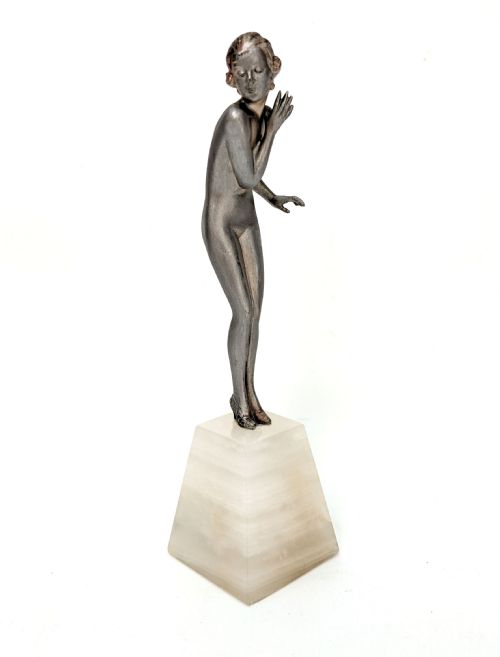


Art Deco Nude Statuette
These art deco nude statuette pieces capture the distinct energy of early twentieth century design, offering dynamic figures that collectors prize for their fluid forms.
Art Deco Nude Statuette
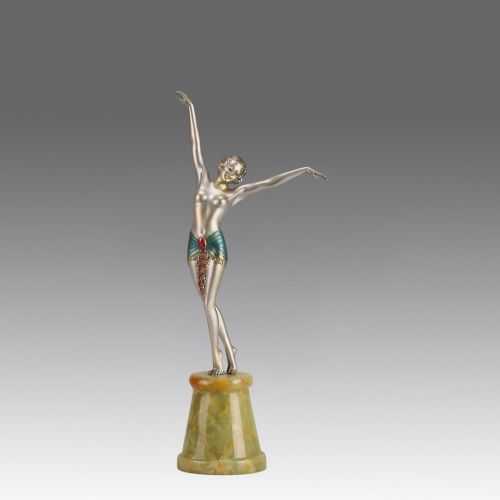
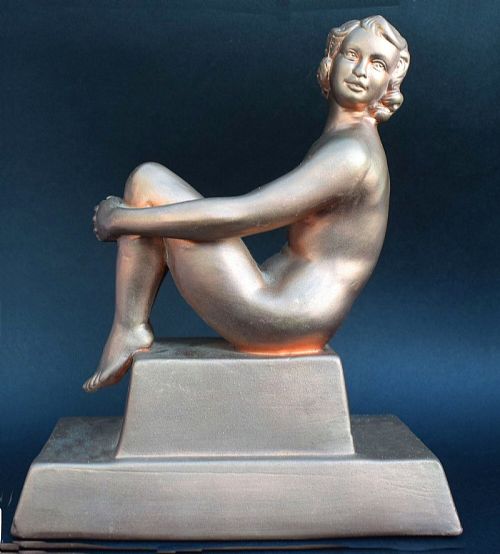
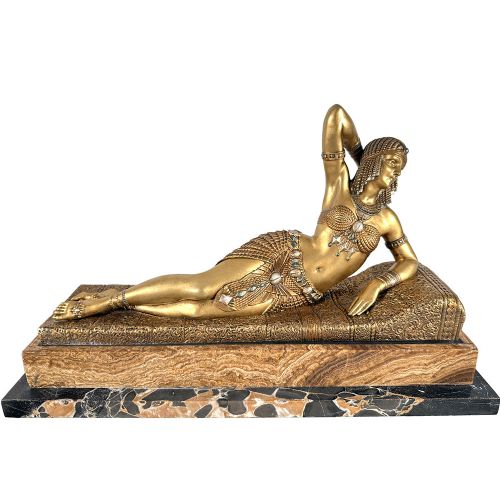
An art deco nude statuette takes the form of female figures, dancers, and mythological subjects cast during the decades around nineteen thirty. You will find these sculptures rendered as sitting figures, reclining characters, and dynamic dancers with outstretched arms.
The objects span origins from France and America, often mounted upon contrasting heavy stone plinths. Most examples date from the nineteen twenties and nineteen thirties, reflecting the predominant style of the period.
How they were made
Foundries produced these pieces using bronze, silvered bronze, patinated metal, and cast metal, frequently finishing surfaces with cold painting or gilt. Makers combined these metallic elements with bases carved from marble and onyx.
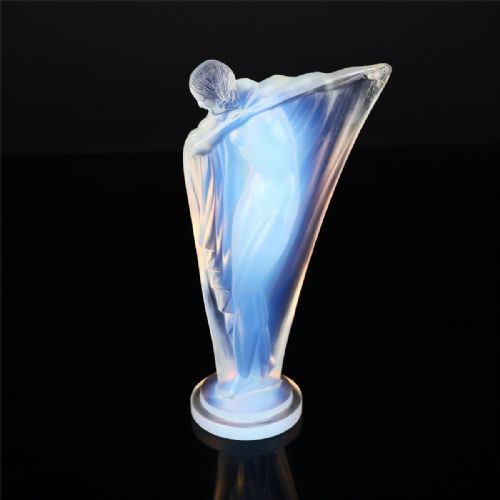
Certain specialised works utilise moulded opalescent glass or delicate porcelain to achieve translucent drapery and skin tones. These varied media allowed workshops to capture both sharp geometric precision and soft anatomical curves.
One dancer balances permanently on her toes while holding a hoop, frozen mid-spin since nineteen thirty.
What varies in quality
The selection of the base material also marks the tier of the piece, with high quality statuettes set upon dense, beautifully veined marble or onyx rather than plain substitute stones. Superior surface patination or original cold painted colour retains its depth and adherence.
Ferdinand Preiss·Josef Lorenzl·Demetre Chiparus·Lucille Sevin·Claire Jeanne Roberte Colinet·René Lalique·Albert Hussmann·Bruno Zach·Pierre le Faguays·Gustav Adolf Daumiller·Mario Korbel
The Art Deco Nude Statuette Glossary
- Cold-painted bronze
- A technique where paint is applied to a bronze object after casting without subsequent firing, allowing for detailed polychrome finishes.
- Patinated metal
- Metal treated with chemical solutions to produce a specific surface colour and aged appearance.
- Spelter
- A zinc alloy frequently utilised as a cost-effective alternative to bronze in figural casting.
- Opalescent glass
- Glass that diffuses light with a milky, pearlescent appearance, shifting in tone according to illumination.
Art Deco Nude Statuette: Frequently Asked Questions
Are these statuettes made of solid bronze?
Many statuettes utilise solid bronze or silvered bronze, though you will also encounter pieces cast from spelter, other patinated metals, or formed in glass and porcelain.
Checking the weight and examining the underside often reveals the specific metal composition used by the foundry.
How do I identify the period of a statuette?
The pieces originate primarily from the nineteen tens, twenties, and thirties, carrying stylistic hallmarks of the movement such as stylised drapery and aerodynamic lines.
Signatures or foundry marks stamped into the metal or stone base also help confirm the era of production.
How should I clean my statuette?
Dust the surface gently with a soft, dry cloth to prevent the accumulation of grit on patinated or painted areas.
Avoid using liquid cleaners, polishes, or abrasive cloths that might strip the original cold painting or patination from the metal.