


Art Deco Nude Painting
An art deco nude painting brings striking modernist forms and daring figures into a room.
Art Deco Nude Painting
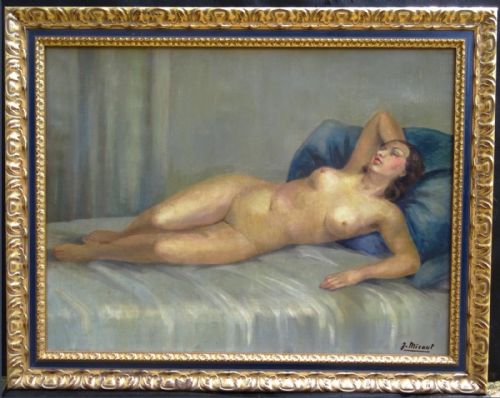
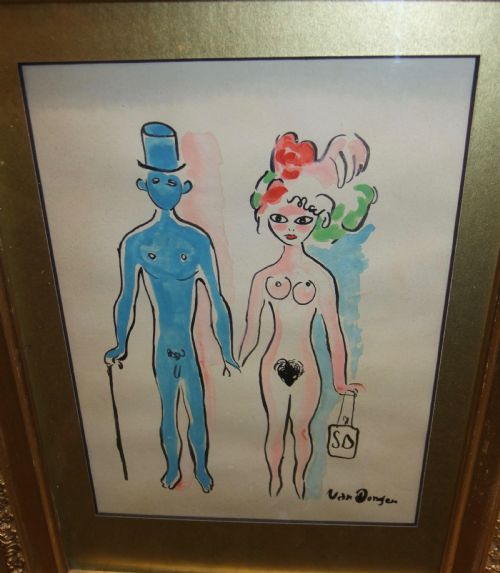
An art deco nude painting captures the bold modernist spirit and relaxed human forms characteristic of the early twentieth century. These works range from French oil paintings on canvas to framed watercolours depicting models, dancers, and sunbathers. Most examples on this page date from the 1920s and 1930s, reflecting the artistic output of the School of Paris and Parisian bohemian life.
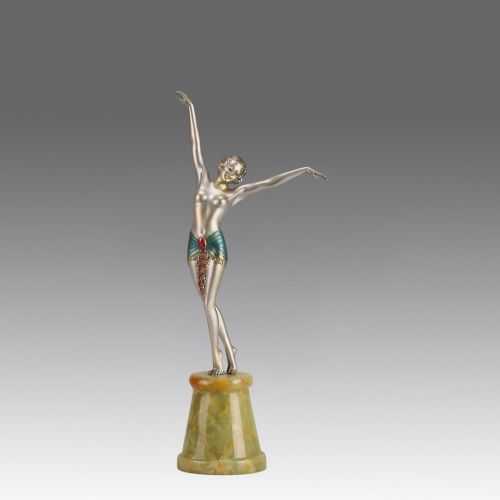
Buyers will find both fine art paintings and companion sculptures in bronze, spelter, and onyx. The figurative subjects celebrate freedom and vitality, often rendered through Fauvist colour palettes or precise academic skill. Whether showing an intimate interior scene or an outdoor study, each piece reflects the distinct aesthetic of the interwar period.
How they were made
The paintings rely on oil on canvas and watercolour applied with expressive brushwork, sometimes housed in original giltwood frames. Metal figures use bronze, spelter, and cold-painted techniques to achieve metallic sheen and coloured surface detail. Bases of onyx and carved wood frequently anchor these sculptural works.
Artists of this era utilised varied techniques from the School of Paris, combining traditional draughtsmanship with modern stylisation. The combination of oil paint on canvas or panel created durable surfaces that retain their warm tones over the decades.
Several ladies on this page spend their time lounging on cliffs, riding horses with crops, or posing gracefully inside large hoops.
What varies in quality
The distinction between ordinary and exceptional works rests upon the confidence of the brushwork and the expressive power of the composition. Stronger paintings demonstrate a sophisticated handling of light and anatomical proportion that elevates a simple portrait into a striking study of form. Weaker examples may rely on rigid outlines or predictable poses without the vibrant atmosphere seen in premier Parisian works.
For mixed-media and sculptural pieces, the quality of the casting and the depth of the cold-painted finish dictate the overall success of the object. Materials like genuine bronze and select onyx bases indicate a higher tier of production compared to lighter spelter alternatives.
Josef Lorenzl·Raymond Moritz·Gaetan Dumas·Bruno Zach·Kees van Dongen
The Art Deco Nude Painting Glossary
- Art Deco
- A design style spanning the 1920s and 1930s characterised by streamlined shapes, geometric patterns, and modern glamour. It influenced painting, sculpture, and decorative arts across Europe.
- Spelter
- A zinc alloy frequently used as a less expensive substitute for bronze in decorative figures. It accepts patination and metallic paint finishes readily.
- School of Paris
- A loose collective of artists working in Paris during the early twentieth century who drew inspiration from diverse international modernist movements. Many prominent painters and sculptors of the era belonged to this circle.
- Cold-painted bronze
- A bronze sculpture painted with oil-based colours that are allowed to dry without high-temperature firing. This delicate method yields vibrant surface details but requires careful handling.
Art Deco Nude Painting: Frequently Asked Questions
What defines an art deco nude painting?
These works display the modernist aesthetic of the 1920s and 1930s through simplified lines, bold composition, and liberated human subjects. They often emerge from the artistic communities of Paris during the interwar years.
The palette and brushwork frequently borrow from Fauvism and contemporary European movements, separating them from traditional academic portraiture.
Are these paintings usually framed?
Many oil paintings arrive in period frames, such as giltwood surrounds that complement the aesthetic of the 1920s and 1930s. Original framing helps preserve the canvas edges and matches the period context.
Buyers should check individual listings to confirm whether a specific canvas retains its historical frame or requires new mounting.
How do I distinguish paintings from sculptures?
Listings divide clearly between two-dimensional works on canvas or paper and three-dimensional objects in bronze, spelter, and onyx. Sculptures often depict dancers or figures in similar modernist poses.
Reviewing the material specifications in each listing prevents any confusion between flat artwork and cast metal figurines.
Where were these pieces created?
The vast majority originate from France, particularly artistic hubs like Montparnasse in Paris, alongside contributions from British and European workshops. French artists dominated the production of figurative works and cold-painted bronzes during this era.
Provenance notes within individual descriptions often highlight specific cities or artistic circles.