


Art Deco Marble Garniture
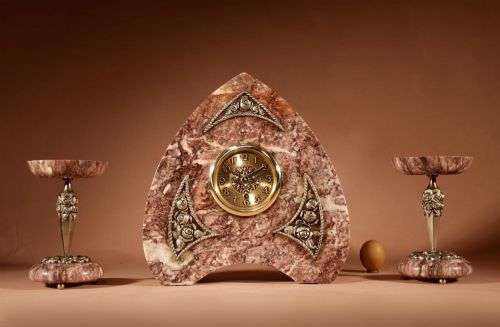
An art deco marble garniture anchors a room with architectural symmetry, pairing a bold central clock with matching side pieces from the nineteen twenties and thirties.
Art Deco Marble Garniture
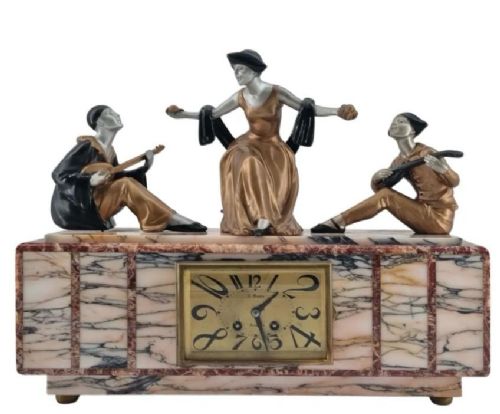
An art deco marble garniture comprises a central mantel clock accompanied by a pair of matching side pieces designed to sit together on a fireplace or sideboard. These sets originate primarily from France during the nineteen tens, twenties, and thirties, showcasing the distinct geometric and figurative language of the period.
The most common configurations on this page include three-piece sets featuring a clock flanked by matching vases or sculptural elements. Many examples incorporate figurative subjects such as dancers, dogs, and pierrots mounted directly onto the stone bases.
Materials span various marbles and stones combined with metals like brass, chrome, and spelter to create striking visual contrasts. Buyers encounter both standalone clocks and complete garniture sets designed to deliver a unified decorative scheme.
How they were made
Cabinetmakers and masons shaped heavy blocks of marble, onyx, and grey breccia into stepped, geometric, or streamlined architectural housings to hold the clock movements. These stone bodies provide the substantial weight and polished surfaces characteristic of the era.
Foundries cast figures and decorative mounts in spelter or bronze, frequently finishing them with silver plating or enamel details. Sculptors such as Sega, Michel Decoux, and others modelled figural ornaments like greyhounds, elephants, and dancers to surmount or accompany the stone bases.
Listings feature items from the nineteen tens, twenties, and thirties, utilising marble, onyx, brass, spelter, and chrome.
What varies in quality
The sophistication of the figural sculpture and the choice of stone drive the distinction between standard and exceptional pieces. Sculptures cast with fine anatomical detail by named artists elevate a garniture far above mass-produced variants.
The variety and quality of the marble itself, such as figured grey breccia paired with contrasting metals like brass and chrome, determine the visual impact. Precision in the geometric cutting of the stone and the integration of the matching side pieces complete the standard of craftsmanship.
Michel Decoux·Sega
The Art Deco Marble Garniture Glossary
- Garniture
- A set of ornamental objects designed to match and display together, typically consisting of a central clock and two flanking vases or figures. These sets create a balanced arrangement on a mantelpiece.
- Spelter
- A zinc alloy commonly used as a cost-effective base metal for casting figures and decorative mounts during the period. It is often painted or plated to imitate bronze.
- Onyx
- A banded variety of chalcedony quartz frequently utilised alongside marble for its translucent layers and rich colouration. It adds warmth and depth to clock cases.
- Mantel clock
- A clock designed to stand on the shelf of a fireplace, serving as both a timekeeper and a focal point of interior decoration. They often form the centrepiece of a garniture.
Art Deco Marble Garniture: Frequently Asked Questions
How do you style a clock garniture?
Place the central clock in the middle of a mantelpiece, sideboard, or wide shelf with the two matching side garnitures positioned symmetrically on either side.
The matching pieces repeat the materials and motifs of the clock to tie the decorative scheme of the room together.
What materials are used in these garnitures?
The primary body is typically constructed from polished marble or onyx, often enhanced with contrasting sections of grey breccia.
Decorative elements incorporate metals such as brass, chrome, and spelter, occasionally featuring silver plating or enamel.
When were these clock sets made?
The pieces seen here date predominantly from the nineteen tens, twenties, and thirties, capturing the height of the Art Deco movement in France.
They reflect the geometric forms, streamlined silhouettes, and popular cultural motifs of that era.