




Art Deco Jadeite Jewellery
Art deco jadeite jewellery brings vibrant green presence and geometric precision to your collection through enduring rings, earrings, and necklaces.
Art Deco Jadeite Jewellery
Art deco jadeite jewellery comprises wearable adornments shaped by the distinct design language of the early twentieth century. Pieces from this selection primarily date across the 1920s, 1930s, and 1940s, alongside select Edwardian examples.
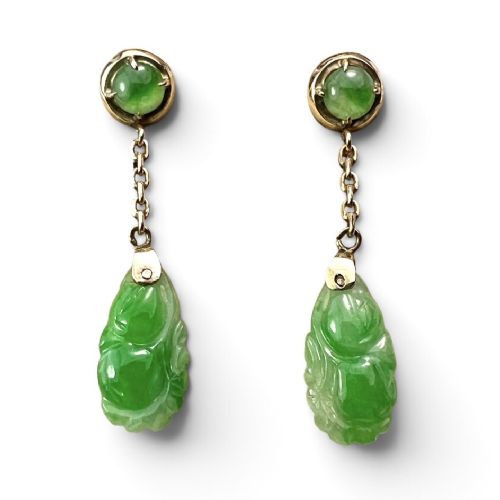
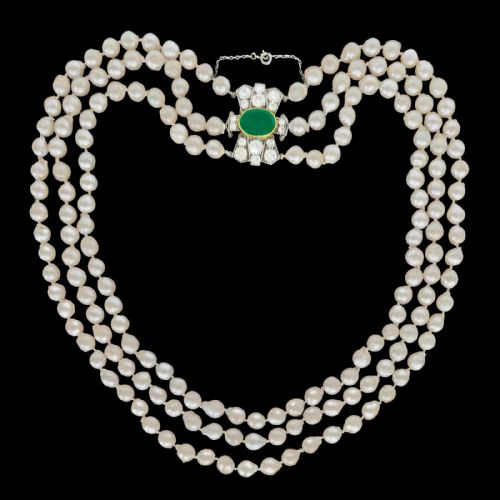
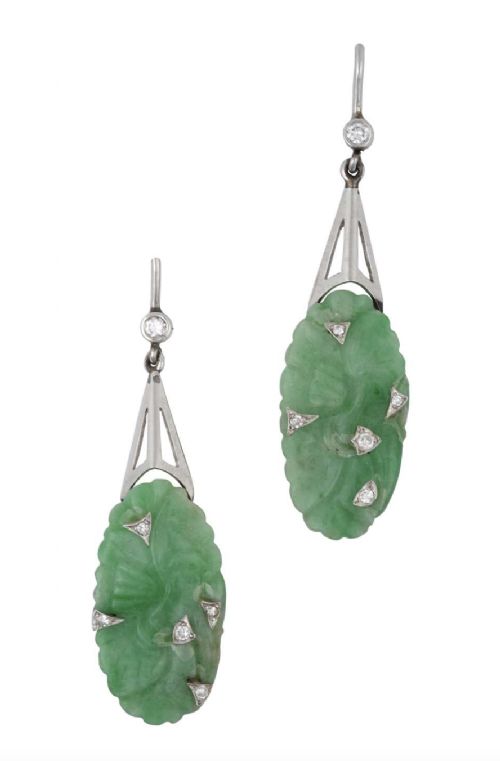
The inventory showcases carved rings, drop earrings, stud earrings, pendants, and multi-strand necklaces. Green jadeite and jade stones dominate the selection, frequently paired with diamonds, pearls, platinum, and various gold purities.
Buyers seeking these items encounter distinct aesthetic markers from the Art Deco period and Early 20th Century styles. The combinations reflect the era's preference for strong colour contrast and structured metallic settings.
Materials and construction methods
Lapidaries shaped natural jadeite and jade into carved panels, beads, and drop stones for these ornaments. Artisans mounted these vibrant green stones into platinum, 9ct gold, 14ct gold, and 18ct gold settings.
Goldsmiths and platinumsmiths incorporated diamond accents and pearls to complement the central green stones. Screw-back mechanisms and secure clasps completed functional elements on earrings and necklaces.
One necklace relies on a Birmingham Assay Office gem report to vouch for its jadeite clasp.
Distinguishing quality factors
The refinement of the stone carving and the intensity of the jadeite coloration determine visual impact. Finer examples display meticulous symmetry in geometric metalwork and balanced integration of supporting diamonds.
The choice of precious metal influences the overall character, with platinum and high-carat gold offering greater durability and finish than silver or lower gold purities. Certification reports from assay offices provide additional documentation for select pieces.
The Art Deco Jadeite Jewellery Glossary
- Jadeite
- A dense pyroxene mineral valued for its vibrant green translucency. It forms the primary gemstone material across these twentieth-century items.
- Art Deco
- A design style emerging in the 1920s characterised by clean geometric lines and symmetrical patterns. It defines the structural aesthetic of these mounts.
- Platinum
- A dense, durable white precious metal utilised for secure stone settings. It provides strong structural support for delicate diamond and jadeite arrangements.
- Carved
- A technique where artisans shape raw stone into pictorial or abstract relief designs. This method appears frequently on rings, pendants, and earrings in the collection.
Art Deco Jadeite Jewellery: Frequently Asked Questions
How do I date art deco jadeite jewellery?
Examination of the metal settings, clasp types, and overall design motifs helps establish the period. Pieces frequently incorporate hallmark stamps or laboratory reports indicating their specific decade of origin.
Stylistic elements like geometric symmetry point directly to the 1920s and 1930s aesthetic. Comparing the mounting technique with known period examples confirms the timeframe.
What metals are typically found in these pieces?
Makers utilised platinum alongside various gold purities including 9ct, 14ct, and 18ct gold. Silver also appears in select items within the selection.
The choice of metal often reflects the piece's era and the value of the accompanying stones like diamonds and pearls. Platinum frames the finest gem-set arrangements.
How should I care for jadeite jewellery?
Store items separately in soft pouches to prevent scratching from harder gemstones like diamonds. Clean the pieces gently using a soft cloth dampened with mild soapy water.
Avoid harsh chemical dips or ultrasonic cleaners that might damage natural jadeite treatments. Regular inspection of the settings ensures the carved stones remain secure.
What is the difference between jade and jadeite?
Jade is a term encompassing two distinct silicate minerals, namely jadeite and nephrite. Jadeite is generally rarer, denser, and capable of displaying vivid emerald-green hues.
Most high-value twentieth-century Asian-inspired ornaments utilise jadeite. Gemological testing confirms the specific mineral species.