




Art Deco Illustration
Art deco illustration brings graphic elegance and period character to a room through authentic works on paper and framed drawings.
Art Deco Illustration
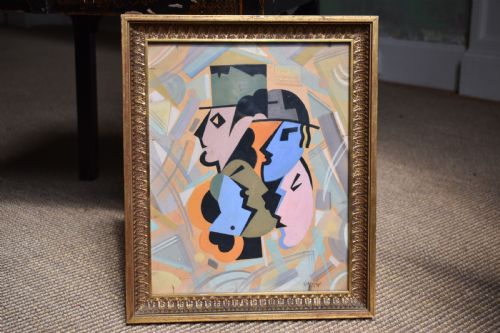
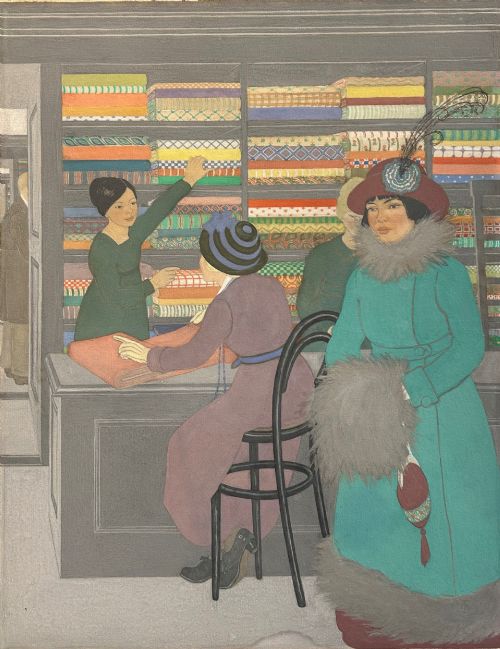
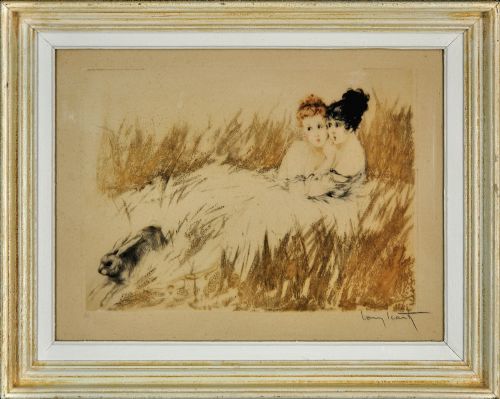
Art deco illustration comprises works on paper, framed drawings, watercolours, and gouache pieces created during the 1920s and 1930s. These items range from theatrical watercolours and advertising designs to portrait sketches and limited edition etchings.
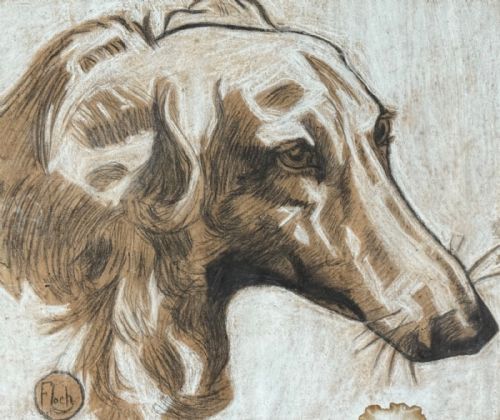
Buyers will encounter various paper formats including buff paper and antique books, alongside framed art and wall art. The selections reflect distinct modernist sensibilities and the vibrant visual culture of the period.
The objects stem predominantly from the 1920s and 1930s, capturing the distinct aesthetic of the interwar years. Pieces span original poster designs and magazine advertisements as well as intimate portraiture.
How art deco illustration was made
Artists utilised watercolour, ink, gouache, and chalk applied directly to paper or buff paper to achieve crisp lines and flat colour areas. Pencil underdrawings frequently structure the composition before the application of water-based pigments.
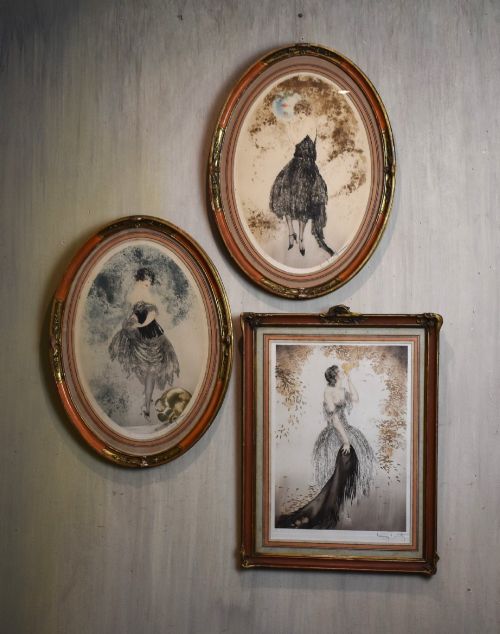
Printmakers employed etching and lithography techniques, occasionally finishing impressions with hand-applied colour or gilt details. These graphic methods allowed for sharp reproduction and distinct tonal graduation across limited editions.
What varies in quality
Quality rests upon the sureness of the draftsmanship and the clarity of the line work, distinguishing confident compositions from hesitant academic exercises. Superior examples demonstrate a secure command of proportion and stylistic economy characteristic of the period.
Condition of the paper surface and the integrity of the pigments heavily influence the desirability of a piece. Tonal stability in watercolours and gouaches without excessive fading marks the finer works in this category.
Louis Icart·Lucien Gibert·Albert Guillaume·Kees van Dongen·Henry Bird
The Art Deco Illustration Glossary
- Gouache
- An opaque water-based pigment that provides flat, dense areas of colour. It allows illustrators to build sharp geometric edges common in period graphic design.
- Etching
- A printmaking technique where lines are bitten into a metal plate with acid before being inked and pressed onto paper. Hand-coloured examples receive pigment applied by brush after printing.
- Lithography
- A planographic printing process based on the repulsion of oil and water. It enabled artists to produce multi-colour poster designs and illustrations efficiently.
- Buff paper
- A pale brownish-yellow paper stock favoured for preparatory sketches and drawings. The neutral tone acts as a mid-tone background for white highlights and dark inks.
Art Deco Illustration: Frequently Asked Questions
What defines an art deco illustration?
Art deco illustration is defined by clean lines, stylized forms, and graphic simplicity typical of the 1920s and 1930s.
These works encompass watercolours, gouache paintings, and printed ephemera created during the height of the modernist movement.
How should I frame vintage paper art?
Vintage paper art requires conservation-grade mounting materials and UV-protective glass to prevent fading and chemical damage.
Keeping the artwork away from direct sunlight preserves the original watercolours, inks, and gouache pigments.
Are these illustrations original works?
The category includes both unique hand-drawn pieces and limited edition prints such as etchings and lithographs.
Signatures, artist ciphers, and medium descriptions within each listing clarify whether a piece is a one-off painting or a printed work.
How do I spot period authenticity?
Authenticity is indicated by period-appropriate paper stocks, printing methods, and framing techniques consistent with the 1920s and 1930s.
Examining the medium under magnification reveals the characteristic dot patterns of modern printing or the genuine brushstrokes of gouache and watercolour.