



Oval Silhouette Portrait
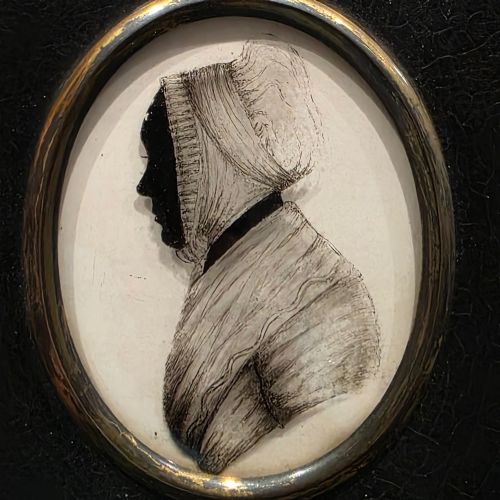
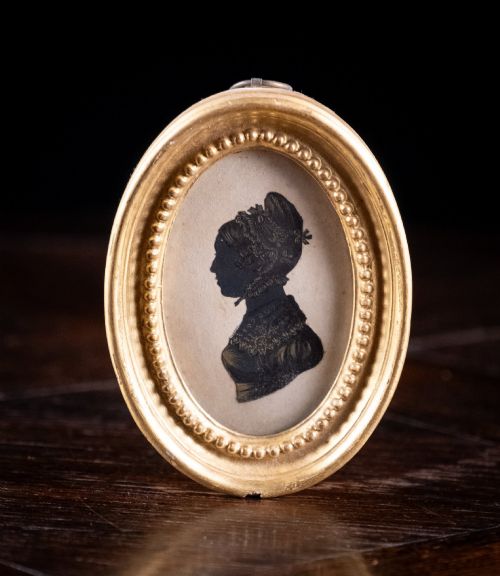
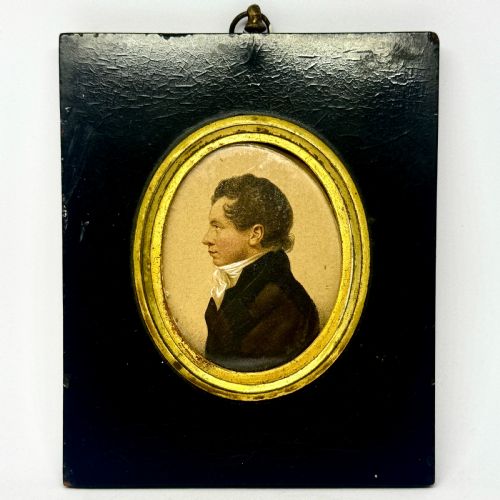
An oval silhouette portrait captures a crisp profile likeness in miniature, offering a remarkably intimate glimpse into eighteenth and nineteenth century life.
Oval Silhouette Portrait
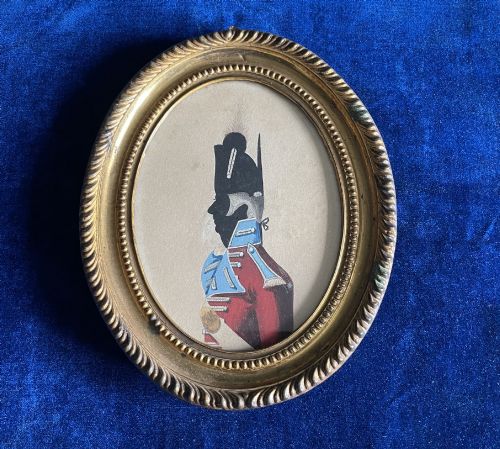
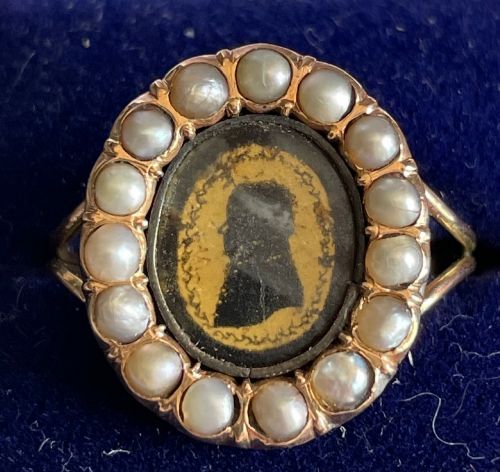
When you search for an oval silhouette portrait, you encounter framed artwork, rings, and wall art produced during the Georgian, Regency, and Victorian periods. These pieces record the distinct profiles of ladies, gentlemen, and children, often rendered with striking economy and precision.
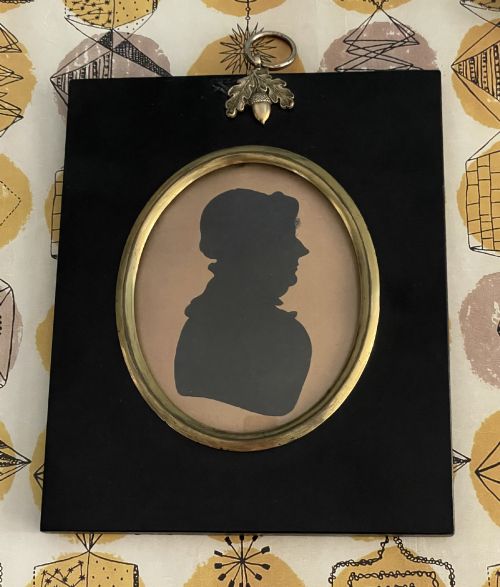
The most common examples on this page are eighteenth and nineteenth century works framed in ebonised wood or pear wood. Many examples feature delicate glass panels, painted details in gold leaf, or cut-out paper profiles mounted against plain grounds.
How they were made
Makers utilised ink, paper, plaster, and glass to construct these miniature likenesses. Artists painted directly onto the reverse of convex glass or cut paper profiles freehand before mounting them over light backgrounds.
Frames play a crucial role in the construction, typically fashioned from ebonised wood, brass, or pear wood. Many profiles incorporate subtle touches of gold leaf to highlight clothing, lace, or jewellery.
Several profiles preserve the exact height of forgotten Regency hair gel and towering turban caps for posterity.
What varies in quality
The distinction between ordinary and exceptional work lies in the sharpness of the profile cut and the subtlety of the painted brushwork. Skilled execution captures the exact set of a chin or the precise shape of a bonnet with very few marks.
Condition of the glass and the originality of the frame also determine the standing of a piece. Intact backing papers, legible handwritten inscriptions, and contemporary frames elevate a work above standard decorative examples.
John Miers·George Atkinson·James Gillespie·John Smith of Edinburgh·Nathaniel Bermingham
The Oval Silhouette Portrait Glossary
- Ebonised wood
- Timber stained or treated to imitate ebony. This dark finish provides a stark, high-contrast border that makes the pale profile stand out.
- Reverse painted
- A technique where the artist applies pigment to the back of a glass sheet so the image is viewed through the front. It creates a smooth, glossy surface finish.
- Portrait miniature
- A small-scale painting or profile likeness designed for personal portability. These works were often kept in pendants, rings, or small wall frames.
- Plaster
- A fine casting material used as a base for moulded profile plaques. Plaster profiles often show crisp relief details and subtle texture.
Oval Silhouette Portrait: Frequently Asked Questions
How were oval silhouette portraits displayed?
Owners typically hung these small framed works on drawing room walls in clusters alongside larger paintings. Some examples were set into jewellery, such as rings or pendants, for personal wear.
Over time, people also kept them in protective pocket cases or displayed them on mantelpieces to remember family members or public figures.
Are these portraits signed by the artist?
Some pieces bear signature details, trade labels, or handwritten inscriptions on the reverse of the frame or backing paper. These notes frequently record the sitter's name and the date of production.
Many works remain unsigned, as artists often produced them quickly during fairs or in temporary town studios without marking every piece.
How do I identify a Regency silhouette?
Regency examples often feature distinct fashion markers such as high-waisted dresses for women and specific cravat styles for men. Artists of this era frequently employed fine gold leaf highlights on glass or delicate watercolour shading.
The frames from this period tend to be narrow ebonised wood oval shapes, sometimes fitted with small brass acorn hangers at the top.
What materials make up the profile?
The profile itself is usually formed from cut black paper, painted ink on card, or moulded white plaster mounted against a darker background. Artists sometimes layered cut paper over painted highlights to create depth in clothing and hair.
In glass-fronted pieces, the pigment sits behind the convex glass plate, protecting the delicate lines from dust and handling.