


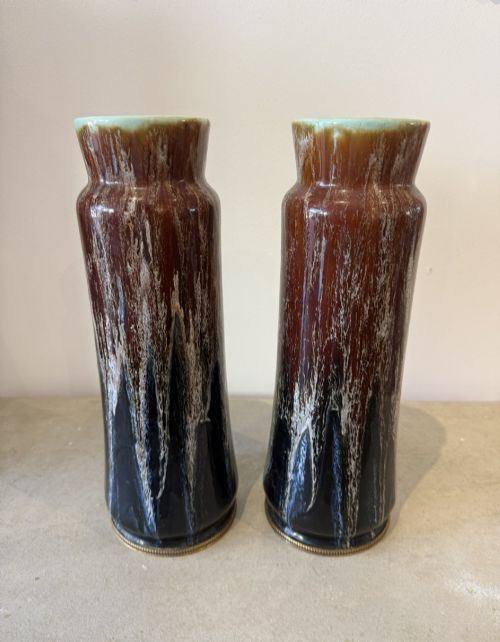
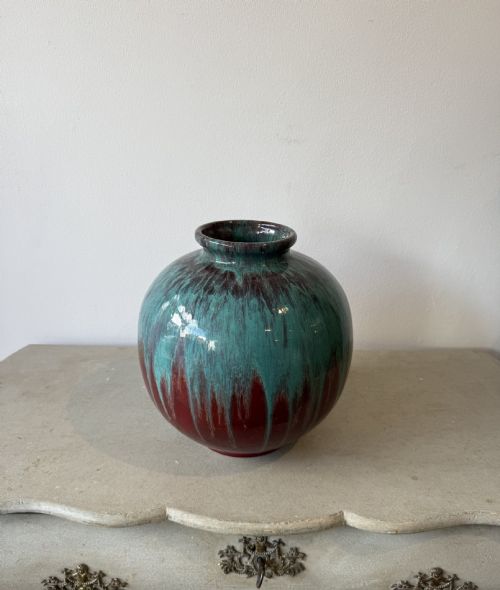


Art Deco Glazed Vase
An art deco glazed vase brings geometric punch and vibrant colour into a room, combining interwar styling with rich surface finishes.
Art Deco Glazed Vase
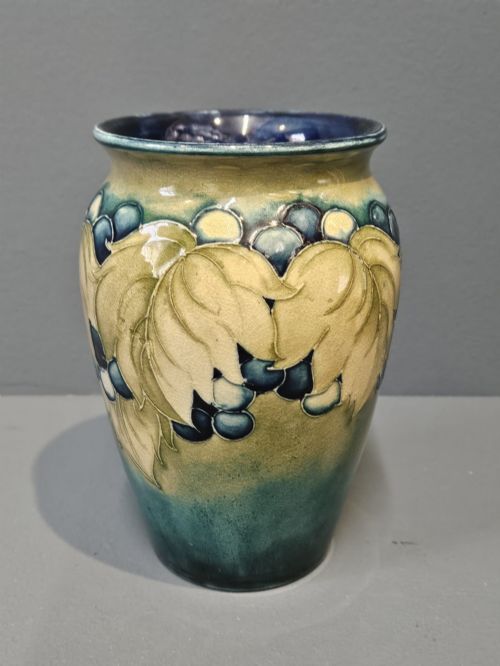
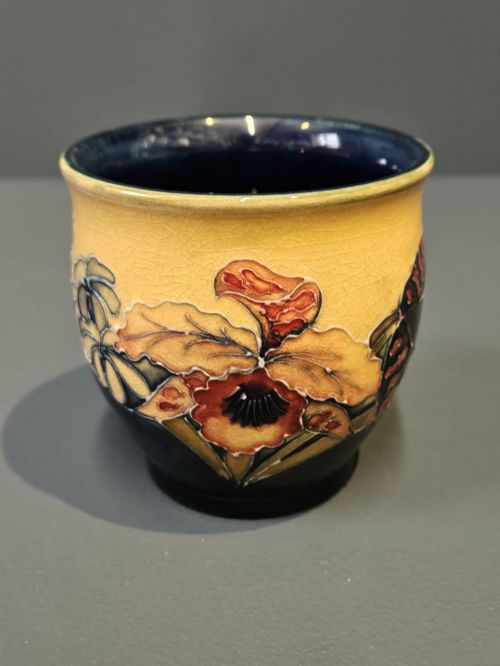
When you search for an art deco glazed vase, you encounter robust vessels produced primarily across the nineteen-twenties and nineteen-thirties, though certain examples draw upon earlier nineteenth-century roots. These pieces manifest as everything from monumental French studio items to modest English earthenware vessels decorated with flora, fauna, and stylised motifs.
The versions you are most likely to meet on this page span British potteries and continental workshops, ranging in form from slender baluster shapes to wide ginger jars. They reflect the diverse aesthetic currents of the interwar decades, taking in both vibrant lustre glazes and sober matte finishes.
Making and materials
Potters shaped these vessels using earthenware and porcelain, applying liquid clay bodies on wheels or in moulds before firing. Workers then painted or sponged pigments directly onto the biscuit or glazed surface.
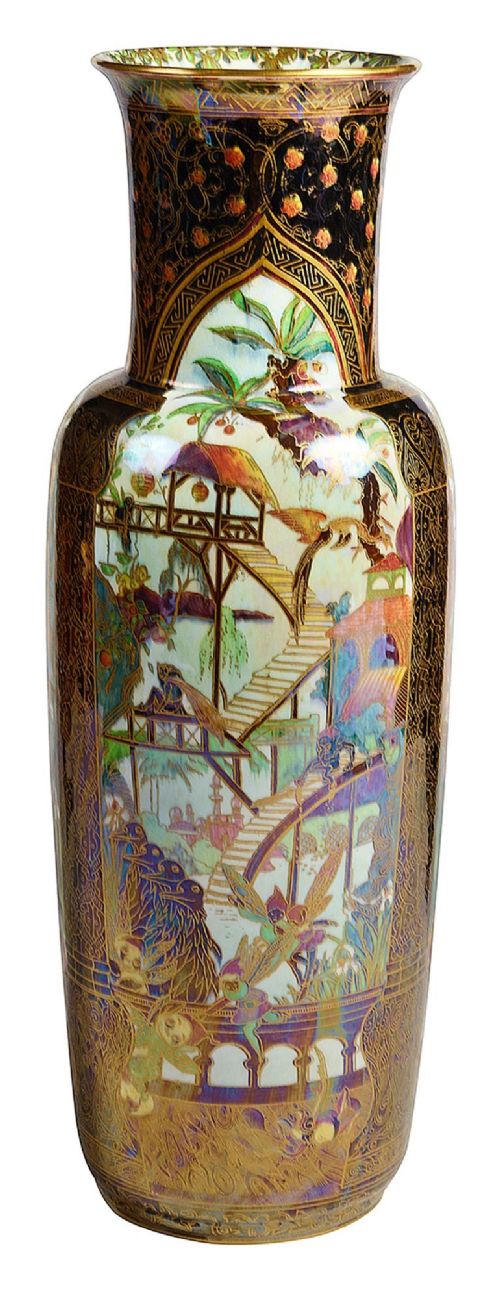
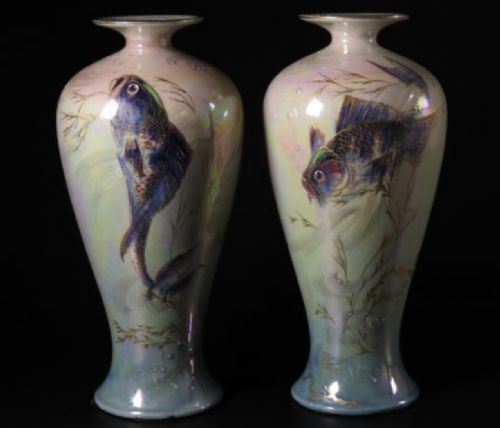
Makers achieved distinctive surface effects through specialised lustre glazes, enamel applications, and occasional touches of gold leaf. These chemical treatments required precise kiln temperatures to bond metallic oxides and lustres to the ceramic body.
Art Deco Glazed Vase Retail Price Guide 2026
Typical asking prices for art deco glazed vase among the pieces listed under this phrase on Sellingantiques today, from the lower quarter to the upper quarter. They describe what is for sale here now, not the wider market.
Mallards and deer wander across these interwar surfaces, proving that modernist ceramic artists retained a soft spot for local fauna.
Assessing quality
Quality rests upon the crispness of the modelled form and the depth of the glaze application, where rich, even coverage without firing blemishes marks the better pieces. Master decorators achieved subtle shading and registration that lesser production lines missed.
The reputation of the pottery and the specific hand of the designer separate standard commercial output from distinguished studio items. Painterly control and ambition in scale elevate certain vessels far above ordinary domestic wares.
Moorcroft·Wedgwood·Boch Freres·Shelley·Robert T Lallement·Carlton Ware·Royal Lancastrian·Mougin·Pilkingtons·Falcon Ware·Charlotte Rhead·Roger Guerin
The Art Deco Glazed Vase Glossary
- Earthenware
- A porous pottery body fired at lower temperatures than stoneware or porcelain. It requires an impermeable glaze to hold water effectively.
- Lustre
- A metallic surface sheen achieved by applying thin metallic films during a reduced oxygen firing. This technique produces iridescent rainbow effects on the ceramic body.
- Celadon
- A pale green or grey-green glaze originating in East Asia, later adopted by European potteries. It relies on iron oxide in reduction firings for its characteristic tone.
- Chinoiserie
- European artistic style reflecting Chinese motifs and decorative tropes. It appears on interwar ceramics through stylised landscapes and oriental figures.
- Baluster
- A vase shape with a rounded body that tapers toward the neck and stands on a narrower base. This traditional form suits the bold geometric patterns of the period.
Art Deco Glazed Vase: Frequently Asked Questions
How do I clean an old ceramic vase?
Wash the vessel gently by hand using lukewarm water and a mild detergent, avoiding harsh scrubbing brushes that might scratch the glaze.
Dry the piece thoroughly with a soft cloth and keep it away from direct sunlight to preserve the surface colours.
Can I use these vases for fresh flowers?
Most glazed earthenware and porcelain vessels hold water safely, but porous bodies or antique hairline cracks require careful handling.
Consider placing a small glass liner inside older or delicate pieces to protect the interior from moisture damage.
What defines the interwar ceramic style?
The style relies on bold geometric patterns, stylised natural motifs, and strong colour contrasts that broke away from nineteenth-century historicism.
Artisans embraced both mass-production techniques and individual studio pottery to create objects suited to modern interiors.
How do I spot a lustre finish?
Lustre finishes display a distinct metallic iridescence that catches the light and shifts between different rainbow hues.
This effect results from metallic oxides applied over the glaze and fired in specialised kiln conditions.