



Art Deco Glass Shaker
An art deco glass shaker brings the sharp geometry and glamour of the interwar cocktail hour directly onto your home bar.
Art Deco Glass Shaker
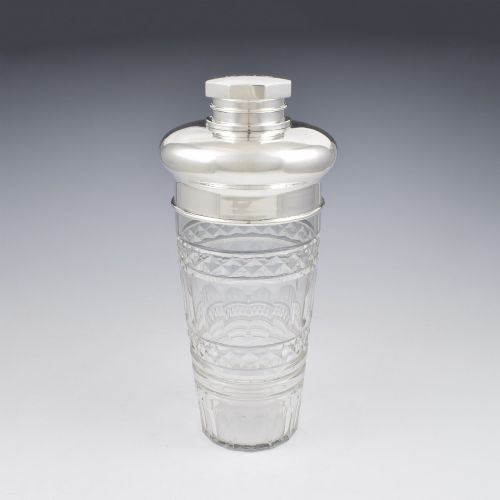
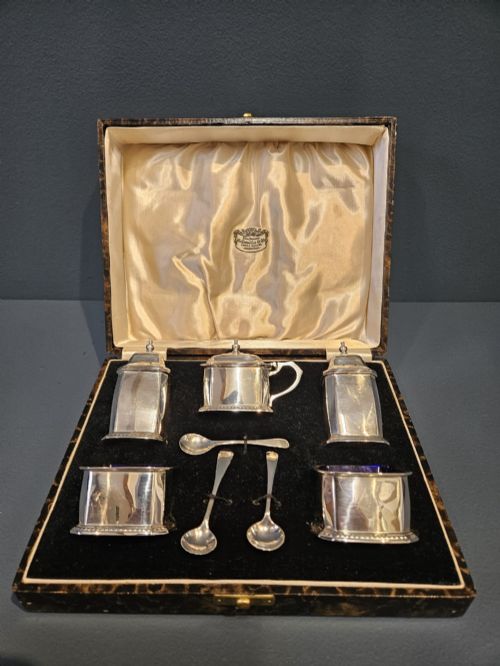
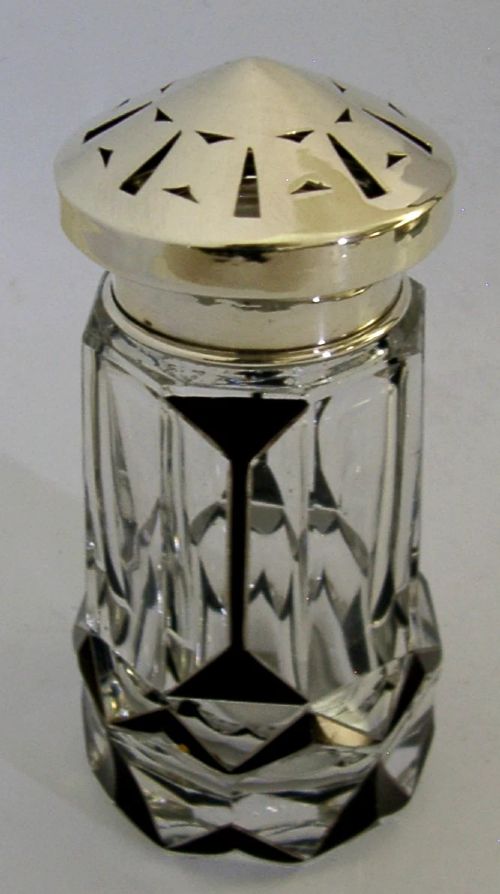
When you search for an art deco glass shaker, you are exploring barware and table vessels produced primarily during the 1920s, 1930s, and 1940s. These pieces span standard cocktail shakers, lighthouse-form sugar casters, and multi-piece cruet sets designed with distinct modernist lines.
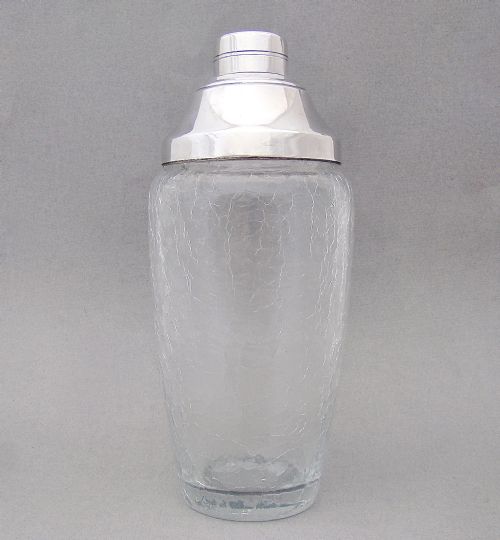
The most common examples you will meet on this page combine moulded or hand-cut glass bodies with metal mounts, often rendered in silver plate or sterling silver. Occasional variants introduce enamel decoration, crackle glass, or blue glass to catch the light.
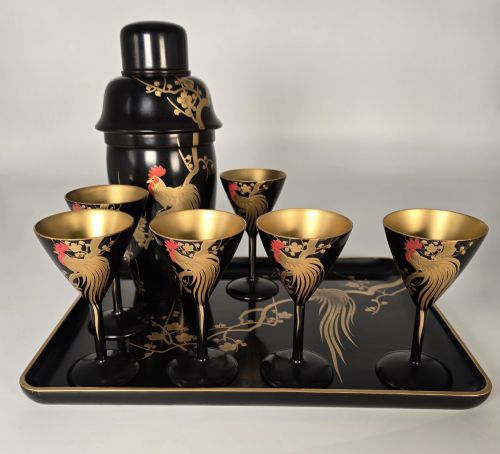
Originating from diverse international workshops, the selection includes British work alongside continental French examples and Japanese lacquer pieces from the Taisho period. Each object reflects the functional elegance demanded by twentieth-century entertaining.
How they were made
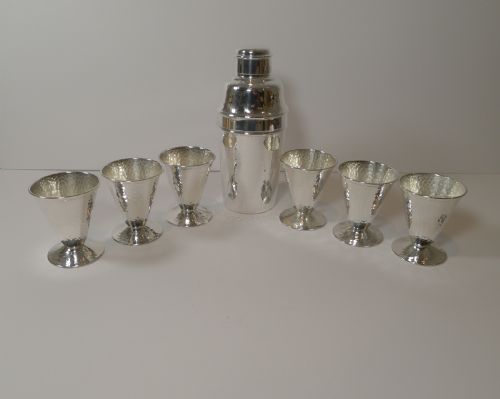
Glass bodies were formed using heavy lead crystal or moulded glass, frequently enhanced by deep hand cutting or crackle effects. Metal components, such as collars, tops, and mounts, relied on sterling silver or silver plate, sometimes finished with hammered textures.
Detailing often incorporated hand-painted enamel elements, such as figurative cockerel motifs, or fitted cork stoppers to ensure a tight seal during mixing. Silversmiths and glass cutters worked in tandem to unite glass and metal into balanced drinking vessels.
Art Deco Glass Shaker Retail Price Guide 2026
Typical asking prices for art deco glass shaker among the pieces listed under this phrase on Sellingantiques today, from the lower quarter to the upper quarter. They describe what is for sale here now, not the wider market.
Listings feature items from the 1920s, 1930s, and 1940s, incorporating materials such as cut glass, sterling silver, silver plate, enamel, and cork.
What varies in quality
The distinction between standard production and top-tier pieces rests on the weight and clarity of the glass, alongside the thickness of the silver mounts. Heavy lead crystal with precise, deep cutting commands greater presence than lighter moulded alternatives.
Maker execution also dictates the grade, particularly where specialised elements like hand-painted enamel or fitted sterling silver tops are concerned. Well-preserved original corks and fully intact silver plating complete with clear hallmarks elevate the standing of any vessel.
Hukin & Heath·Goldsmith & Silversmith's
The Art Deco Glass Shaker Glossary
- Art Deco
- A design style spanning the 1920s and 1930s characterised by sleek geometric shapes, streamlined forms, and modern industrial materials. It replaced the flowing organic curves of earlier decorative movements.
- Sugar Caster
- A perforated vessel used for sprinkling sugar onto food or drinks. In art deco barware, these often mirror the lighthouse silhouette of tall cocktail shakers.
- Cruet Set
- A matched group of small bottles or containers designed to hold condiments like oil, vinegar, salt, and pepper. They frequently share the same cut glass and silver mount vocabulary as cocktail shakers.
- Crackle Glass
- Glassware intentionally plunged into cold water while hot to produce a fine network of internal fractures across the surface. This technique creates a textured, shimmering appearance popular in twentieth-century decorative vessels.
- Sterling Silver
- An alloy consisting of pure silver and other metals, usually copper, standardised for durability and lustre. It appears frequently on the rims, collars, and lids of high-end cocktail shakers.
Art Deco Glass Shaker: Frequently Asked Questions
Were these shakers used for cocktails?
These vessels served primarily as functional barware for mixing and serving iced drinks during the height of the cocktail era. Their sturdy glass and metal construction was designed to withstand the vigorous shaking required to blend ingredients.
Many double as versatile serving pieces or decorative bar ornaments when not actively in use. Their enduring popularity stems from this dual capability as both practical tools and display objects.
How do I date a glass shaker?
Dating relies on examining hallmarks stamped into the silver mounts, stylistic indicators typical of the 1920s to 1940s, and manufacturing techniques. Hallmarks on sterling silver provide specific year codes and maker marks for accurate placement.
Stylistic cues such as streamlined geometric cuts or specific enamelling methods help narrow down periods when metal marks are absent. Comparing the form against documented catalogued designs from the era offers further confirmation.
Are original stoppers common?
Original cork or metal stoppers appear on some surviving examples, though many have been replaced over decades of use. Finding a piece retaining its original fitting adds to the completeness of the object.
Replacements are standard in vintage barware, provided they fit securely within the silver collar. Collectors generally look for stoppers that maintain the proportional balance of the silhouette.