


Art Deco Geometric Pendant
An art deco geometric pendant combines crisp lines and precious materials from the early twentieth century.
Art Deco Geometric Pendant
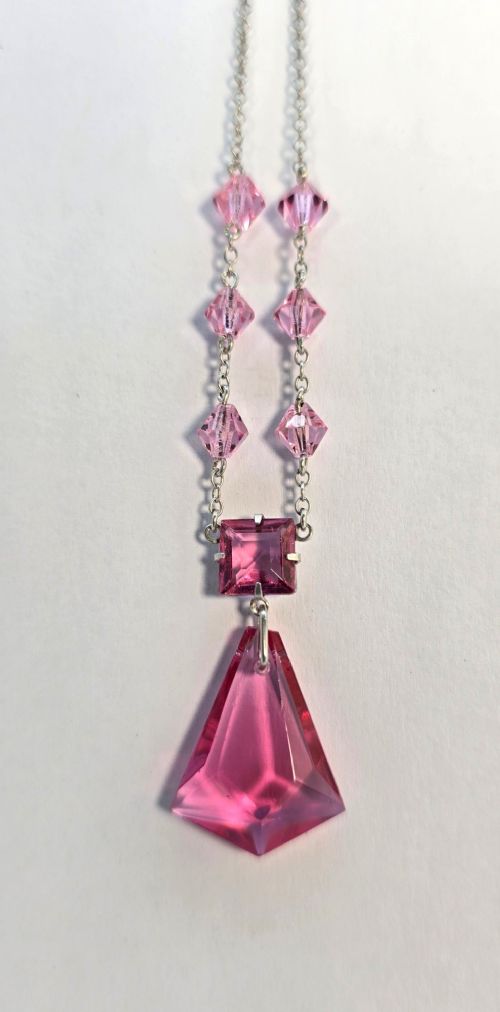
An art deco geometric pendant encompasses drop necklaces, metal lanterns, and ceiling lights originating predominantly from the 1920s, 1930s, and 1940s. These items display the characteristic angular symmetry and clean profiles associated with the period.
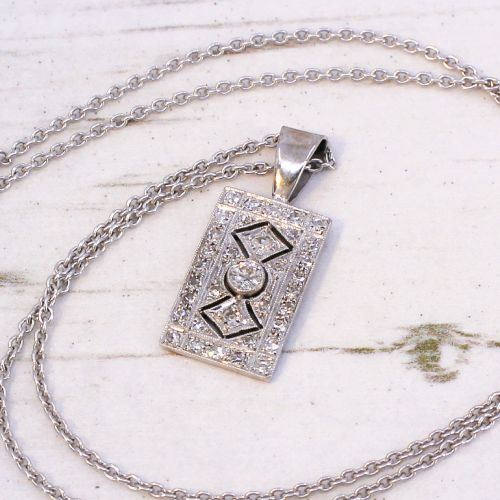
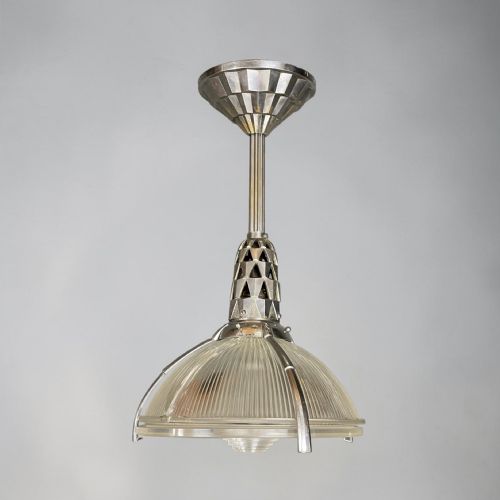
The selection on this page centres heavily on platinum and diamond pendants alongside chrome, brass, and glass lighting fixtures. Buyers encounter both fine jewellery set with precious stones and architectural chrome pieces designed for interiors.
Earlier Victorian, Edwardian, and nineteenth-century examples also appear alongside the core 1930s items. This mix reflects the evolution of modernist design across several decades.
Materials and construction
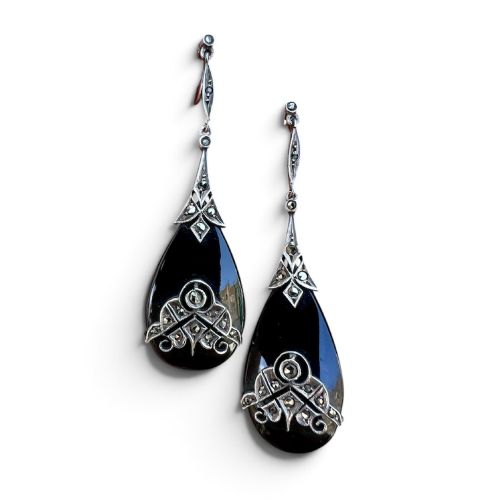
Metals such as platinum, white gold, palladium, silver, and chrome form the structural backbone for these pendants and lights. Jewellers mounted old cut diamonds, sapphires, rock crystal, and onyx into these metallic settings.
Glass, frosted glass, and crystal undergo hand cutting and moulding to produce lanterns and ceiling fixtures. Plastics like bakelite and galalith appear in modernist necklaces alongside enamel and brass.
Listings incorporate both lighting fixtures and wearable jewellery, using materials from diamond and platinum to bakelite and chrome.
Evaluating standard
The refinement of the metalwork and the precision of the geometric layout distinguish standard production from superior examples. Master jewellers utilised platinum and heavy carat gold to secure large diamonds with exact symmetry.
In lighting and larger items, the integrity of the frosted glass and the weight of the brass or chrome dictate the calibre of the piece. Untouched original elements demonstrate higher integrity than later replacements.
Émile-Jacques Ruhlmann·Jakob Bengel
The Art Deco Geometric Pendant Glossary
- Platinum
- A dense, durable precious metal utilised extensively in twentieth-century jewellery settings to hold diamonds securely.
- Bakelite
- An early synthetic resin popular in modernist necklaces of the 1930s, valued for its intense colour and durability.
- Plafonnier
- A ceiling-mounted bowl light or pendant light that sits close to the surface, common in 1930s interiors.
- Galalith
- A semi-synthetic plastic derived from milk casein, used to create colourful geometric links in modernist necklaces.
- Old cut
- A traditional diamond cutting style characterised by a high crown and small table, typical of antique stones.
Art Deco Geometric Pendant: Frequently Asked Questions
What periods do these pendants come from?
The items span the 1920s, 1930s, and 1940s, capturing the height of the modernist design movement. Earlier nineteenth-century, Victorian, and Edwardian pieces also make an appearance in the selection.
Most items align directly with the 1930 date bracket, reflecting the peak of geometric production in both jewellery and architectural lighting.
How do I hang a ceiling pendant?
Pendant lights and lanterns utilise metal chains or rods attached to a ceiling rose for suspension. Many examples combine brass, copper, or chrome with glass shades.
Professional installation is recommended for vintage electrical fixtures to ensure compatibility with modern wiring standards.
What is modernist art deco?
Modernist art deco leans into industrial materials, stark lines, and asymmetrical or repeating geometric patterns. Chrome, galalith, and bakelite feature prominently in this sub-genre.
These pieces diverge from traditional floral motifs, favouring the machine-age aesthetic of the interwar years.
Are diamonds certified on these pieces?
Certain pieces include certification detailing the carat weight, colour, and clarity of the stones. Diamond weights range from small accent stones to substantial multi-carat centrepieces.
Mountings often incorporate platinum or white gold to complement the brilliance of the diamonds.