


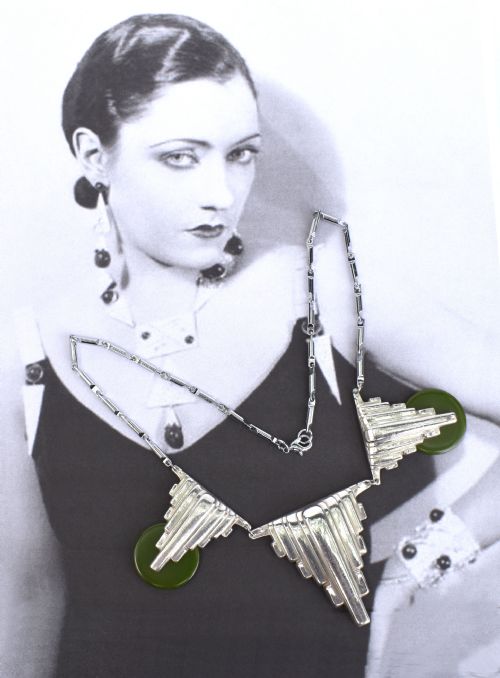

Bakelite Art Deco Jewellery
Bakelite art deco jewellery brings together vibrant early plastics and bold geometric forms, offering wearable modernist design that collectors prize.
Bakelite Art Deco Jewellery
Bakelite art deco jewellery spans necklaces, earrings, bracelets, brooches, and dress clips originating from the nineteen thirties and nineteen forties. These pieces capture the distinctive modernist aesthetic of the interwar period through striking shapes and saturated colours like cherry red and butterscotch.
Materials and construction
Makers utilised synthetic resins such as Bakelite, phenolic resin, and Galalith, shaping them into beads, geometric components, and plaques. These colourful plastics were frequently mounted in chrome or metal settings to achieve the characteristic industrial contrast of the period.
Many necklaces and bracelets integrate flexible elements like cord and elastic to hold the rigid resin components together. Metal findings and clips secure the brooches and earrings, completing the durable construction typical of nineteen thirties production.
Some butterscotch beads whisper tales of nineteen thirties frocks and cloche hats.
Judging quality and design
The distinction between standard pieces and exceptional examples rests upon the sophistication of the modernist design and the integration of metalwork. Pieces associated with specific makers demonstrate more ambitious structural compositions that elevate them above routine items.
The clarity and depth of colour within the phenolic resin and Bakelite components influence the visual impact. Well-preserved surface finishes and balanced proportions between the plastic elements and chrome mountings indicate superior manufacture.
Jakob Bengel
The Bakelite Art Deco Jewellery Glossary
- Bakelite
- An early form of synthetic phenol-formaldehyde resin valued for its durability and rich colour palette. It became central to jewellery production during the nineteen thirties.
- Galalith
- A semi-synthetic plastic derived from casein and formaldehyde, often utilised in modernist necklaces for its smooth texture and ability to accept vibrant dyes.
- Phenolic resin
- A synthetic thermosetting polymer that encompasses Bakelite. It forms the solid structural body of many interwar beads and geometric components.
- Dress clip
- A two-part ornamental clasp designed to attach securely to clothing without piercing the fabric. These items were widely worn during the nineteen thirties.
- Modernist
- An aesthetic movement prioritising clean geometric lines, industrial materials, and functional simplicity. This style defines the jewellery of the period.
Bakelite Art Deco Jewellery: Frequently Asked Questions
What periods do these pieces date from?
The inventory consists primarily of pieces from the nineteen thirties and nineteen forties, alongside occasional items attributed to the nineteenth century. These dates reflect the height of synthetic resin jewellery production.
Buyers encounter distinct stylistic markers from the art deco and modernist movements within these decades. The materials and construction methods correspond directly to the industrial techniques of the interwar era.
How should bakelite jewellery be worn?
These pieces function as striking focal accessories, whether worn as bold bead necklaces, earrings, or dress clips. Their geometric forms complement simple necklines and tailored garments.
Care should be taken to protect elastic or cord stringing on older necklaces from excessive tension. Storing pieces away from direct sunlight preserves the original colouration of the resin.
How do you identify bakelite?
Bakelite exhibits a dense weight and distinctive sound when two pieces tap together. The material often develops a specific patina over decades of handling.
Specialist tests can confirm the presence of phenolic resin, though visual inspection of the moulding seams and colour depth usually guides experienced collectors.
What metals accompany the plastics?
Chrome and standard metals frequently appear alongside Bakelite and phenolic resin in modernist designs. These metallic elements provide structural contrast and secure settings for earrings and clips.
The integration of metal reflects the industrial aesthetic favored by designers during the nineteen thirties. Such mountings highlight the geometric properties of the resin components.