


Vintage Geometric Necklace
A vintage geometric necklace brings together clean lines, sharp angles, and period materials to form a striking statement piece.
Vintage Geometric Necklace
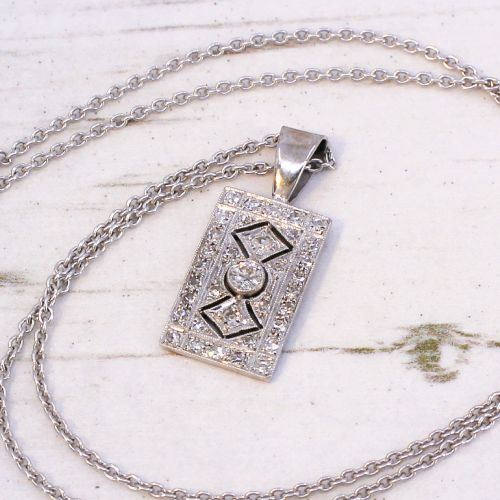
A vintage geometric necklace draws on the linear forms of the Art Deco, Edwardian, and Mid-Century Modern periods to create structured adornment. The pieces appearing here range from delicate pendants to fringe necklaces and multi-strand pearl assemblies with geometric clasps.
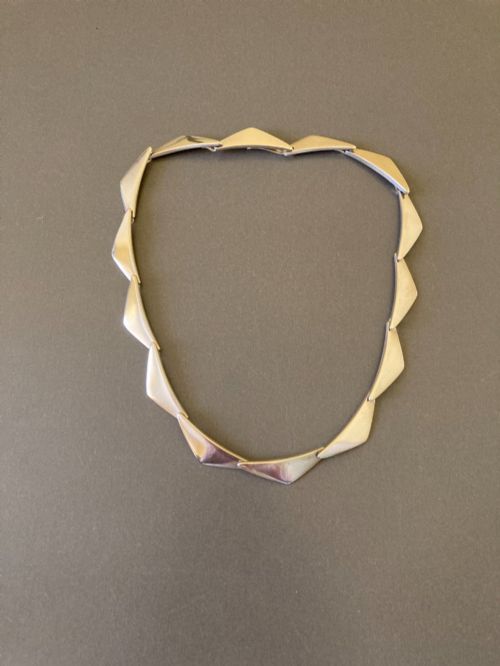
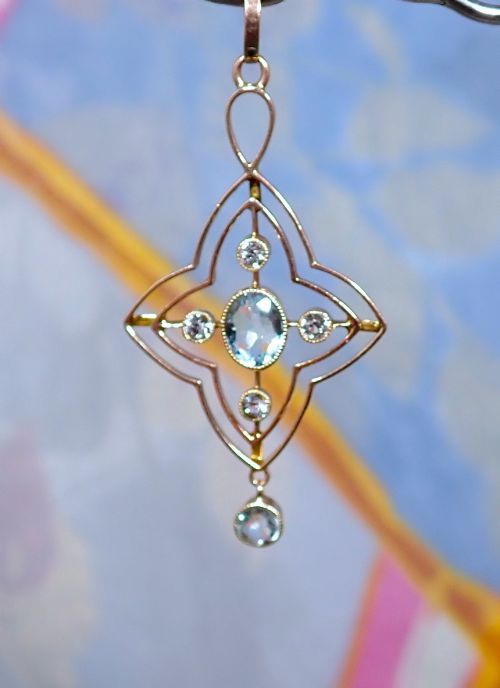
Art Deco examples dominate the selection, bringing together chrome, Bakelite, platinum, and diamonds in repeating symmetrical motifs. Alongside these sit silver Modernist designs and Edwardian drop pendants featuring sapphires, aquamarines, and white sapphires.
Buyers encounter everything from green glass and chrome compositions to substantial platinum and diamond creations. Each item reflects the architectural interests of its decade, translating industrial shapes into wearable ornaments.
How they were made
Metals such as platinum, silver, 18ct white gold, and chrome provide the structural framework for these pieces. Workshops shaped these materials into rigid mounts, geometric links, and flexible fringe drops.
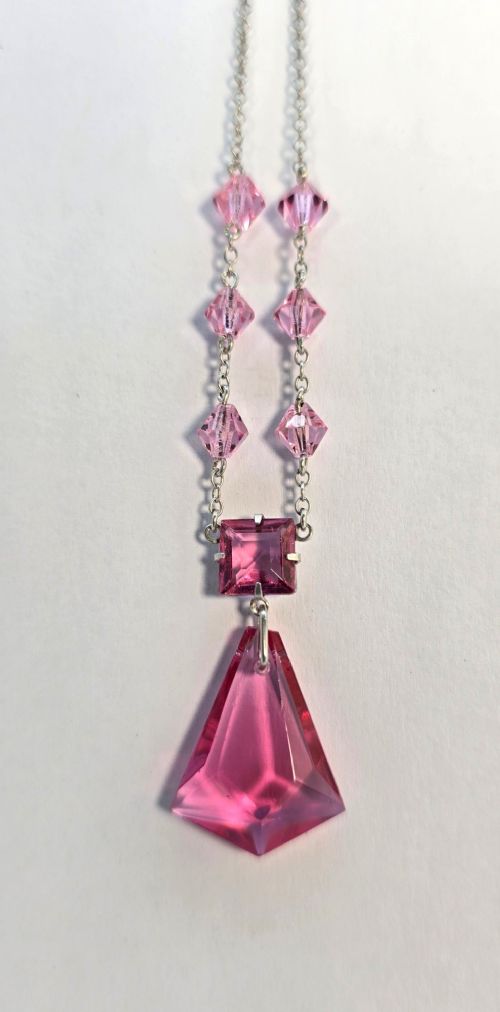
Gemstones including diamonds, pink hand-cut crystal, carnelian, rock crystal, onyx, and basaltic sapphire are precision-cut into steps, baguettes, and circles. Plastics like Bakelite and Galalith introduce bold colour blocks alongside metalwork.
Manufacturing methods combine traditional hand-setting of stones with industrial metal fabrication. This union of fine jewellery techniques and modern materials defines the construction of the era.
Early plastics like Bakelite and Galalith brought vibrant geometry to milk-derived jewellery long before modern synthetics arrived.
What varies in quality
The precision of the metalwork and the integration of the stones dictate the standard of execution. Superior examples display exact symmetry, secure stone settings, and balanced weight distribution across the necklace or pendant.
Material selection divides the range from mass-produced chrome and plastic items to precious platinum and high-carat diamond configurations. The complexity of the geometric arrangement and the quality of the cut stones elevate individual pieces.
Georg Jensen·Jakob Bengel
The Vintage Geometric Necklace Glossary
- Art Deco
- A design style from the 1920s and 1930s characterised by symmetry, clean lines, and geometric shapes. It moves away from organic curves toward industrial abstraction.
- Bakelite
- An early synthetic phenol formaldehyde resin utilised for colourful geometric elements in 1930s jewellery. It holds vivid hues and forms hard, durable components.
- Fringe necklace
- A necklace featuring hanging drops or tassels suspended along the lower edge of the chain. This layout creates movement while following a strict geometric drop pattern.
- Galalith
- A semi-synthetic plastic made from milk casein, popular in modernist jewellery during the early decades of the twentieth century. It takes polish well and mimics natural materials.
- Negligee pendant
- A pendant style featuring two drops suspended from unequal lengths, often linked to Edwardian and Art Deco aesthetics. The asymmetrical drop lengths add visual interest to an otherwise geometric layout.
Vintage Geometric Necklace: Frequently Asked Questions
What periods do these necklaces come from?
The pieces span the Victorian, Edwardian, and twentieth century, with a strong concentration from the 1920s and 1930s.
Later items also draw on Mid-Century Modernist design principles from the 1960s.
How do I wear a fringe necklace?
A fringe necklace sits high on the collarbone to let the vertical drops fall naturally against the skin.
These statement pieces pair best with simple necklines that do not compete with the geometric pattern.
What materials are common in Bakelite pieces?
Bakelite ornaments typically combine moulded synthetic resin sections with chrome chains or metal clasps.
This pairing of industrial metal and colourful plastic defines accessible modernist design from the interwar years.
Are platinum and white gold used together?
Platinum serves as the primary metal for high-end diamond pieces from the Art Deco era due to its strength and bright finish.
White gold and silver appear alongside platinum across various price points and manufacturing dates.