

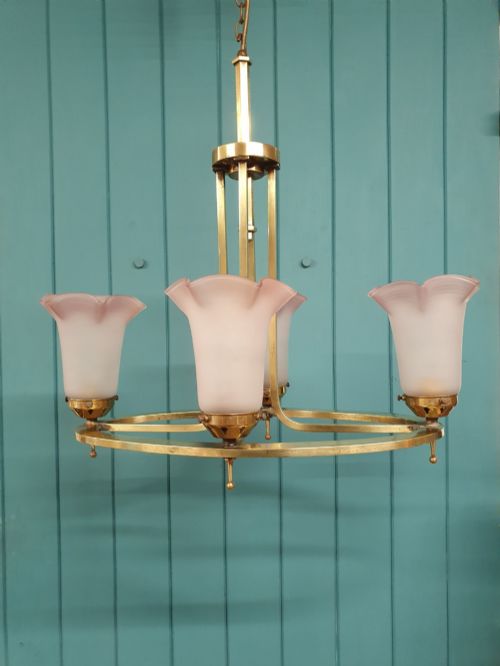


Art Deco Frosted Pendant Light
These art deco frosted pendant light fixtures bring geometric form and soft illumination to a room, offering the character collectors seek.
Art Deco Frosted Pendant Light
An art deco frosted pendant light hangs from the ceiling to illuminate a space through diffusion, relying on moulded or etched surfaces to soften the glare of the bulb. The selection spans the nineteen-twenties and nineteen-thirties, alongside Edwardian and nineteenth-century pieces that share similar hanging forms.
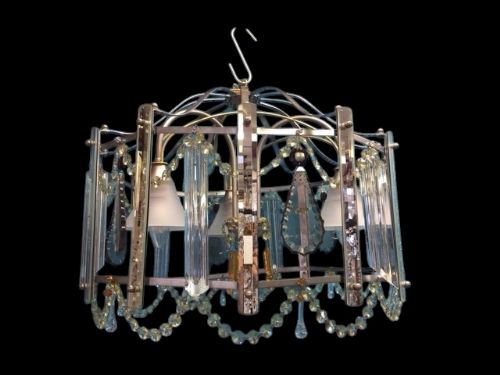
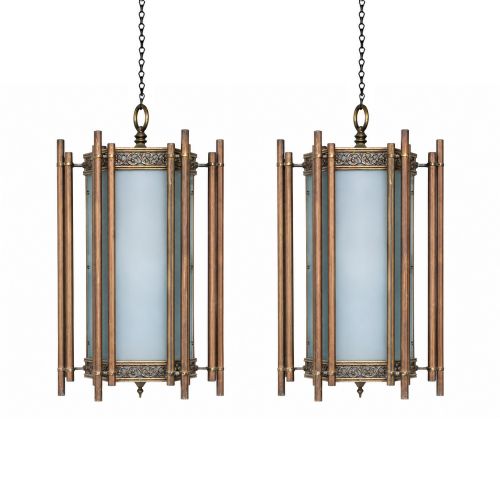
Buyers encounter various configurations here, from single slip-shade bowls and clam shell designs to large brass and bronze chandeliers. Pendants take the form of globes, lanterns, and plafonniers, sometimes paired with cut glass or opalescent elements.
How they were made
Makers shaped the hanging bodies using frosted, opalescent, and pink or green tinted glass, often moulding the material into geometric clamshells, slip shades, or heavy domes. Metalwork frames utilise brass, chrome, copper, bronze, and wrought iron to support the glass components securely.
Techniques combined foundry casting for the metal frames with press-moulding or acid-etching for the glass shades. Pieces often incorporate chain suspensions or rigid ceiling rods to anchor the hanging weight.
Some shades mimic the ribbed interior of a clam shell, proving that marine life inspired the geometry of the machine age.
What varies in quality
Quality rests in the weight and purity of the glass, where deeply moulded patterns and even translucency distinguish finer examples from standard production. Heavier gauge metalwork on frames and galleries indicates superior manufacture.
The sophistication of the design dictates the tier of the piece, with works attributed to named makers or French foundries exhibiting more intricate structural casting and finer surface detail in the metal.
Émile-Jacques Ruhlmann·Jean Gauthier
The Art Deco Frosted Pendant Light Glossary
- Plafonnier
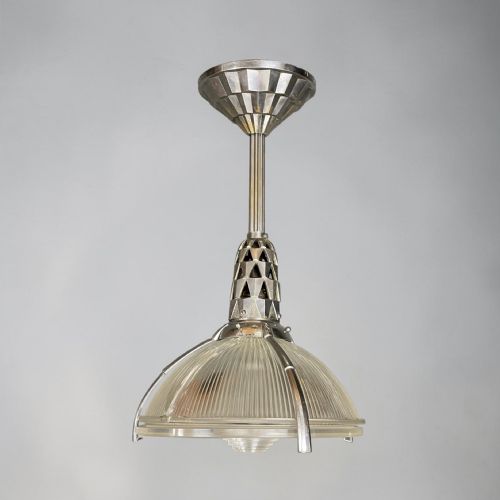
- A bowl-shaped ceiling light that fits close to the ceiling or hangs on a short drop, popular during the interwar period. These fixtures direct light upwards and outwards into the room.
- Slip Shade
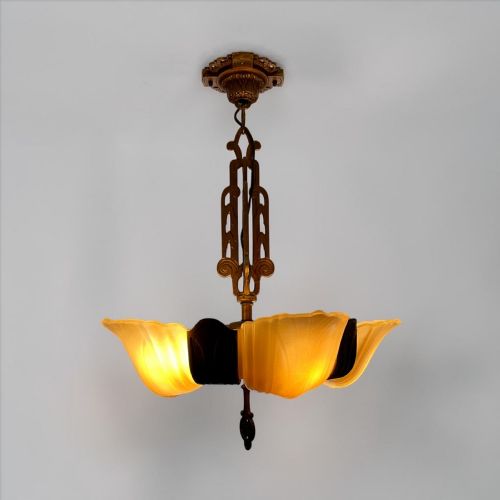
- A moulded glass panel that slides into a metal frame on a sconce or chandelier. Multiple slip shades often fit together around a central fixture.
- Opalescent Glass
- Glass containing minerals that create a milky, pearlescent appearance with shifting tones of blue or orange when lit. This material diffuses harsh light effectively.
- Chandelier
- A branched branching ceiling light holding multiple bulbs. These fixtures distribute light across larger spaces.
Art Deco Frosted Pendant Light: Frequently Asked Questions
How do I hang an art deco frosted pendant light?
These fixtures require secure attachment to ceiling joists using appropriate hooks or mounting brackets linked to the suspension chain or rod.
Electrical wiring must connect safely to the mains supply, often necessitating professional installation due to the weight of the metal and glass components.
Are these lights suitable for low ceilings?
Plafonniers and close-hanging pendant designs fit rooms with restricted vertical clearance by sitting relatively high against the ceiling.
Longer chain suspensions and multi-light chandeliers suit rooms with high ceilings where the drop balances the proportions of the space.
What bulb type should I use?
Low-heat LED bulbs preserve vintage glass from excessive thermal stress while providing adequate illumination through frosted shades.
Warm white output replicates the historic ambiance intended by the original manufacturers.
How do I clean frosted glass shades?
Gentle washing in warm soapy water removes dust and grime from textured or etched surfaces without harming the finish.
Avoid abrasive cloths or harsh chemicals that can scratch or dull the delicate frosted texture.