


Art Deco Fitted Wardrobe
An art deco fitted wardrobe brings architectural geometry and striking wood grain into a bedroom while offering sophisticated storage.
Art Deco Fitted Wardrobe
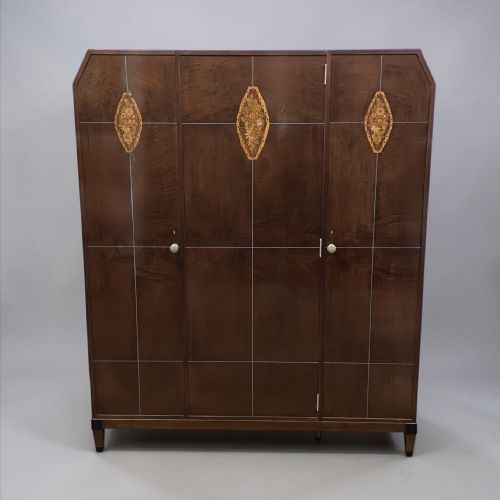
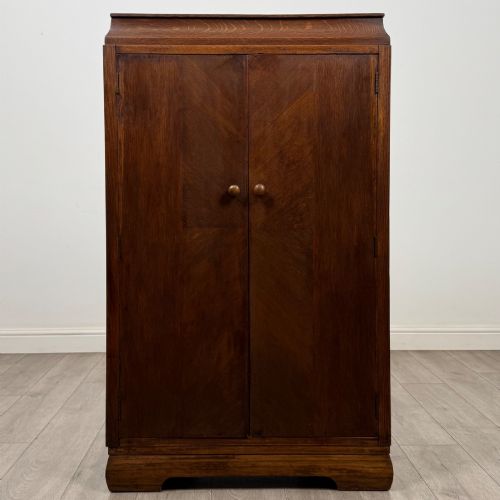
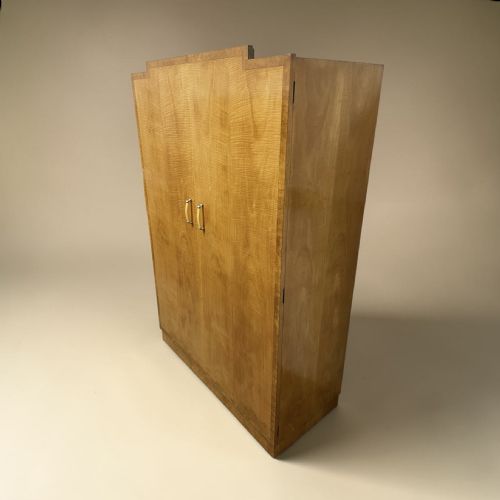
When you search for an art deco fitted wardrobe, you encounter substantial storage pieces designed to maximise internal capacity while presenting a unified external facade. The examples appearing on this page span the 1920s, 1930s, and 1940s, capturing the transition from early twentieth-century proportions to streamlined interwar modernism.
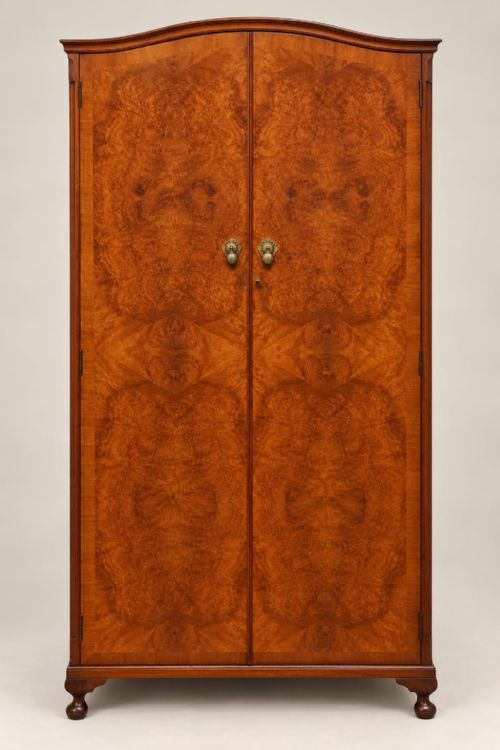
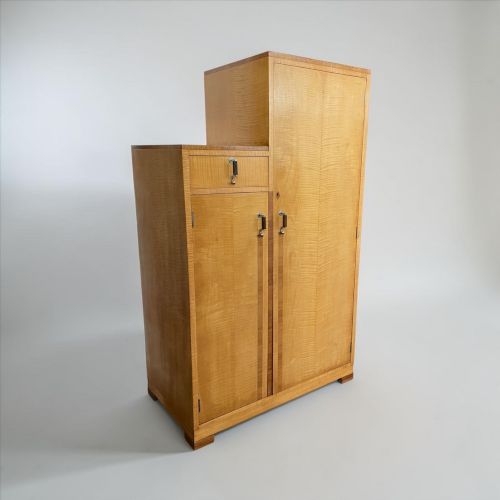
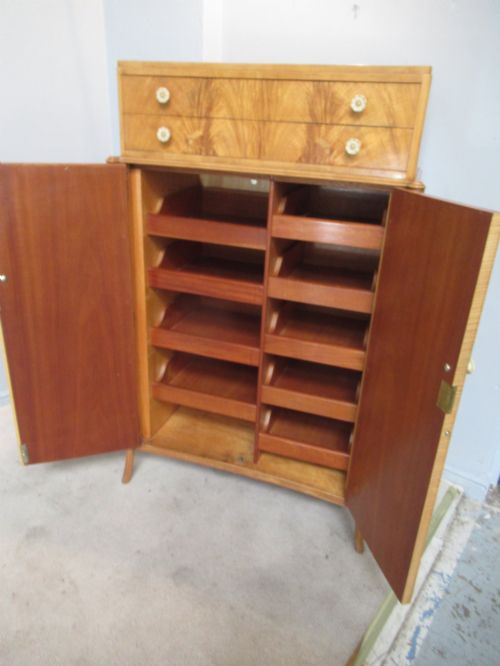
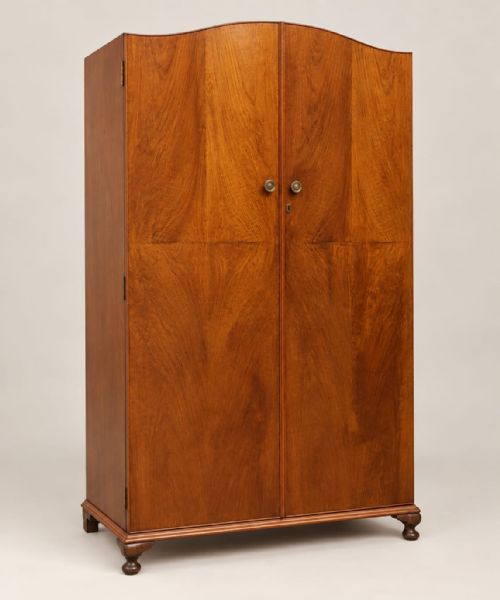
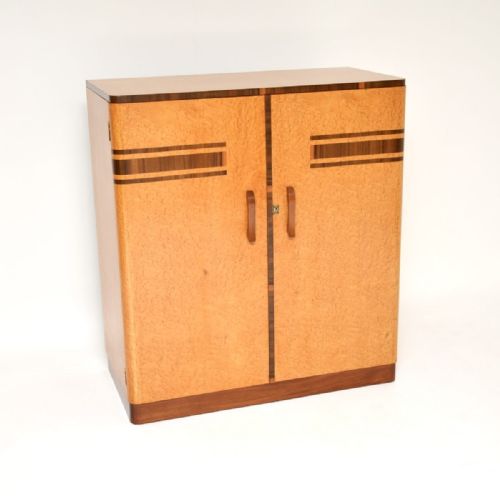
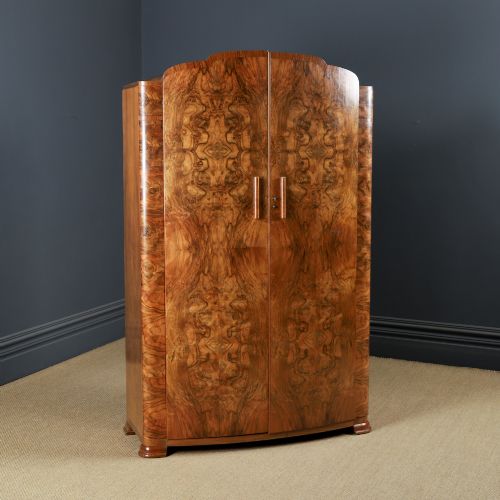
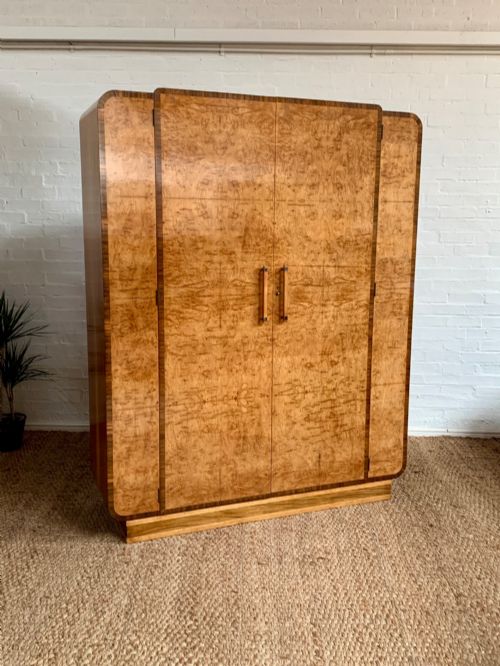
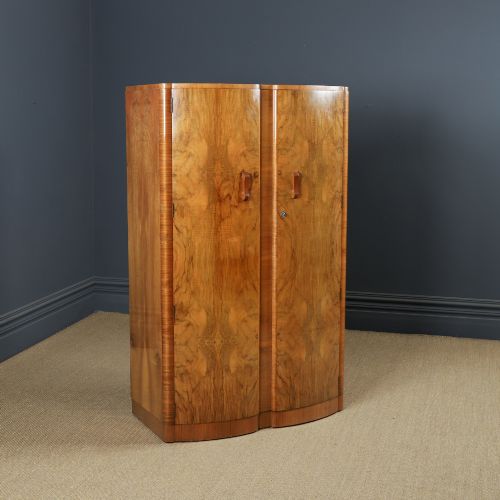
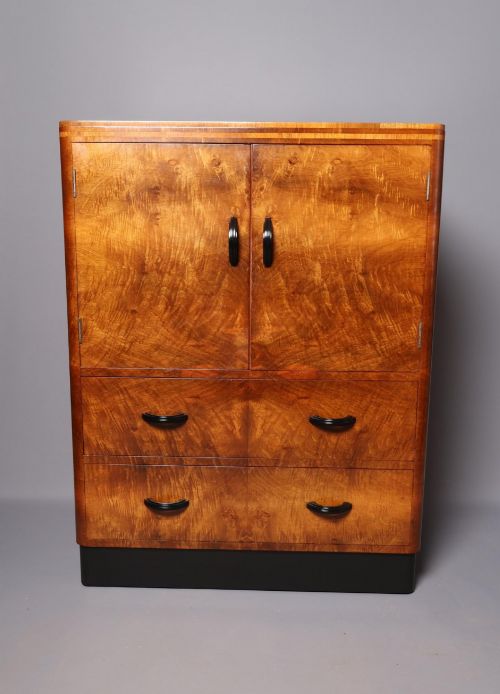
You are most likely to meet burr walnut and plain walnut finishes, often paired with maple interiors or contrasting metal and brass handles. The forms range from double and triple wardrobes to compactums and tallboys, many equipped with dedicated compartments for gentlemen's attire.
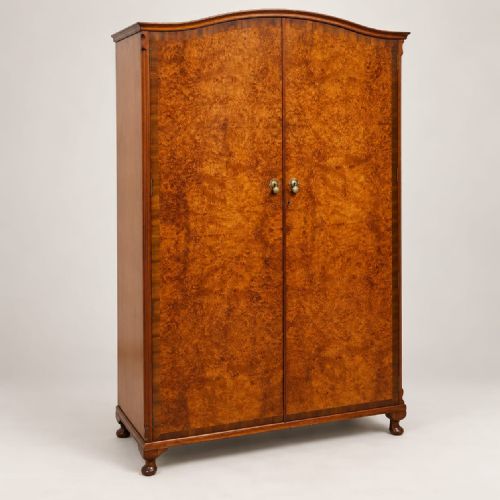
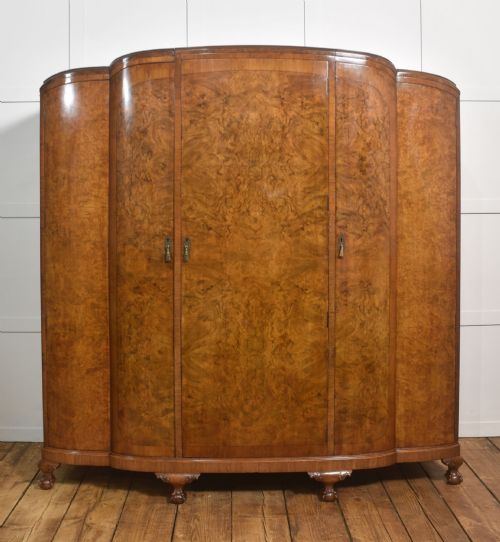
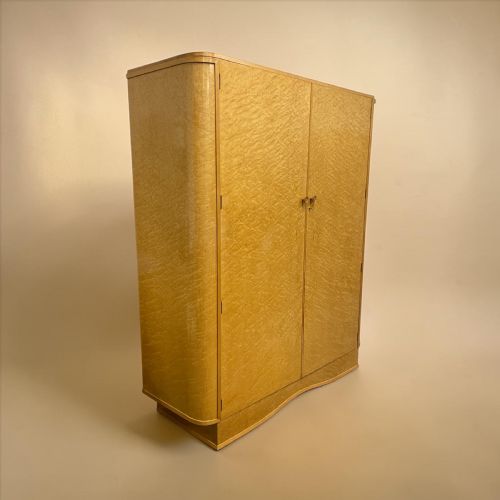
The style draws on traditional cabinet making adapted for modern domestic efficiency, maintaining fitted internal arrangements behind symmetrical doors. Bow front designs and breakfront configurations appear frequently alongside clean-lined geometric carcasses.
Materials and construction
Cabinet makers utilised solid timbers alongside decorative veneers, applying burr walnut and birds eye maple to primary surfaces in symmetrical patterns. This technique allowed workshops to display rich, figured wood grain across large door panels while maintaining structural stability underneath.
Hardware played an essential role in the construction, incorporating cast brass and moulded bakelite for handles, hinges, and internal fittings. Interiors frequently featured integrated shelving, hanging rails, and tie racks constructed from secondary woods like maple.
Joinery methods combined traditional carcase construction with fitted internal components designed to organise clothing systematically. The exterior facades relied on clean planes, curved bow fronts, and stepped cornices typical of the period.
Art Deco Fitted Wardrobe Retail Price Guide 2026
Typical asking prices for art deco fitted wardrobe among the pieces listed under this phrase on Sellingantiques today, from the lower quarter to the upper quarter. They describe what is for sale here now, not the wider market.
Gentlemen of the 1930s required dedicated compartments for stiff collars and tie presses within their compactums.
Factors determining quality
The division between standard and superior pieces rests on the choice of veneer and the symmetry of its book-matching across the doors. Master craftsmen selected highly figured burr walnut and arranged the grain patterns to create mirrored reflections across the facade.
Internal organisation and the retention of original fittings significantly influence the standing of a piece. Wardrobes retaining complete maple-lined compartments, brass hangers, and original bakelite details demonstrate superior original specification.
Proportion and architectural presence separate routine production from exceptional design. Pieces exhibiting well-resolved bow front contours or breakfront massing show greater refinement in planning and execution.
Heals of London·Harry and Lou Epstein·Hartman Luggage Co.
The Art Deco Fitted Wardrobe Glossary
- Burr walnut
- A veneer sliced from walnut tree growths, producing swirling, intricate grain patterns highly prized for cabinet fronts. It forms the primary visual signature of many pieces on this page.
- Compactum
- A multi-functional wardrobe combining hanging space with internal drawers, shelves, and compartments. This form provided comprehensive clothes storage within a single footprint.
- Breakfront
- A cabinet design where the central section projects forward from the flanking wings. This architectural arrangement creates depth and shadow across the wardrobe facade.
- Bow front
- A convex, outwardly curved front elevation that softens the linear geometry of a piece. It requires specialist bending techniques during construction.
- Bakelite
- An early synthetic thermosetting plastic utilised for handles, escutcheons, and decorative details. Its dark, lustrous finish contrasts sharply with lighter woods like maple.
Art Deco Fitted Wardrobe: Frequently Asked Questions
What is an art deco fitted wardrobe?
An art deco fitted wardrobe is a large storage piece from the interwar period featuring organised internal compartments behind symmetrical, veneered doors.
These pieces combine decorative wood grains like burr walnut with geometric lines, offering integrated hanging space and shelving tailored for modern clothing storage.
How do I identify a 1930s wardrobe?
Nineteen-thirties wardrobes are characterised by streamlined geometric shapes, stepped cornices, and symmetrical veneer patterns without heavy carving.
They frequently utilise burr walnut or birds eye maple, complemented by contrasting brass or bakelite hardware rather than traditional revival ornamentation.
What is the difference between a wardrobe and a compactum?
A standard wardrobe focuses primarily on vertical hanging space enclosed by two or three full-length doors.
A compactum integrates hanging sections alongside banks of internal drawers, pull-out trays, and smaller compartments designed for folded garments and accessories.
How do I style a burr walnut wardrobe?
A burr walnut wardrobe works best as a focal point in a bedroom with neutral walls and minimal surrounding furniture.
Allowing natural light to fall across the figured veneer highlights the swirling grain patterns and complements both contemporary and period interiors.