


Art Deco Figural Sculpture
Art deco figural sculpture captures the dynamic energy and sleek stylisation of the interwar years, offering a striking focal point for any room.
Art Deco Figural Sculpture
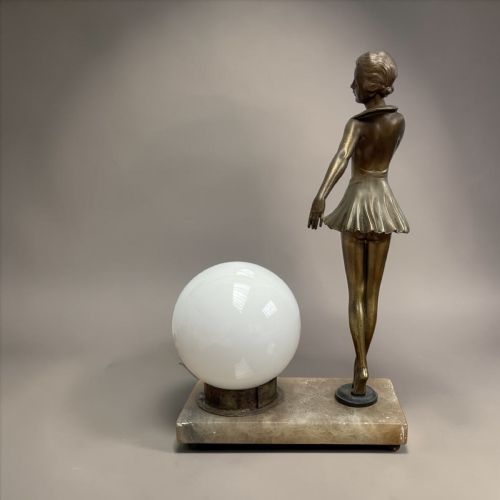
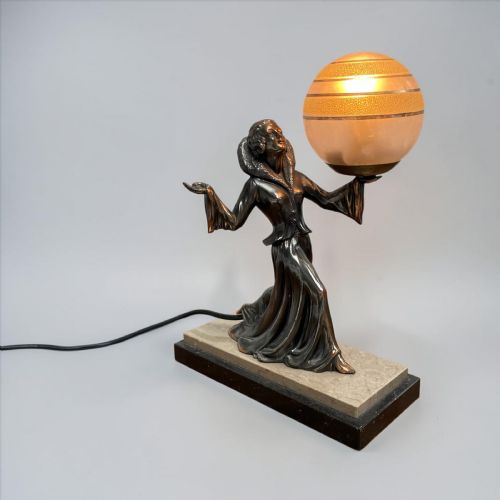
Art deco figural sculpture encompasses statues, lamps, bookends and decorative objects produced predominantly during the 1920s and 1930s. These pieces portray human figures, dancers, children and animals in stylised forms that reflect the modern aesthetic of the period.
The most common versions met on this page include bronze and spelter figures mounted on marble or onyx bases, alongside functional table lamps and night lights. Egyptian revival themes and theatrical dancers appear frequently among the listings.
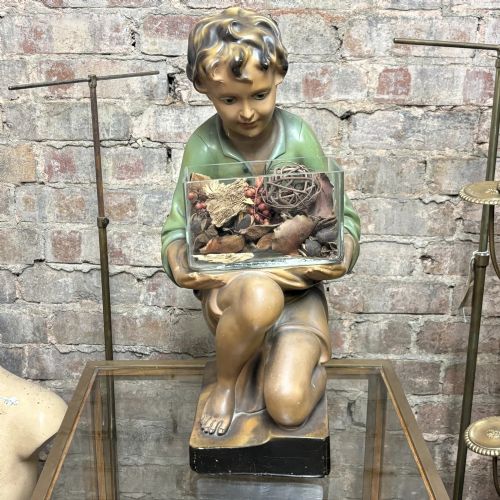
Originating largely from French and European workshops, these sculptures range from grand gallery bronzes to modest spelter figures and hand-painted terracotta pieces. Each item embodies the characteristic geometry and streamlined posture associated with the style.
How they were made
Sculptors utilised traditional metalworking techniques such as the lost-wax casting method for bronze figures, while more commercial pieces relied on spelter cast in moulds. Cold painting and patination added surface colour and detail to the metallic bodies.
Natural stones including marble, onyx and alabaster formed heavy, stable bases for many figures and lamps. Artisans combined these materials with glass components and hand-painted bisque ceramics to achieve contrasting textures and visual depth.
Sculptures of sleepy babies and loyal dogs remind us that interwar households loved their pets just as much as we do.
What varies in quality
The choice of mounting materials also dictates quality, with genuine marble and onyx bases offering superior weight and polish compared to substitute stones. Signed works by recognised sculptors carry distinct artistic merit that elevates them above anonymous factory output.
Alexandre Kelety·Bruno Zach·Marion Willis Stanfield·Herzig
The Art Deco Figural Sculpture Glossary
- Spelter
- A zinc alloy commonly used as a less expensive alternative to bronze during the interwar period. It accepts patination well but requires gentle handling due to its brittle nature.
- Cold painted
- A method where paint is applied to a metal sculpture after casting without being fired in a kiln. This technique allowed for vibrant polychrome finishes on bronze and spelter figures.
- Patinated metal
- Metal treated with chemicals, heat or acids to produce a specific surface colour or aged appearance. It protects the underlying material while enhancing the sculptural details.
- Egyptian revival
- A decorative style inspired by archaeological discoveries that incorporates pharaonic motifs and imagery into art deco design. This aesthetic appears notably in candelabras and statues.
- Bisque
- Unglazed ceramic porcelain that results in a matte, tactile surface texture resembling marble. It was frequently used for delicate figural statuettes and decorative groups.
Art Deco Figural Sculpture: Frequently Asked Questions
What materials are used?
Pieces incorporate a variety of mediums including bronze, spelter, marble, onyx, alabaster, glass, terracotta and bisque porcelain. Metals frequently feature patinated or cold-painted finishes to accentuate the design.
Heavier elements like marble and onyx serve primarily as supportive bases for the figures and lamps.
How do I identify the period?
The objects stem largely from the 1920s and 1930s, defined by distinct geometric styling, streamlined human forms and characteristic costuming. Signatures from period artists often appear directly on the base or figure.
Materials such as spelter and the presence of Egyptian revival motifs also point firmly to this interwar timeframe.
Were these items purely decorative?
Many sculptures served a dual purpose as functional household objects rather than static display pieces. Creators integrated figures into table lamps, night lights, bookends, candelabras and table lighters.
This blending of art and utility was a hallmark of design during the period.
Where were they made?
A significant portion of these sculptures originated in France and across Europe during the height of the movement. European foundries and independent artists produced both limited edition bronzes and broader commercial editions.
Italian workshops also contributed notable alabaster and carved stone figures.