








Art Deco Figural Art
Art deco figural art captures the dynamic spirit of the early twentieth century through human and animal forms designed for lighting and display.
Art Deco Figural Art
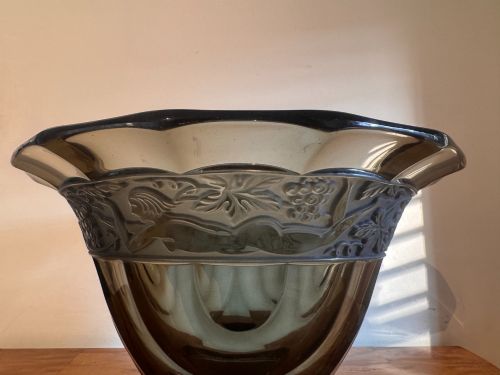
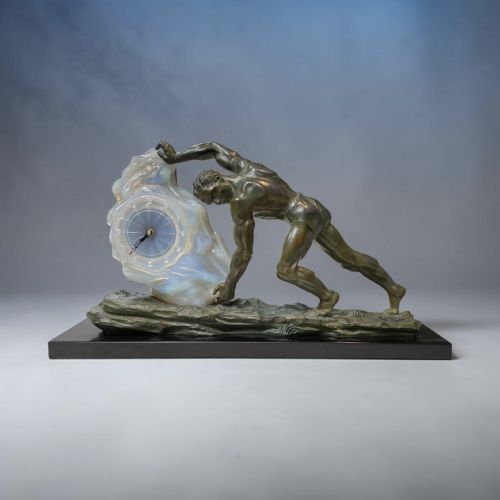
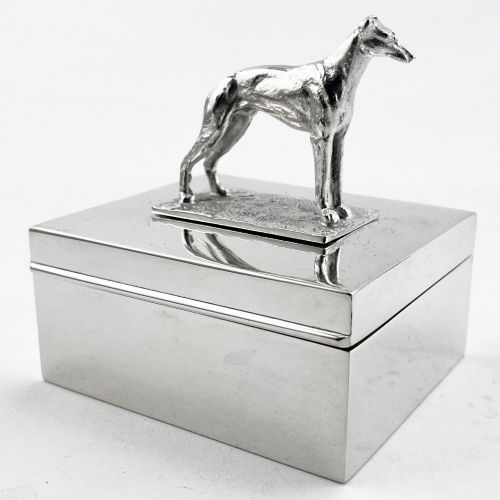
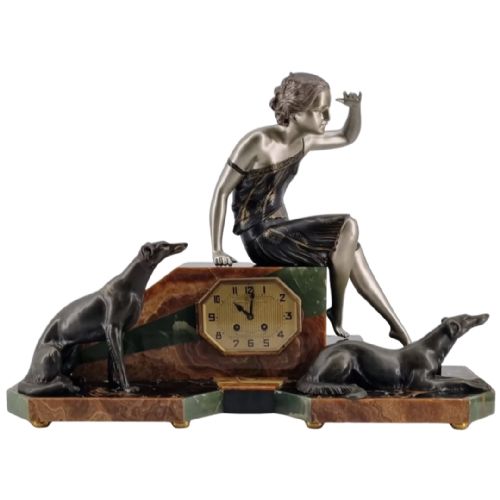
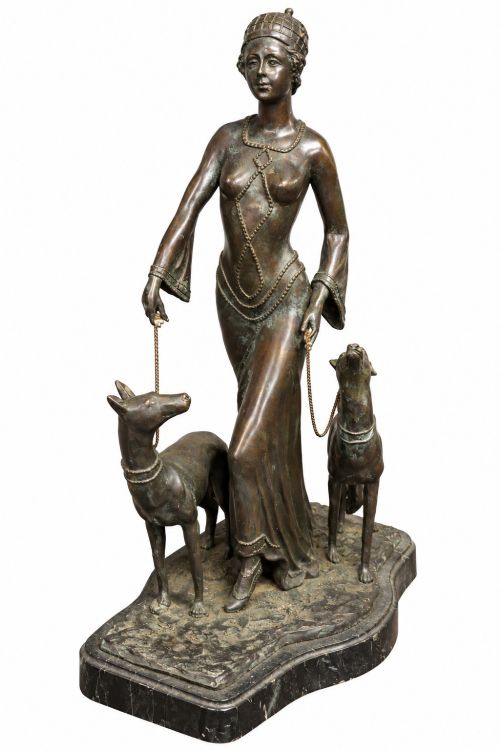
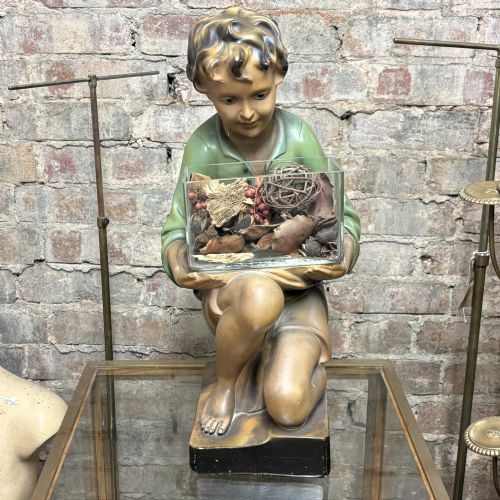
Art deco figural art encompasses sculptural works, lighting, and mantel clocks shaped around human figures and animals. These pieces reflect the distinctive aesthetic of the period, prioritising stylised lines and energetic movement over strict realism.
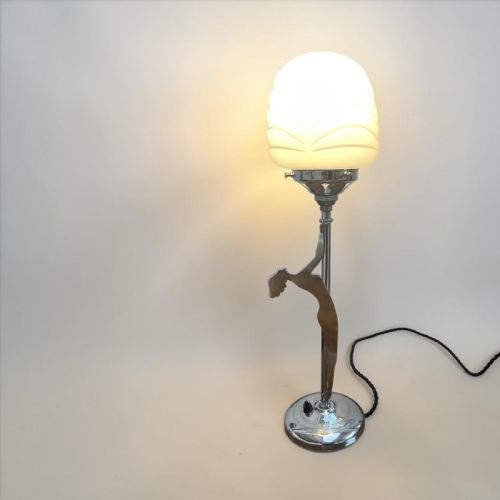
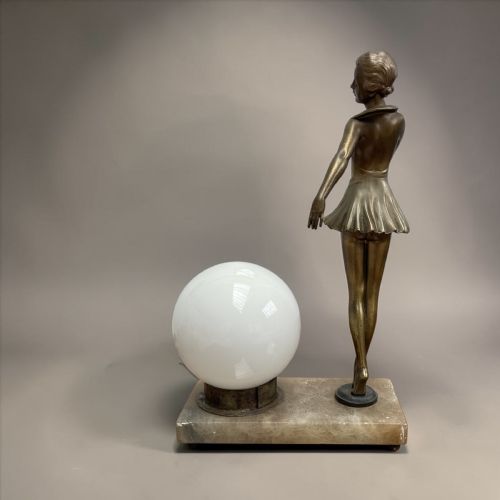
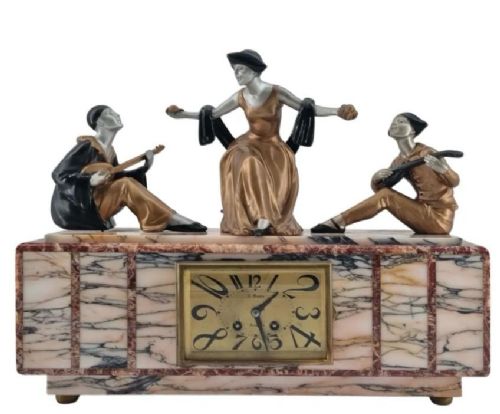
The most common examples on this page are table lamps and decorative statues featuring female dancers, pierrots, and domestic animals. These functional objects integrate figurative sculpture directly into domestic lighting and timepieces.
Objects originate primarily from the 1920s and 1930s, alongside select works drawing on earlier styles or extending into the 1940s. European makers dominate the selection, producing works designed for prominent display on mantelpieces, desks, and tables.
How they were made
Makers utilised a wide range of media, pairing cast metals such as bronze and spelter with bases of marble, onyx, and alabaster. Spelter often received a patinated finish to mimic heavier metals, while metals were sometimes silver-plated.
Sculptural components combine metal casting, glass moulding, and hand-carving of stone elements. Integrated lamps often incorporate glass shades, known as veilleuses, to diffuse light across the figurative bases.
Art Deco Figural Art Retail Price Guide 2026
Typical asking prices for art deco figural art among the pieces listed under this phrase on Sellingantiques today, from the lower quarter to the upper quarter. They describe what is for sale here now, not the wider market.
Listings feature items spanning the 1910s to the 1940s, with a strong concentration of pieces originating in the 1920s and 1930s.
What varies in quality
The distinction between tiers rests on the choice of foundational material, separating heavy cast bronze and hand-carved alabaster from lighter spelter and pressed glass. Foundational stability and the precision of the casting determine the visual weight of the sculpture.
Georges Gori·Uriano·Libochovice·Sega·Karl Ens·Anton Buschelberger·Alexandre Kelety·Marion Willis Stanfield·C Neuhaus
The Art Deco Figural Art Glossary
- Spelter
- A zinc alloy commonly utilised as a less expensive alternative to bronze for decorative figures. It accepts patination readily to resemble older metals.
- Onyx
- A banded variety of chalcedony stone frequently employed for heavy clock and lamp bases. It provides a polished, decorative foundation for metal sculptures.
- Veilleuse
- A small night lamp or decorative lamp designed to emit a soft, subdued glow. These pieces often incorporate figural ceramic or glass elements.
- Collotype
- A planographic printing process utilising gelatin, capable of producing detailed fine art reproductions. Prints using this method capture subtle tonal gradations.
- Alabaster
- A fine-grained, translucent stone used for carved figures and lamp bases. Its natural light transmission suits illuminated decorative displays.
Art Deco Figural Art: Frequently Asked Questions
What is art deco figural art?
Art deco figural art comprises decorative objects, lamps, and sculptures shaped around human or animal forms during the 1920s and 1930s. These pieces merge functional items like clocks and lamps with stylised figurative design.
Creators drew inspiration from dance, theatre, and nature, rendering subjects with geometric simplicity and sleek lines. The resulting works served as prominent decorative elements in contemporary interiors.
How were figural lamps used?
Figural lamps functioned as both domestic lighting and sculptural centrepieces on desks, tables, and sideboards. The figures frequently held torches, globes, or glass shades that cast a soft ambient glow.
Owners placed them in reception rooms and hallways to showcase modern taste and artistic lighting design. Their dual purpose made them central to period interior styling.
How do I identify materials?
Examining the weight, surface texture, and coldness to the touch helps distinguish between metals like bronze and spelter. Heavier stones such as marble and onyx contrast with softer alabaster through distinct grain patterns and opacity.
Glass elements often feature frosted or moulded finishes typical of twentieth-century production techniques. Inspecting bases and undersides reveals the primary construction components.