
Art Deco Drawers
These art deco drawers bring geometric lines and figured veneers into a room, offering practical storage with distinct period character.
Art Deco Drawers
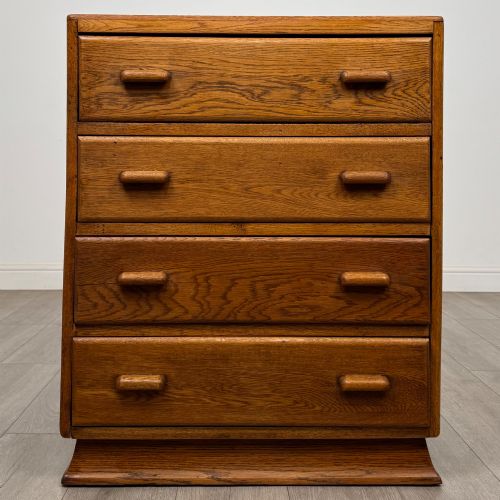
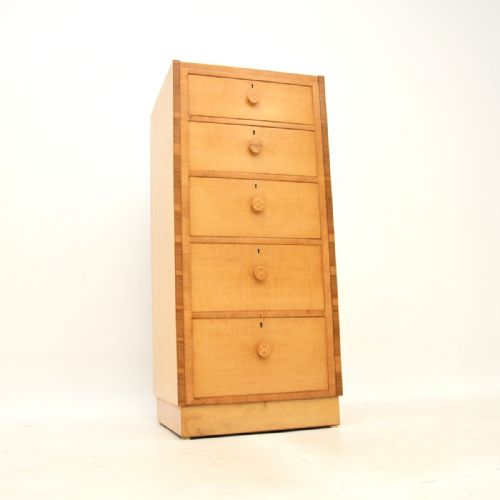
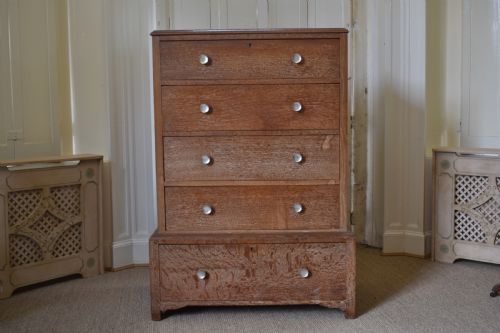
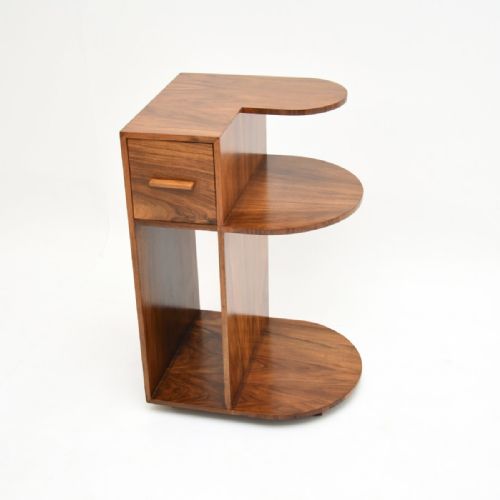
Art deco drawers span sturdy upright chests, compact bedside tables, and tallboys designed primarily during the 1920s and 1930s. Oak and walnut form the backbone of these pieces, alongside lighter timbers such as sycamore, maple, and birch.
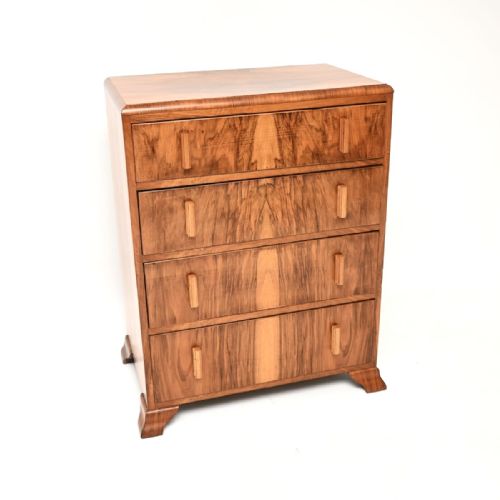
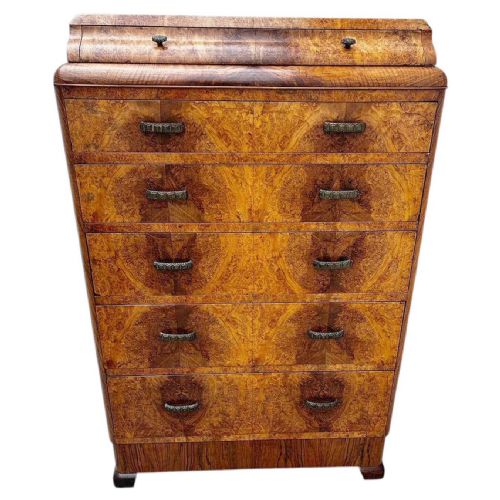
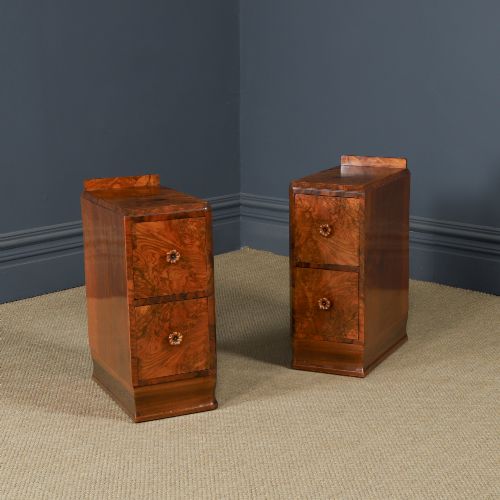
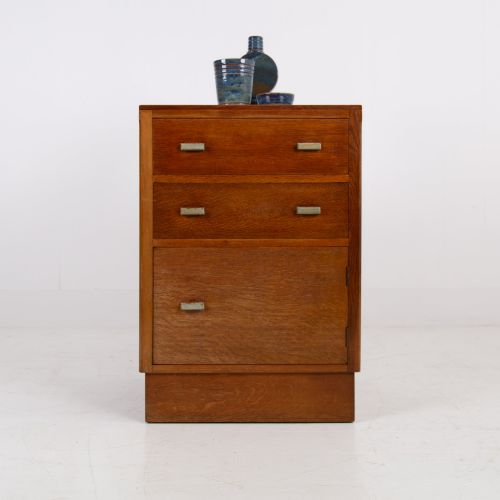
The chest of drawers remains the most common form met here, frequently appearing in figured or burr walnut with contrasting grain patterns. Tallboys and bedside cabinets offer taller proportions or paired bedside storage built to matching geometric templates.
Makers and workshops of the period also adapted the style into desks and console tables, maintaining the clean lines and drawer banks characteristic of the era. Pieces lean heavily towards modernist restraint or French decorative flourishes.
How they were made
Cabinetmakers applied decorative veneers like burr walnut, satinwood, and fruitwood over solid timber frames to create sweeping grain patterns across drawer fronts. Chrome and brass handles or trim provide metallic contrast against the polished wooden surfaces.
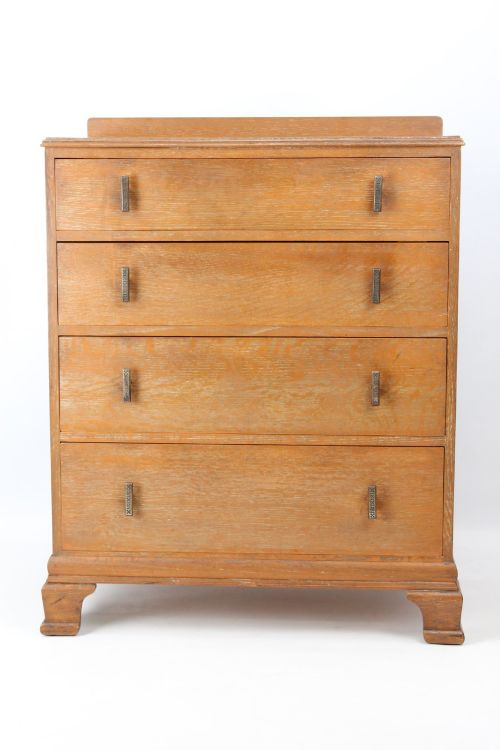
Construction methods combine traditional dovetail joinery within the drawer boxes with advanced veneering techniques that accentuate symmetry. Limed or bleached finishes appear on oak and walnut to lighten the overall tone of the furniture.
Listings feature oak, walnut, burr walnut, sycamore, satinwood, mahogany, birch, maple, and fruitwood across various drawer configurations.
What varies in quality
The choice and matching of veneer set the highest tiers apart from simpler utilitarian pieces, particularly where burr walnut or exotic woods are mirrored across multiple drawers. Grain continuity across the entire front of a chest indicates deliberate design and skilled execution.
Hardware integrity and drawer action determine daily utility, with well-fitted drawers gliding smoothly within solid oak or mahogany secondary frames. Maker attribution, through stamps or labels from established firms, separates standard production from superior workshop output.
Hille·Dudley & Co·Gomme·Frank Taylor & Co·Fortnum and Mason·Maurice Adams·Bath Cabinet Makers
The Art Deco Drawers Glossary
- Tallboy
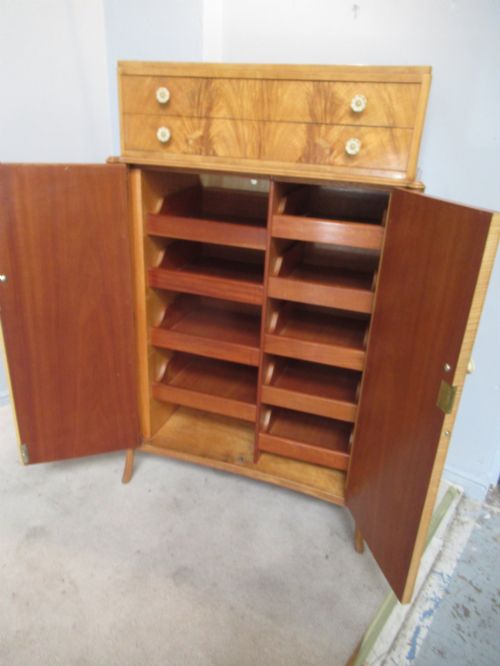
- A tall chest of drawers, often combining a cupboard section above standard drawer tiers to maximise vertical storage. These pieces were built to save floor space while providing significant capacity.
- Burr Walnut
- A timber harvested from walnut tree growths, producing intricate, swirling grain patterns highly prized for decorative veneer work. Cabinetmakers used it symmetrically across drawer fronts for visual impact.
- Palisander
- A dense, dark exotic hardwood utilised for rich colour and striking grain variation in modernist furniture. It lends an opulent finish to commodes and side tables.
- Haberdashery Counter
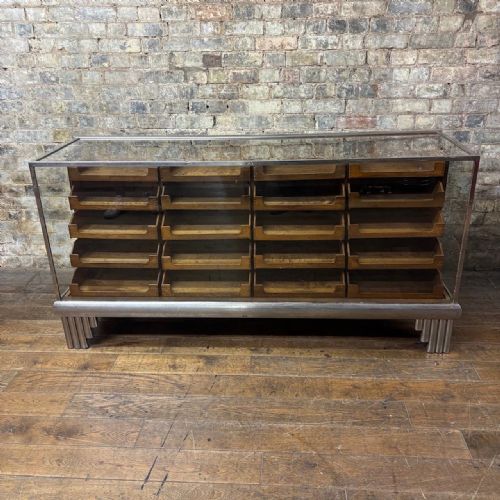
- A multi-drawer storage unit featuring glazed or open compartments originally used in retail settings for small dry goods. These industrial pieces translate well into domestic interiors for accessible storage.
- Commode
- A decorative low chest of drawers or cabinet originating from French furniture forms. In this period, they often feature unconventional proportions and parchment or metal accents.
Art Deco Drawers: Frequently Asked Questions
What is a tallboy?
A tallboy is an elevated chest of drawers that offers substantial vertical storage without taking up excess floor space. They frequently incorporate cupboard doors above the lower drawer tiers.
These pieces suit bedrooms where floor area is limited but storage requirements remain high.
How do I identify walnut veneers?
Walnut veneers display rich brown tones with complex grain patterns that repeat symmetrically when book-matched across drawer fronts. Burr walnut specifically shows dense, swirling clusters within the grain.
Close inspection of the edges reveals the thinness of the timber layer applied over the primary wood substructure.
Where should I place bedside cabinets?
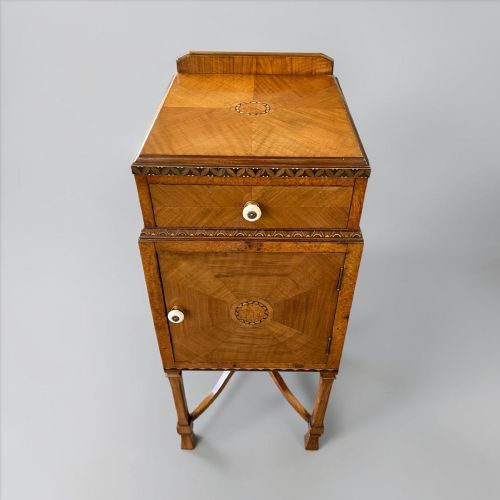
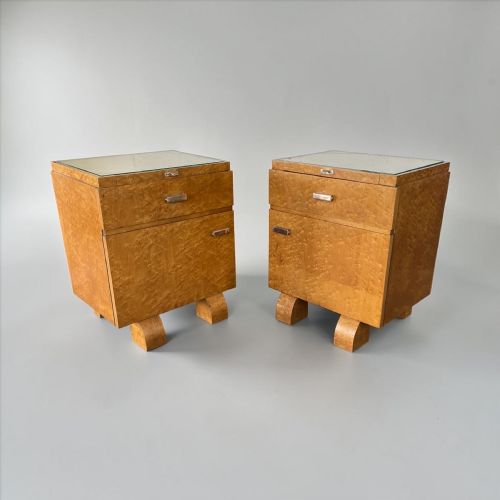
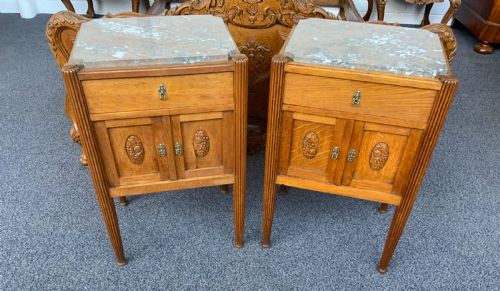
Bedside cabinets fit neatly beside standard bed frames, offering enclosed storage for small nighttime items on top of floor-standing stability. Pairs allow for symmetrical placement on either side of a bed.
Their compact footprints also suit smaller guest rooms or narrow alcoves.
Are these pieces French or English?
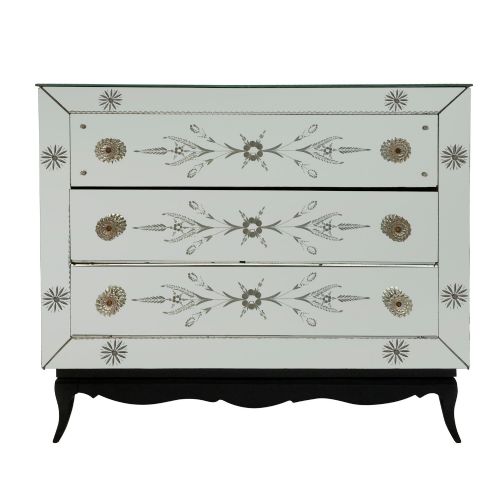
Origin markings and timber choices often distinguish French pieces, which frequently utilise fruitwood, palisander, or mirrored glass alongside bolder decorative forms. English examples lean more toward figured walnut, oak, and restrained modernist lines.
Both national traditions share the geometric emphasis characteristic of the era.