



Art Deco Cocktail Mixer
An art deco cocktail mixer brings geometric elegance and period engineering straight to the home bar.
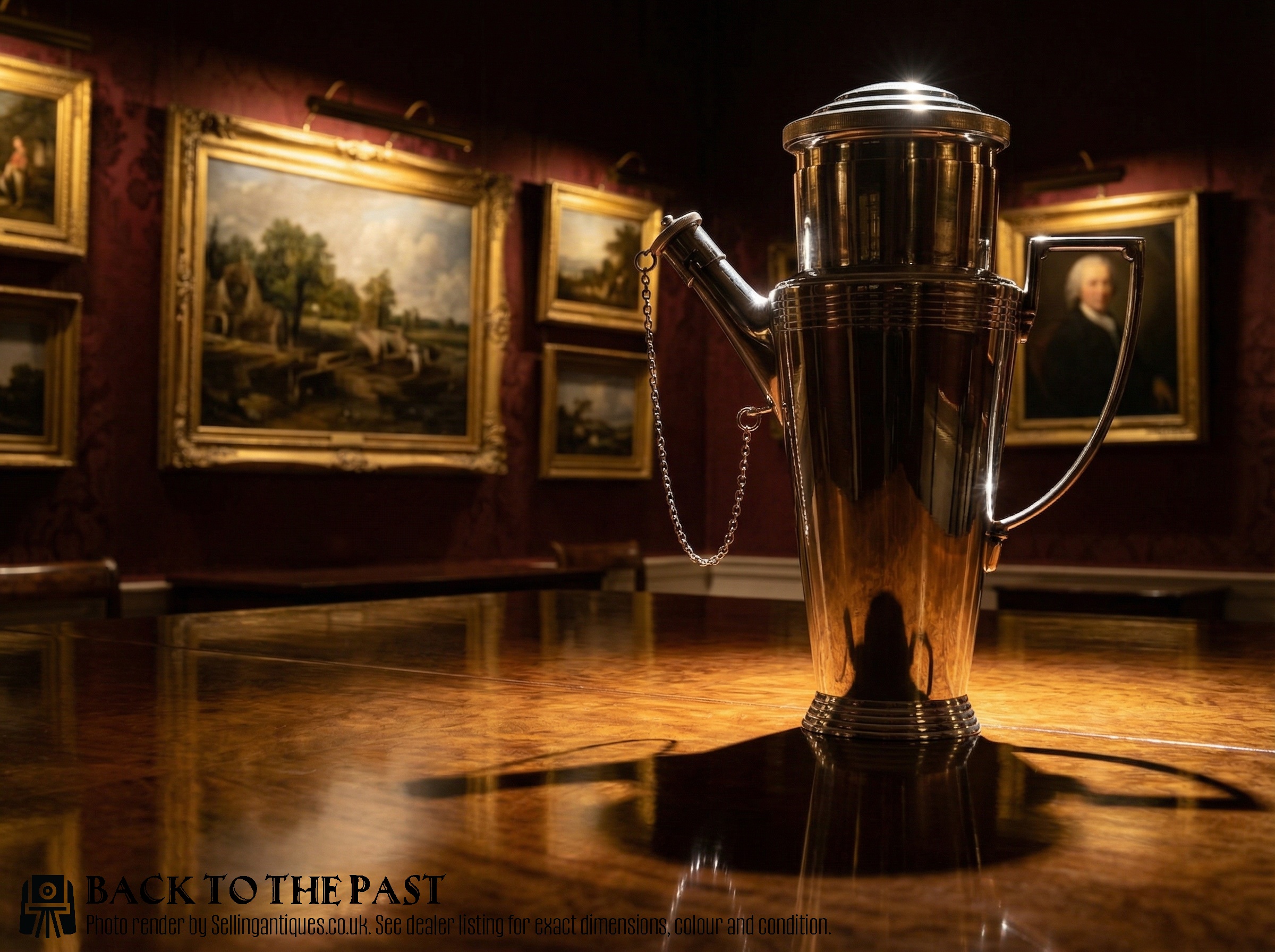
Art Deco Cocktail Mixer
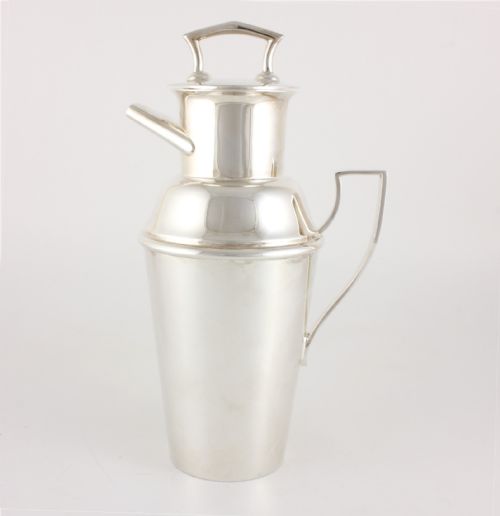
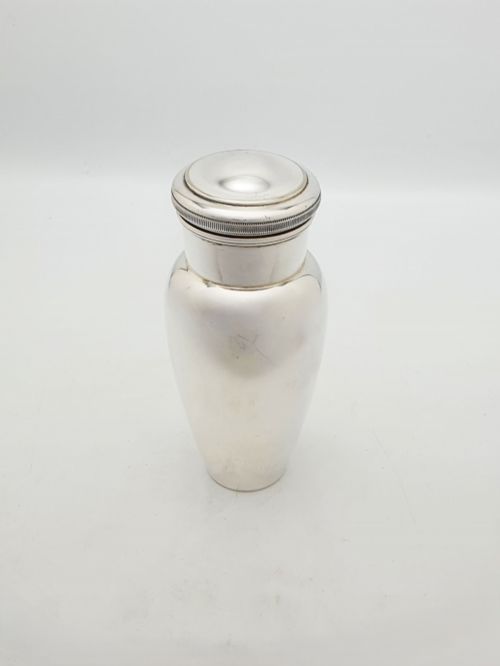
An art deco cocktail mixer stands as a central pillar of period barware, combining utility with striking modernist lines. These pieces primarily date from the nineteen twenties, thirties, and forties, reflecting the glamour of interwar entertaining.
Most examples encountered here take the form of silver plated cocktail shakers or specialised barware vessels. Makers often utilised inventive mechanisms, producing designs with integral lemon squeezers, ice breakers, or rotating recipe bands.
Originating from English, French, German, and Italian workshops, these vessels range from simple cylindrical shakers to novelty forms like milk churns. The selection captures the full stylistic breadth of the era, from restrained English plating to Italian modernist bullet shapes.
Materials and construction
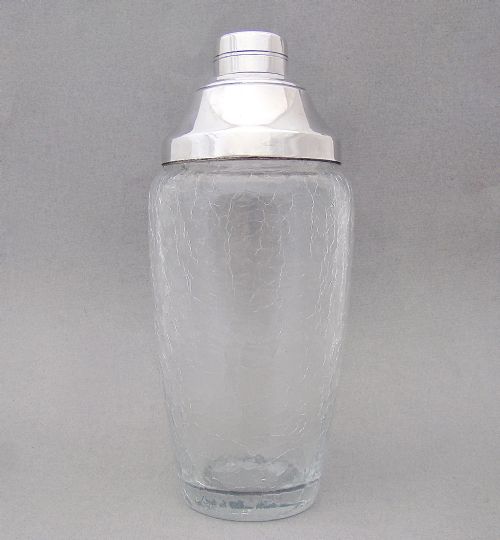
Silver plate and electroplated nickel silver form the primary metal bodies for these shakers, supplemented by occasional solid silver and brass components. Glass bodies appear frequently, often paired with metal mounts, coloured enamel, or crackle finishes.
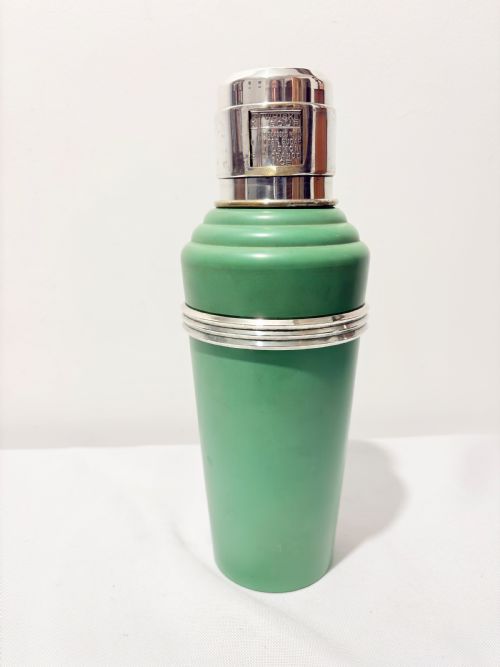
Interiors and mechanisms frequently incorporate cork seals and green Bakelite details for insulation and grip. Engine turning and engraved recipe details demonstrate the precision metalworking techniques common to the period.
Some shakers disguise their true purpose behind novelty milk churn shapes or built-in citrus squeezers.
Assessing craftsmanship and design
The sophistication of the internal mechanism dictates the standing of a piece, separating standard shakers from elaborate rotary recipe designs. Integrated hardware like lemon squeezers and ice breakers demand complex engineering that elevates the construction.
The weight of the metal and the crispness of engine-turned decoration reveal the standard of the silversmithing. Furthermore, recognised maker marks from established firms provide a clear distinction in provenance and overall execution.
Asprey & Co·Keith Murray·Hukin & Heath·J. B. Chatterley & Sons·James Dixon & Sons·William Suckling·C S Green & Co.·Adie Brothers·Gaskell & Chambers·Carl Deffner·Elkington & Co
The Art Deco Cocktail Mixer Glossary
- Electroplated Nickel Silver
- A base metal alloy coated with a layer of silver, commonly abbreviated as EPNS on period barware. This technique provided the appearance of solid silver at a commercial scale.
- Engine Turning
- A mechanical decoration method that cuts intricate geometric patterns into metal surfaces. It appears frequently on the bodies of interwar barware to catch the light.
- Bakelite
- An early form of synthetic plastic utilised for heat-resistant handles and decorative finials. It often appears in green hues on period mixing vessels.
- Swizzle Stick
- A device used within a barware set to agitate and mix drinks. These implements could be operated via manual pumps or rotation.
Art Deco Cocktail Mixer: Frequently Asked Questions
How do I use a vintage recipe shaker?
Rotating bands or engraved panels display drink formulas directly on the metal body of the vessel. Users align the indicator to view ingredient proportions before pouring.
Modern users often treat these marked vessels as display pieces rather than functional kitchenware to preserve the historic plating and internal cork seals.
What materials make up these shakers?
Silver plate over nickel silver forms the predominant body material across English and continental workshops. Glass, brass, and solid silver also appear alongside Bakelite and cork components.
Manufacturers selected these durable metals to withstand frequent use while maintaining a polished surface for cocktail parties.
How do I identify a period piece?
Examine the base for maker marks, registry numbers, and metal composition stamps such as EPNS. Stylistic indicators like geometric engine turning and modernist silhouettes point directly to the interwar decades.
Comparing the manufacturing technique against known silversmith output helps confirm the specific era of production.
Where were these cocktail mixers manufactured?
Production centres spanned across England, France, Germany, and Italy during the twentieth century. Prominent silversmiths and specialised metalwork factories drove these regional designs.
Italian examples frequently favor modernist bullet shapes and recipe menus, while English workshops often produced engine-turned cylindrical shakers.