


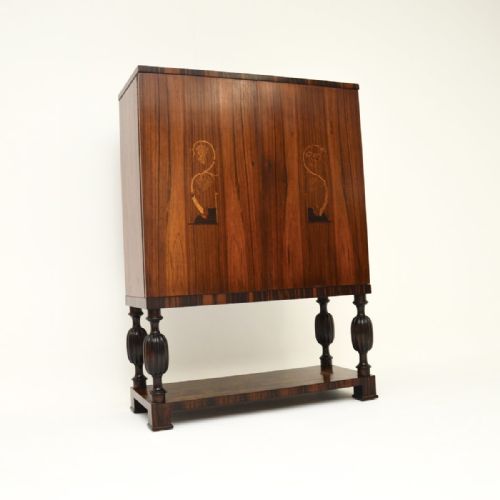
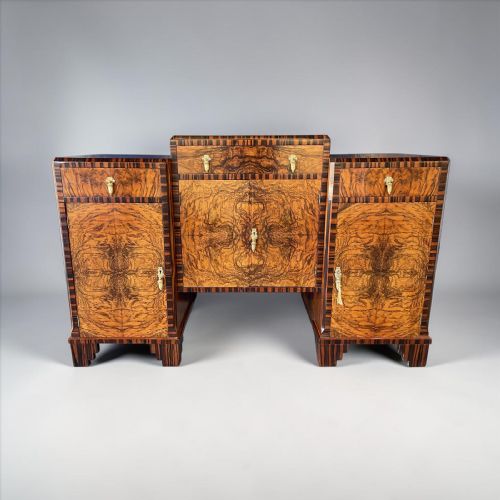
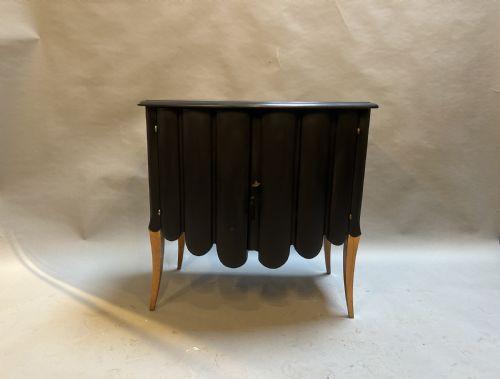

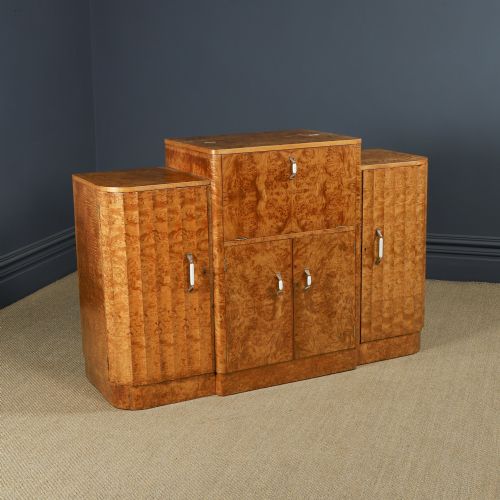


Art Deco Cocktail Cabinet Sideboard
An art deco cocktail cabinet sideboard brings sophisticated storage for entertaining into your dining room or living space.
Art Deco Cocktail Cabinet Sideboard
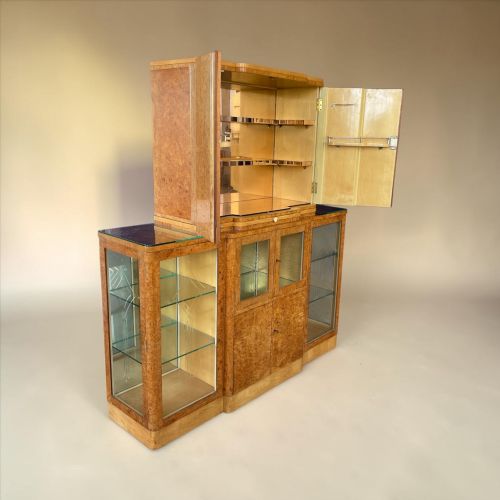
An art deco cocktail cabinet sideboard combines the long, low storage surface of a traditional dining room server with specialised compartments for bottles, glassware and mixing equipment. These pieces primarily date from the nineteen thirties and nineteen twenties, carrying the characteristic geometric lines and streamlined forms of the period.
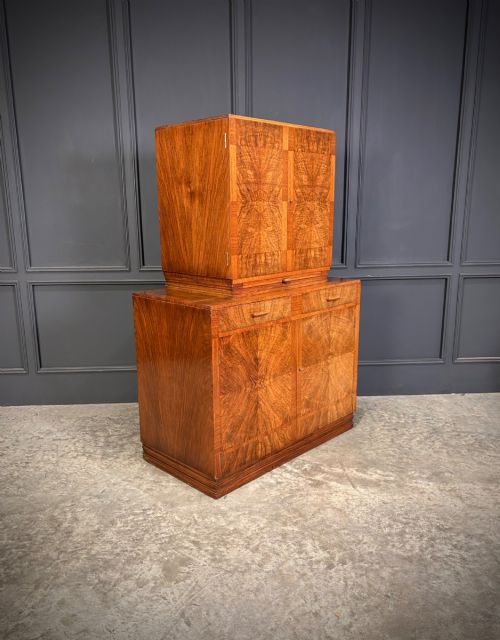
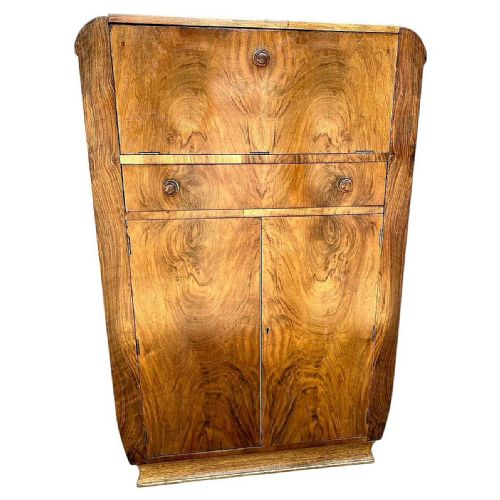
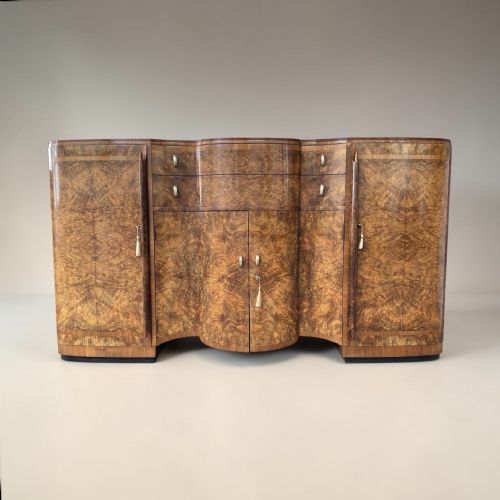
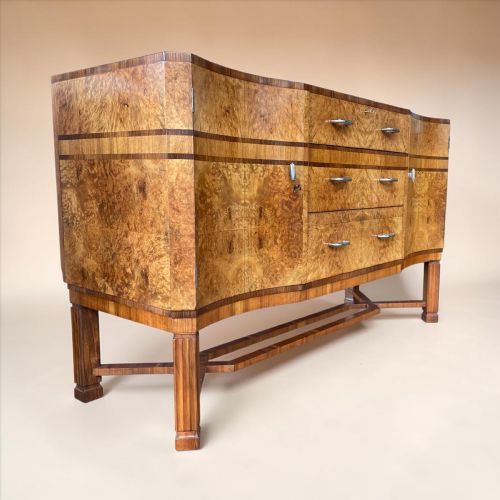
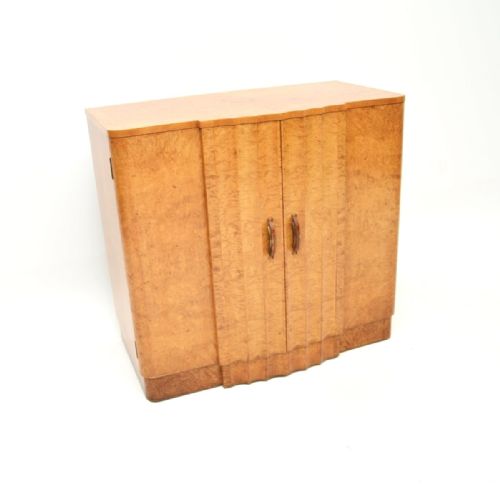
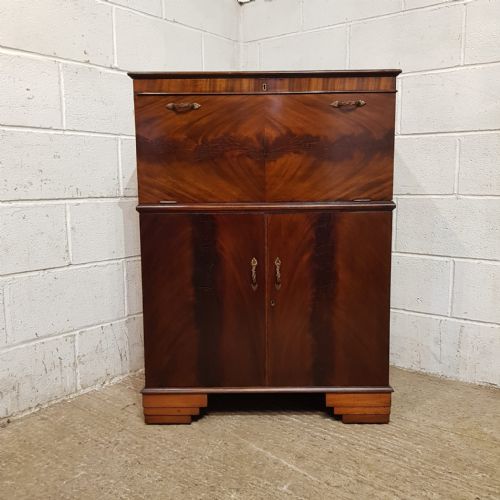
The version you are most likely to meet on this page is constructed from walnut or burr walnut veneer, often featuring curved double bow fronts and fitted interior compartments for drinks preparation.
Materials and construction methods
Cabinet makers utilised decorative wood veneers such as burr walnut, figured walnut, satinwood, rosewood, birch and elm over sturdy timber carcases to achieve dramatic grain patterns across wide surfaces. These tactile exteriors were frequently complemented by functional interior elements including mirrored glass panels, polished brass hardware and electrical lighting fittings.
Makers shaped the heavy timber forms into sweeping curves and architectural silhouettes, applying specialist polishing techniques to accentuate the natural figures within the wood.
Art Deco Cocktail Cabinet Sideboard Retail Price Guide 2026
Typical asking prices for art deco cocktail cabinet sideboard among the pieces listed under this phrase on Sellingantiques today, from the lower quarter to the upper quarter. They describe what is for sale here now, not the wider market.
Several cabinets retain original electrical fittings designed to illuminate the cocktail interior the moment the mirrored doors swing open.
Judging the quality of the workmanship
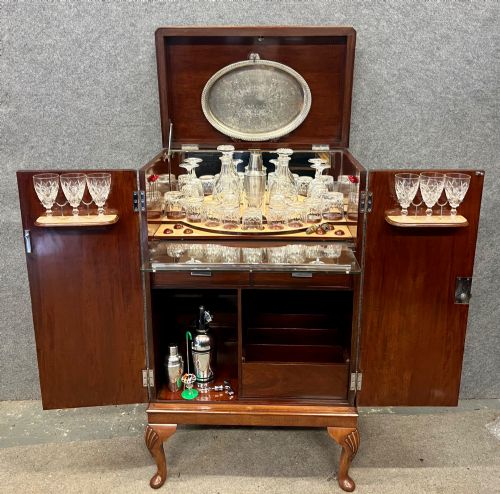
Superior examples distinguish themselves through the careful selection and matching of wood veneers across the entire front elevation, creating symmetrical patterns that flow seamlessly across doors and drawers. The refinement of the interior mechanism, from pull-down cocktail shelves to fitted glass holders and integrated lighting, marks the difference between standard production and master cabinet making.
Heavier construction, sophisticated timber choice such as burr walnut rather than plain walnut, and documented workshop provenance elevate specific pieces above standard domestic furniture.
Harry and Lou Epstein·Maurice Adams·Waring and Gillow·Hamptons of Pall Mall London
The Art Deco Cocktail Cabinet Sideboard Glossary
- Burr walnut
- A wood veneer taken from the gnarled growth on a walnut tree, prized for its swirling, highly decorative grain patterns. It forms the primary visual signature of many high-end cocktail cabinets.
- Veneer
- A thin layer of choice wood applied over a secondary timber base to create decorative surfaces without excessive weight or cost. Cabinet makers matched these sheets symmetrically.
- Bow front
- A convex curved furniture front that projects outward in an arc. This shape softens the geometric lines typical of the period.
- Bakelite
- An early synthetic plastic used for handles, knobs and decorative trim during the twentieth century. It provides a tactile, authentic period detail on doors and fittings.
- Credenza
- A dining room sideboard or side cabinet used for serving food and storing tableware. In twentieth-century design, this form occasionally merged with drinks storage.
Art Deco Cocktail Cabinet Sideboard: Frequently Asked Questions
What is an art deco cocktail cabinet sideboard?
It is a dual-purpose furniture form designed in the interwar years that combines a low serving surface with specialised internal compartments for bottles, glasses and cocktail accessories.
These pieces reflect the glamorous entertaining habits of the period, offering concealed storage alongside impressive veneered exteriors for display in principal reception rooms.
How do I date an art deco cocktail cabinet?
Most pieces originate from the nineteen twenties and nineteen thirties, identifiable through characteristic geometric forms, streamlined silhouettes and the extensive use of figured veneer.
Earlier Edwardian precursors occasionally anticipate the form, while true art deco examples rely on symmetry, curved fronts and modern materials like mirrored glass and bakelite.
How were these cabinets used originally?
They served as dedicated stations for hosting guests, keeping spirits, glassware and mixing tools neatly organised behind locking cabinet doors and fold-down shelves.
The top surface acted as a serving area for drinks preparation, while internal mirrors and fitted racks displayed glassware during evening gatherings.
How do I care for burr walnut veneer?
Protect the polished wood surfaces by keeping them away from direct sunlight, excess moisture and sudden temperature changes that can cause the delicate veneer to lift or fade.
Apply a light furniture wax occasionally to maintain the sheen, and avoid placing wet glasses directly onto the wood without coasters.