


Art Deco Clip Brooch
An art deco clip brooch fastens sharply to a lapel or divides into twin dress clips for versatile twentieth-century elegance.
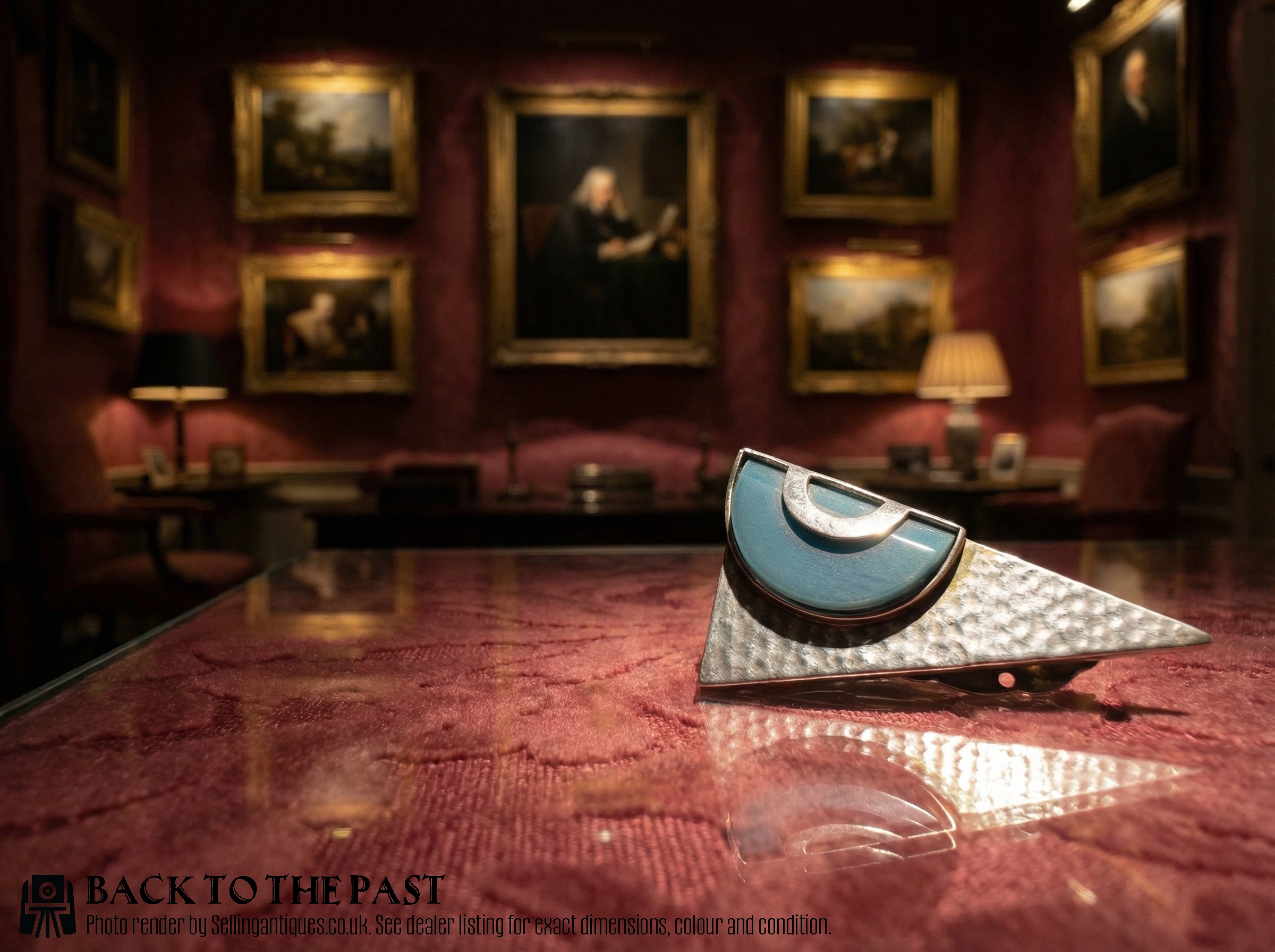
Art Deco Clip Brooch
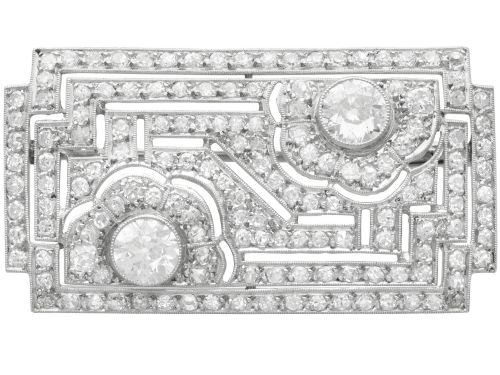
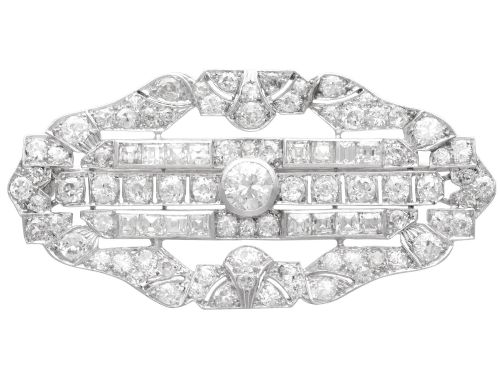
An art deco clip brooch combines geometric precision with the practical versatility of detachable dress clips, emerging primarily from the 1920s and 1930s. Buyers seek these pieces for their architectural symmetry and ability to transform from a single statement brooch into paired fur clips.
The selection here encompasses platinum and diamond mountings alongside silver, gold, and colourful plastics like Galalith and celluloid. Pieces range from large certified double clip pendants to Chinese export enamel work and modernist Scandinavian designs.
How they were made
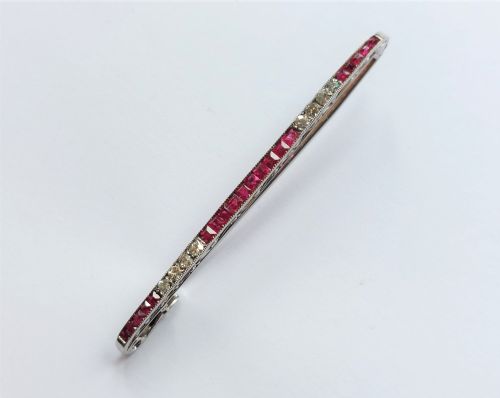
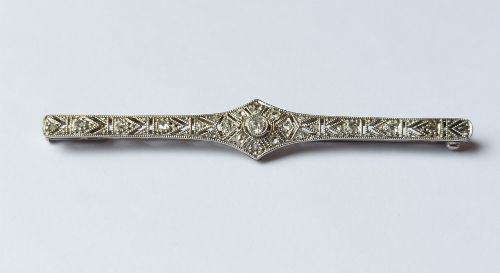
Metalsmiths built the finest frames in platinum or white gold, utilising millegrain edges and openwork galleries to hold substantial old-cut diamonds. Gemstones such as sapphires, emeralds, rubies, and rock crystal quartz were calibrated tightly into geometric channels.
Alternative pieces relied on silver, base metal, and paste stones, or incorporated carved celluloid and Galalith for modernist and novelty designs. Silver filigree and enamel work also appeared alongside marcasite settings during the nineteen-thirties.
Listings feature platinum, 14ct yellow gold, and silver alongside alternative materials like Galalith, enamel, and rock crystal quartz.
What varies in quality
Quality rests upon the crispness of the metalwork and the integration of the mechanical clip mechanism. Superior examples maintain firm, secure tension in their folding closures while displaying exact stone calibration without visible gaps in the platinum or gold setting.
The distinction between upper and lower tiers also lies in material selection, separating heavy diamond and platinum creations from lighter silver-plated or base metal pieces. Master workshops achieved finer piercing and stone matching that elevated standard dress ornaments into works of haute joaillerie.
Cartier Paris·Paillette·Jakob Bengel·CIRO
The Art Deco Clip Brooch Glossary
- Duette
- A patented double clip brooch design that separates into two individual dress clips worn on a lapel or neckline. This mechanism defined much of nineteen-thirties fastening innovation.
- Millegrain
- A decorative technique featuring a row of tiny raised metal beads along the edge of a setting. It softens the platinum boundary around diamonds.
- Galalith
- A semi-synthetic plastic derived from casein that accepted vibrant colours and smooth polishing. It appeared frequently in modernist jewellery of the period.
- Paste
- Hand-cut glass facets used as imitation gemstones in period costume jewellery. Higher-grade paste was individually foiled to catch the light.
- Zircon
- A natural gemstone possessing high refractive brilliance and fire, frequently utilised as a diamond substitute in twentieth-century mounts.
Art Deco Clip Brooch: Frequently Asked Questions
How do clip brooches separate?
These brooches usually feature a clever sliding or locking mechanism on the reverse that releases two distinct dress clips from a shared frame.
Once detached, each clip fastens independently to a collar, pocket, or evening strap.
Can I wear a clip brooch as a pendant?
Certain examples include integrated loops or folding bails on the reverse to accommodate a neck chain.
This dual functionality allowed twentieth-century owners to transition pieces easily from daytime dress adornments to evening pendants.
How do I date an art deco piece?
Dating relies on combining the hallmark evidence, metal choices, and lapidary cuts such as old European or transitional diamonds.
The prevalence of platinum and geometric symmetry typically points towards the twenties and thirties.
Are celluloid and Galalith fragile?
Early plastics require gentle handling and protection from strong solvents, perfumes, and direct heat to prevent warping or discoloration.
Store them away from other metals to preserve their smooth surfaces.