
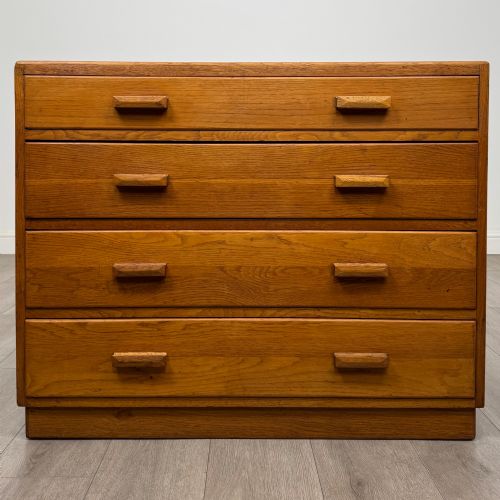
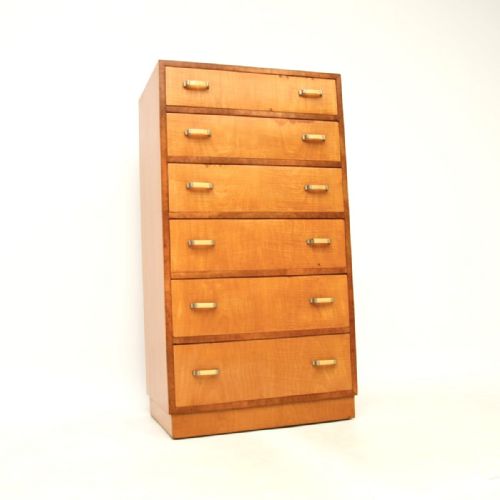

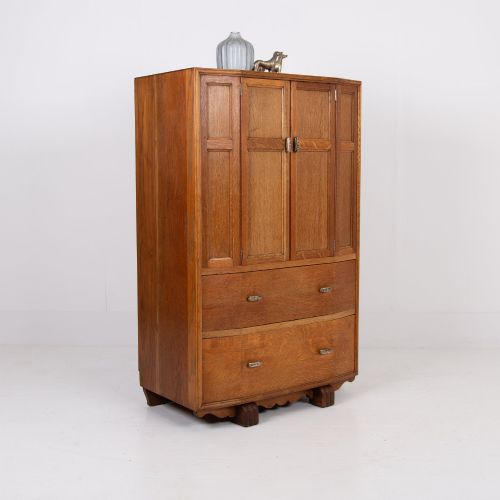
Art Deco Chest of Drawers
An art deco chest of drawers brings geometric symmetry and striking grain patterns to a bedroom.
Defining the art deco chest of drawers
An art deco chest of drawers unites functional storage with the characteristic geometric lines and restrained ornamentation of the 1920 and 1930 periods. These pieces serve as practical bedroom furniture while functioning as focal points through their distinct silhouettes.
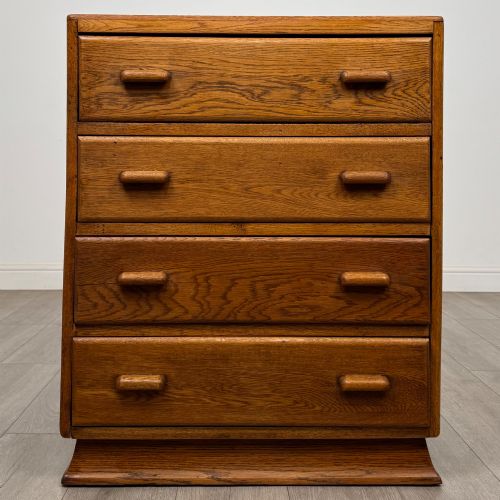
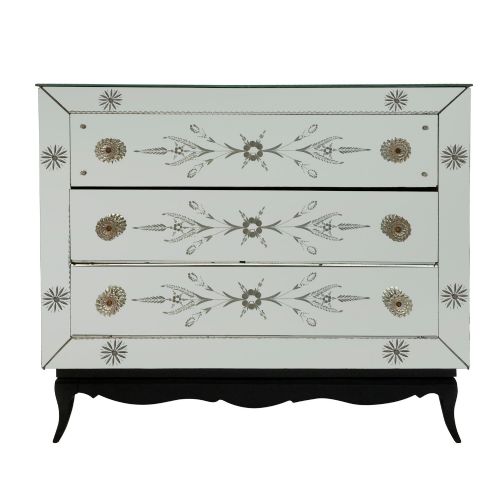
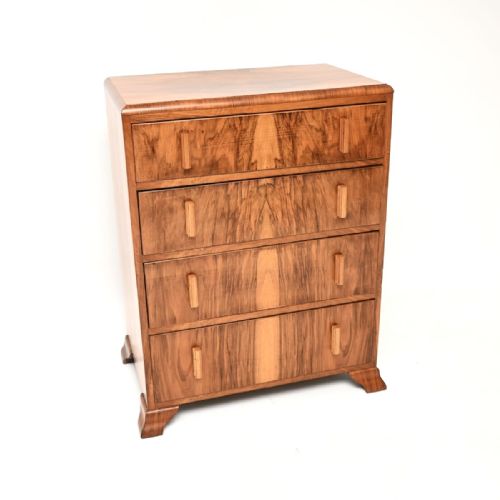
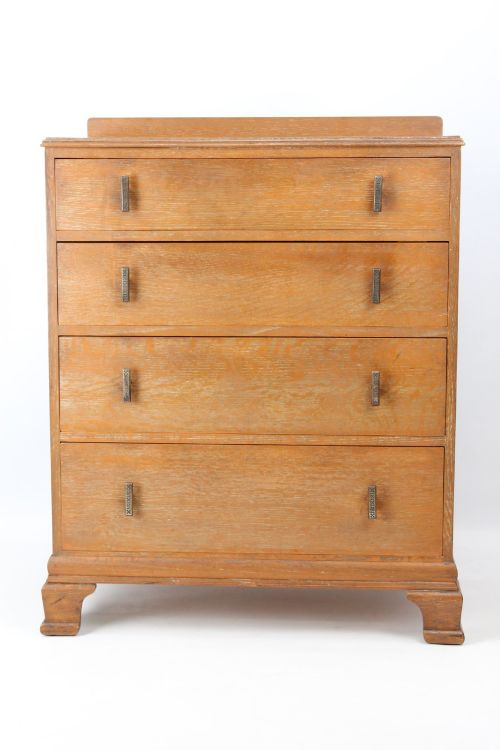
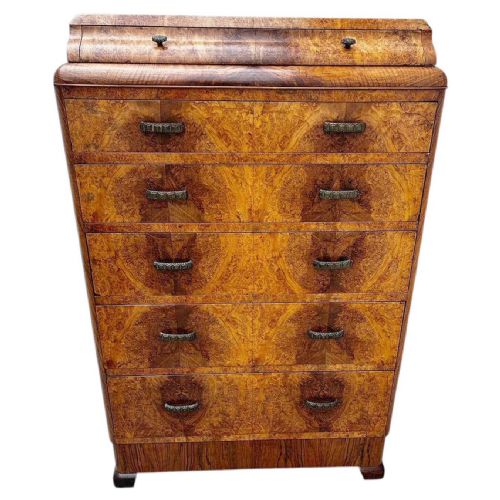
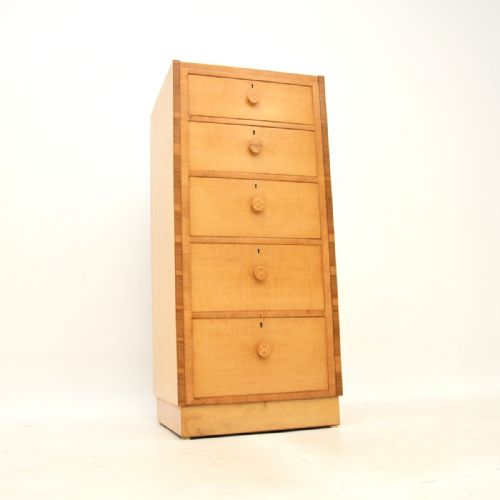
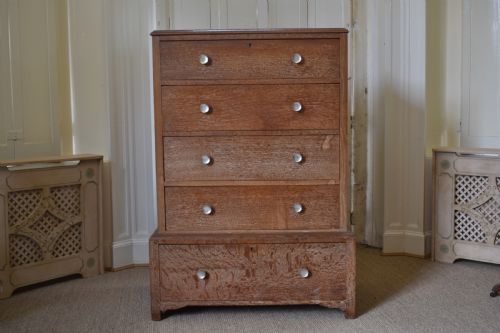
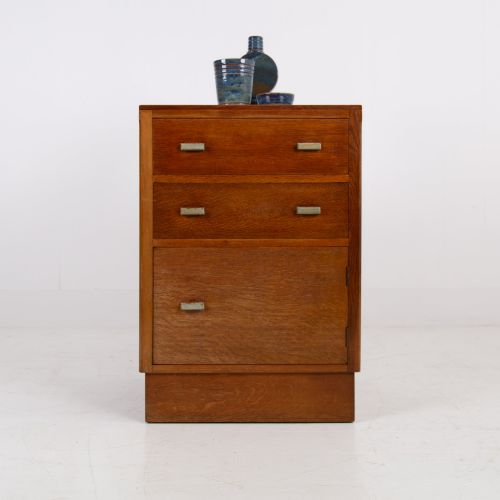
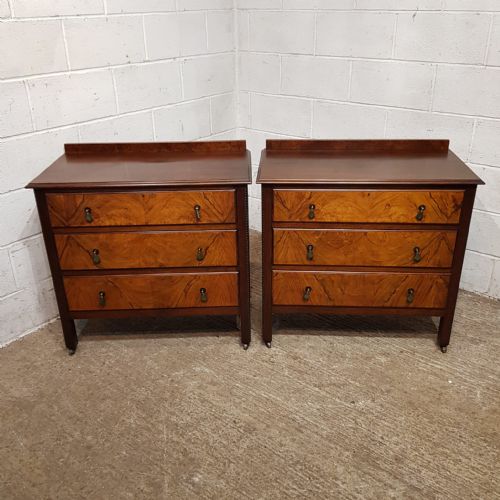
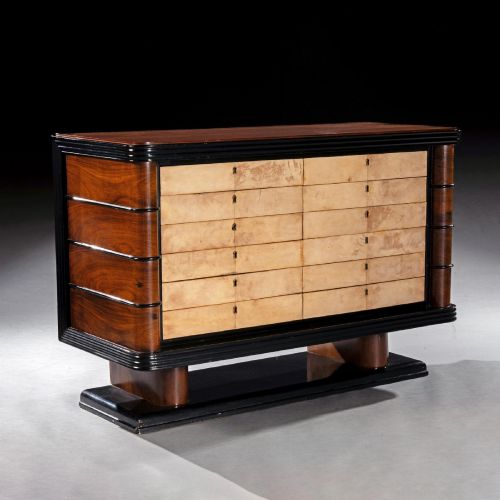
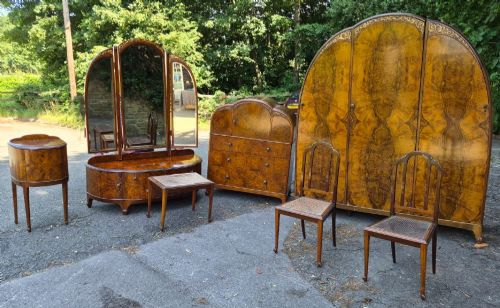
The versions most commonly encountered on this page display veneered surfaces in walnut, burr walnut, and oak, alongside French interpretations featuring mirrored glass or ebonised wood. Forms range from low commodes to tallboys and banks of six drawers.
Materials and construction
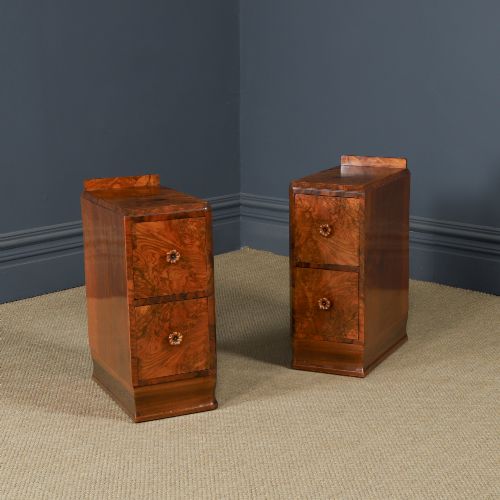
Cabinet makers utilised secondary woods as carcasses to support decorative surface veneers including burr walnut, figured walnut, sycamore, satinwood, and burr elm. These fine veneers were laid in symmetrical patterns to highlight the natural movement of the grain.
Specialist techniques involved contrasting ebonised wood or metal details against warm timber tones, while French examples incorporated etched or mirrored glass panels into the exterior design.
Retail Price Guide 2026
Typical UK retail prices for art deco chest of drawers, calculated from the Sellingantiques database of over a million retail prices indexed since 2003. This retail price guide relies exclusively on Sellingantiques data; no external sources or auction records are used, so the figures do not describe the wider market.
Some chests feature up to six narrow drawers, originally designed for storing everything from small garments to secret collections.
Markers of distinction
The grade of an art deco chest of drawers depends largely on the choice and matching of the veneer. Highly figured burr walnut or scarce sycamore displays superior visual depth compared to plain timber surfaces.
Construction methods and the integration of secondary materials such as ebonised wood, mirrored glass, or specialist metal hardware separate standard production pieces from finer workshop outputs.
Hille·Bath Cabinet Makers·Waring and Gillow
The Art Deco Chest of Drawers Glossary
- Burr walnut
- A prized timber harvested from walnut tree growths, yielding intricate, swirling grain patterns heavily utilised in art deco furniture design.
- Commode
- A decorative chest of drawers or cabinet, frequently associated with French art deco pieces from the 1920 period.
- Tallboy
- A tall chest of drawers providing vertical storage capacity while maintaining a compact floor footprint.
- Veneer
- A thin layer of superior wood applied over a stable secondary timber base to create decorative exterior surfaces.
- Ebonised wood
- Timber treated with a dark finish to imitate ebony, providing sharp contrast against lighter walnut or sycamore veneers.
Frequently Asked Questions
How do I date an art deco chest?
Pieces generally date from the 1920 and 1930 periods, identifiable through characteristic geometric forms and material combinations like mirrored glass and walnut veneer.
Construction methods and stylistic influences, such as French art deco design traits, further assist in narrowing the timeframe.
What woods were used?
Walnut and burr walnut appear most frequently, often paired with sycamore, satinwood, oak, or burr elm.
Ebonised wood and metal also feature as contrasting elements across various regional styles.
Are French chests different?
French examples from this era frequently incorporate mirrored glass or etched glass panels alongside ebonised wood.
These designs often lean towards the commode form rather than standard British drawer configurations.
How do I style one at home?
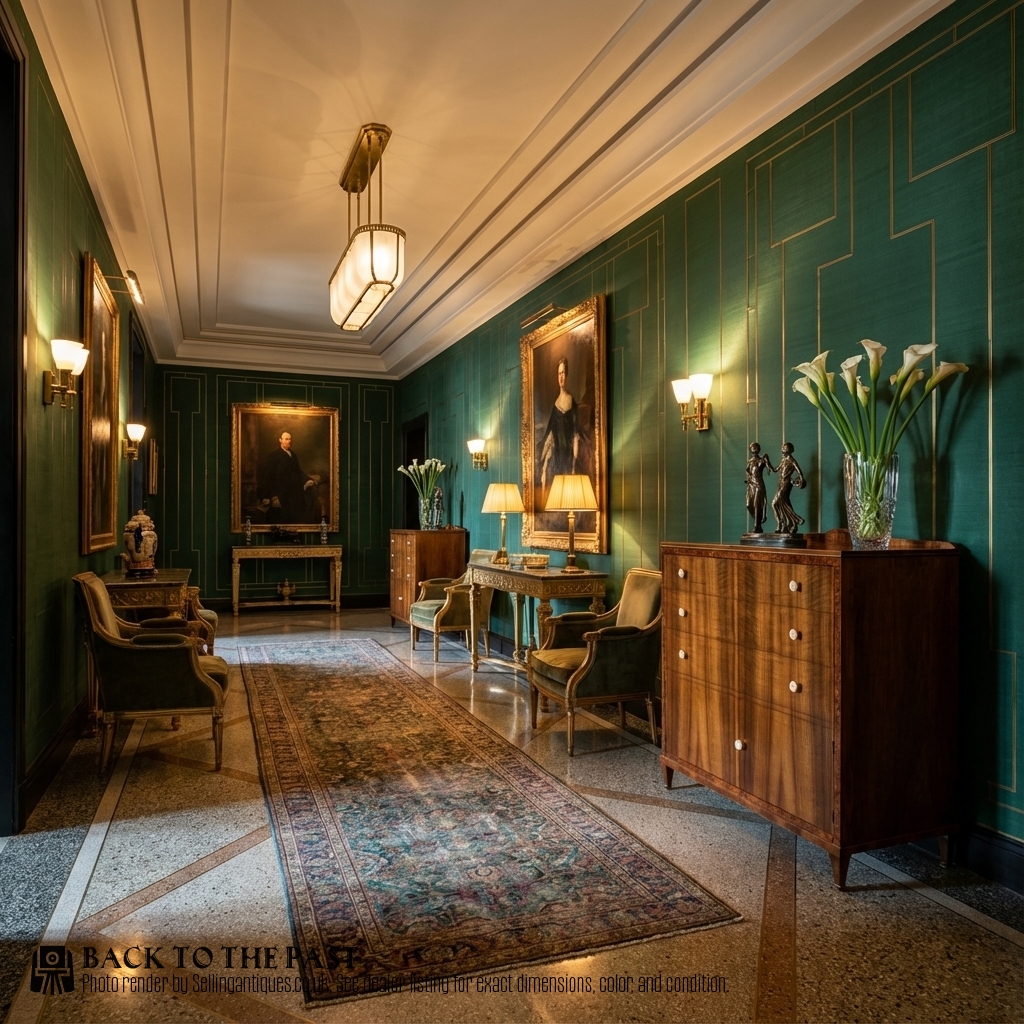
An art deco chest of drawers works effectively as a bedroom storage piece or a statement surface in a hallway.
The strong grain patterns and geometric lines pair well with minimalist surroundings that allow the timber to stand out.