
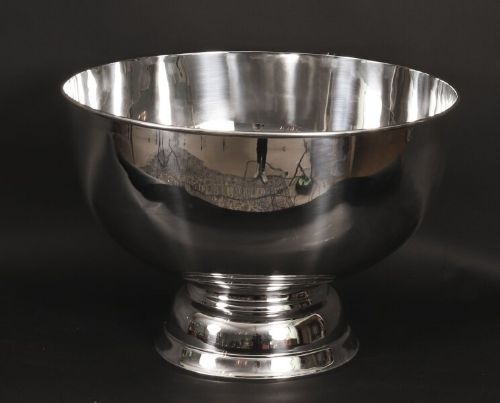


Art Deco Champagne Bucket
An art deco champagne bucket brings the sharp geometry and polished weight of the interwar years straight to the dining table.
Art Deco Champagne Bucket
When searching for an art deco champagne bucket, buyers encounter purposeful vessels designed to chill wine and hold ice during the early decades of the twentieth century. These pieces appear primarily as champagne coolers, wine coolers and ice buckets spanning the 1920s, 1930s and 1940s.
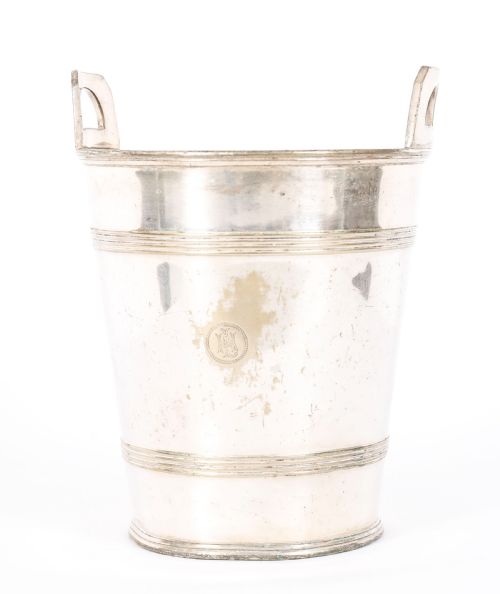
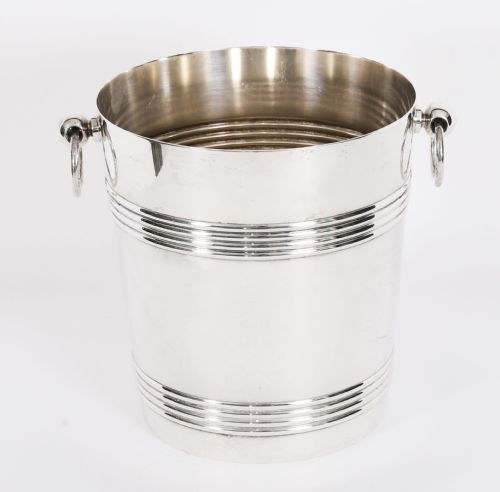
The most common examples on this page are French and English silver-plated vessels, often taking cylindrical or faceted forms. Alongside standard coolers, the selection includes distinct variations such as floor-standing models, table-top top hat shapes and multi-piece sets.
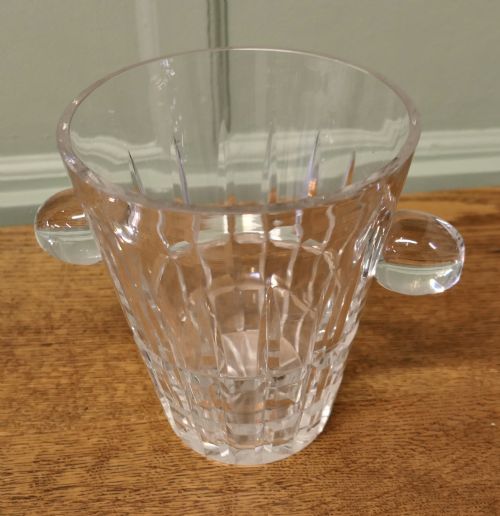
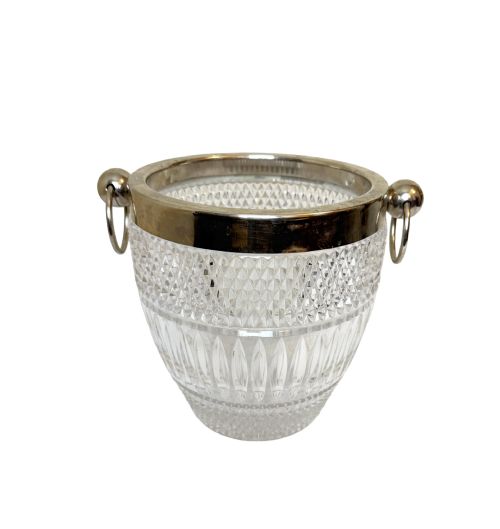
Makers and workshops across Europe produced these items for domestic dining and grand hotel service alike. Alongside metal vessels, the category encompasses hand-blown cut crystal and glass buckets, as well as occasional combinations of oak and copper.
Materials and construction
Makers utilised silver plate over a base metal, solid chrome, brass and copper to achieve durable, reflective bodies capable of enduring constant service. Silver-plate techniques applied thick layers of silver to white metal alloys, creating a brilliant finish that withstands regular polishing.
Glass and crystal versions relied on heavy-duty hand-blowing and deep cutting to produce faceted walls that refracted light through melting ice. Wood elements, such as oak staves, were bound with metal bands to construct water-tight tubs for cooling bottles.
Handles, handles cast in geometric shapes, and stepped bases were securely soldered or riveted to the main body. Stamped hallmarks and maker marks were commonly punched into the base or rim to record the manufacturing house.
Some champagne buckets take the exact silhouette of a gentleman's top hat, ready to serve wine straight from evening wear.
Judging quality and execution
Quality rests in the weight of the metal and the crispness of the geometric detailing. Heavy gauge silver plate maintains a substantial feel in the hand and resists denting far better than thinner domestic pressings.
The distinction between standard commercial items and top-tier workshop output lies in the integration of handles and the purity of the metal surface. Renowned Parisian and Sheffield makers applied heavier silver deposits that endured decades of intensive hotel and domestic use without exposing the base metal beneath.
Crystal quality is determined by the depth of the hand-cut facets and the clarity of the glass without internal bubbles. Well-balanced proportions and secure construction define pieces that successfully transition from functional table service to static display.
Hutton Sheffield·Christofle·Mappin & Webb·WMF·Elkington·Luc Lanel·Ercuis·St Medard·Wiskemann·Cailar & Bayard
The Art Deco Champagne Bucket Glossary
- Silver plate
- A thin layer of pure silver bonded to a base metal such as nickel silver or copper. This technique allowed makers to produce luxurious tableware at a lower cost than solid silver.
- Gallia
- A high-grade silver-plate alloy developed and utilised by Christofle in Paris. The mark indicates superior thickness of the silver coating applied to the base.
- Jardiniere
- An ornamental pot or stand, occasionally adapted or repurposed as a wine cooler or ice bucket. These pieces often feature liner inserts to protect exterior materials from moisture.
- Top hat
- A specific cylindrical silhouette resembling a formal gentleman's hat, popular in English designs of the period. This form provides a deep interior cavity for ice and bottle placement.
- Cut crystal
- Glassware shaped and patterned through abrasive wheel cutting. The resulting deep cuts create sharp geometric prisms characteristic of the period style.
Art Deco Champagne Bucket: Frequently Asked Questions
How do I clean a silver plated bucket?
Wash the vessel in warm water with mild washing-up liquid, using a soft cloth to remove any residue from ice or wine. Dry thoroughly immediately afterwards to prevent water spots.
Polish sparingly with a specialised silver cloth or non-abrasive cream, avoiding vigorous scrubbing that might wear through the plated surface over time.
Can these buckets hold actual ice today?
These vessels were built specifically to hold ice and chilled bottles during service. Modern use will not harm the metal or glass provided the interior is dried completely after use.
Avoid leaving stagnant water or melting ice sitting inside the vessel for prolonged periods once the gathering has ended.
How do I identify the maker?
Turn the piece upside down and inspect the base or the lower edge of the rim. Stamped maker marks, workshop ciphers, and silver-plate quality stamps are typically punched directly into the metal.
Researching these specific punch marks or initials reveals the manufacturing house, country of origin, and often the production decade.
Are glass and crystal versions fragile?
Interwar glass and crystal buckets feature thick, heavy walls designed to withstand the weight of ice cubes and bottles. While sturdier than standard glassware, they still require careful handling during washing and placement on hard dining surfaces.
Inspect the rim and base for internal stress fractures before filling with heavy loads.