
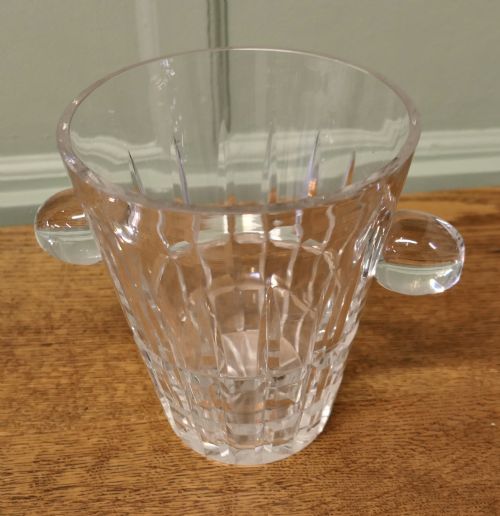
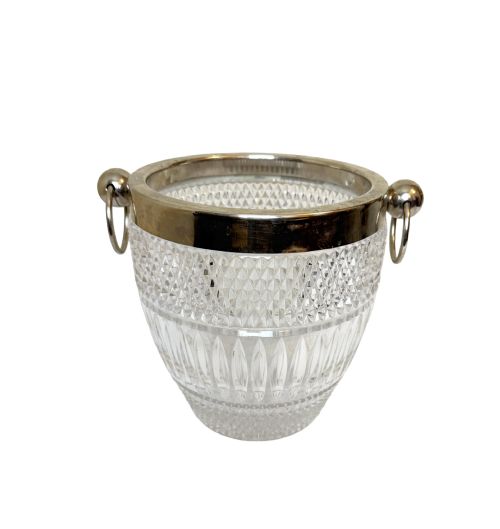


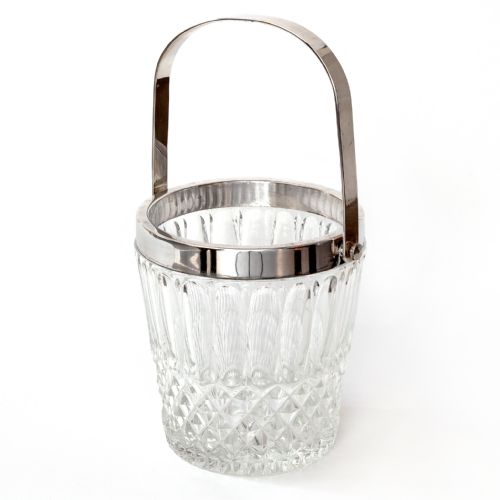


Vintage Glass Champagne Cooler
These vintage glass champagne cooler examples bring serious presence to a table, combining weighty cut crystal or glass with silver plate, silverplate, silver-plate, or brass mounts.
Vintage Glass Champagne Cooler
When you search for a vintage glass champagne cooler, you find functional vessels designed to chill wine and champagne using ice. The pieces listed on this page span from the 19th Century and 1800 through the Edwardian, Art Nouveau, and Art Deco periods up to 1940.
You are most likely to meet French and English examples formed as ice buckets and wine coolers. They appear in materials like cut crystal, glass, cut glass, lead crystal, silver plate, silverplate, silver-plate, and brass.
Styles range from Regency and French Empire to Art Nouveau and Art Deco. Forms vary from personal ice buckets to large hand blown cut crystal champagne coolers with gilt bronze mounts.
How they were made
Maker workshops utilised heavy lead crystal and glass, often shaping them through hand blowing and hand cutting techniques. The resulting cut crystal and cut glass display crisp facets that catch the light.
Metal mounts in silver plate, silverplate, silver-plate, brass, and gilt bronze were securely fitted to the glass bodies. These durable combinations provided both structural support and decorative contrast.
One personal champagne ice bucket is specifically sized for a single individual to enjoy a private vintage chilling experience.
What varies in quality
The weight and thickness of the lead crystal or glass set a baseline for the substance of the cooler. Pieces described as extremely heavy demonstrate superior material density compared to standard vessels.
The precision of the hand cut facets and the quality of the metal mounts determine the refinement of the object. Gilt bronze mounts and intricate French cut crystal represent the higher end of the range.
The Vintage Glass Champagne Cooler Glossary
- Cut Crystal
- Glass containing lead oxide that has been hand cut with decorative facets. This material produces a high refractive index and a clear ringing sound when struck.
- Silver Plate
- A base metal coated with a thin layer of silver. It provides the appearance of solid silver while offering durability for wet table settings.
- Gilt Bronze
- Bronze metal that has been coated with a thin layer of gold. It adds a warm metallic accent to mounts and handles.
- Art Deco
- A design style from the early twentieth century featuring geometric shapes and clean lines. It appears frequently in pieces from the nineteen twenties.
Vintage Glass Champagne Cooler: Frequently Asked Questions
What is a vintage glass champagne cooler used for?
These vessels are designed to hold ice and water to chill champagne or wine bottles for serving at the table.
They also function as decorative centrepieces or ice buckets for everyday entertaining.
How do I date a glass champagne cooler?
Dating relies on stylistic markers such as the geometric lines of Art Deco or the flowing organic forms of Art Nouveau. Material combinations like heavy lead crystal with silver plate also point to specific manufacturing decades.
Historical periods range from Regency and French Empire through Edwardian production up to the mid twentieth century.
Are these coolers made from crystal or plain glass?
Listings include both standard glass and heavy lead crystal or cut crystal. Lead crystal contains mineral content that increases weight and brilliance.
Many pieces feature hand cut patterns that enhance the sparkle of the material.
What metals are used alongside the glass?
Metal components include silver plate, silverplate, silver-plate, brass, and gilt bronze. These materials form handles, rims, and structural mounts.
Mounts are securely attached to support the heavy glass bodies.
Where were these champagne coolers made?
Origin points in the inventory include both French and English workshops. French pieces often feature elaborate cut crystal and gilt bronze mounts.
English examples frequently pair glass with silver plate in Regency and Edwardian styles.