


Art Deco Ceylon Sapphire
These art deco ceylon sapphire rings bring together unheated stones and period platinum settings that collectors prize for their striking blue hue.
Art Deco Ceylon Sapphire
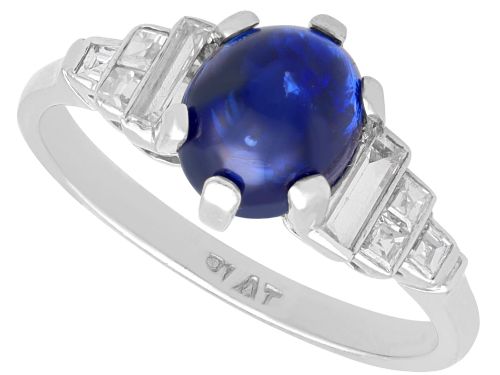
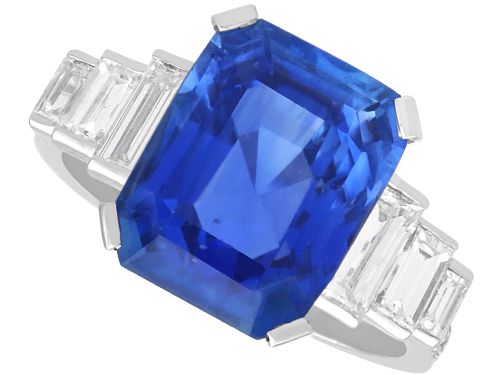
When you search for art deco ceylon sapphire, you encounter rings defined by significant gemstone weight set within early twentieth-century frameworks. The forms span from solitary centre stones to intricate cluster arrangements framed by smaller diamonds.
The pieces you meet on this page originate predominantly from the 1920s and 1930s, reflecting the geometry and precision of the period. Alongside these true period examples, you find designs referencing the aesthetic from slightly later decades.
Rings in this category primarily take the form of dress, cocktail, and cluster configurations. Each showcases the distinct optical properties of stones originating from Sri Lanka, mounted securely in platinum or gold.
Materials and construction
The fabrication relies heavily on platinum and gold, which provide the structural integrity needed to support substantial central gems. Platinum was favoured for its strength, allowing for delicate wirework and secure prong settings without bulk.
Stones are shaped into faceted cuts or smooth cabochons, depending on the natural clarity and colour saturation of the material. These are paired with small accent diamonds that highlight the brilliance of the main blue sapphire.
Several rings boast central stones tipping the scales past eleven carats, proving that the previous century favoured a dramatic gesture on the hand.
Evaluating quality and merit
The distinction between tiers rests upon the saturation and depth of colour within the gemstone itself. Stones displaying a vibrant, even distribution without heavy zoning command greater attention from discerning collectors.
Craftsmanship in the metalwork further differentiates the examples, visible in the precision of the geometric layout and the secure integration of the surrounding diamond accents.
The Art Deco Ceylon Sapphire Glossary
- Ceylon Sapphire
- A gemstone originating from Sri Lanka, known for its distinctive lively blue colour and high transparency. These stones often exhibit a lighter, brighter tone than sapphires from other origins.
- Cabochon
- A gemstone shaped and polished with a smooth, rounded top rather than faceted edges. This cut is frequently utilised to emphasise the deep colour and natural lustre of large stones.
- Cluster Ring
- A ring style featuring a prominent central stone surrounded by a border of smaller gems. This arrangement maximises visual impact and plays with the contrast between different stones.
- Art Deco
- A design style from the early twentieth century characterised by sleek geometric lines, symmetry, and stylised motifs. It rejected traditional floral curves in favour of modern industrial forms.
Art Deco Ceylon Sapphire: Frequently Asked Questions
What defines an art deco ceylon sapphire?
An art deco ceylon sapphire combines a prominent gemstone from Sri Lanka with the distinct geometric mountings characteristic of the interwar decades. These pieces balance architectural metalwork with vibrant blue stones.
The aesthetic relies on clean lines and structured arrangements, often incorporating platinum alongside complementary diamond accents to frame the central jewel.
How do I care for my ring?
Daily maintenance involves gentle cleaning with warm water, mild soap, and a soft brush to remove accumulated oils from beneath the setting. Avoid harsh chemical cleaners that might affect the integrity of the metal or stone.
Store the piece separately from other jewellery to prevent scratching between the diamonds and softer components. Periodic checks by a specialist ensure the prongs holding the large sapphire remain secure.
Are these rings suitable for daily wear?
Sapphires rank high on the hardness scale, making them durable enough for regular use when mounted in robust metals like platinum or gold. However, the substantial size of these central stones warrants mindfulness during rigorous manual tasks.
Removing the ring during heavy activity protects both the delicate millegrain detailing and the setting from unnecessary impact or strain.
How can I distinguish period styles?
Authentic pieces from the 1920s and 1930s display specific construction techniques, such as hand-beaded edges and integrated gallery work beneath the stone. The platinum is often denser and heavier than that found in later reproductions.
Examining the underside reveals the hand-finished nature of the metalwork, distinguishing genuine items from later tributes built with modern casting methods.