


Art Deco Ceramic Bowl
An art deco ceramic bowl brings geometric styling and vibrant glaze work from the interwar years straight onto a modern table.
Art Deco Ceramic Bowl
An art deco ceramic bowl embodies the distinctive design vocabulary of the 1930s, alongside earlier Edwardian influences and occasional Art Nouveau crossovers. These pieces serve primarily as decorative vessels, fruit bowls, and vanity accessories such as powder boxes and trinket jars.
The most common form on this page is the ceramic powder box or bowl, often modelled with figural lids depicting flapper girls, bathing belles, and jesters. Alongside these vanity items sit larger decorative fruit bowls and octagonal serving pieces.
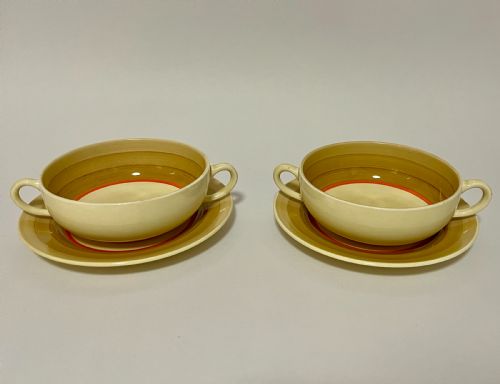
Origins stretch from British potteries to continental workshops in France, Germany, and Austria. Makers utilise earthenware and porcelain to achieve various structural forms, from square sugar bowls to circular vanity jars.
How they were made
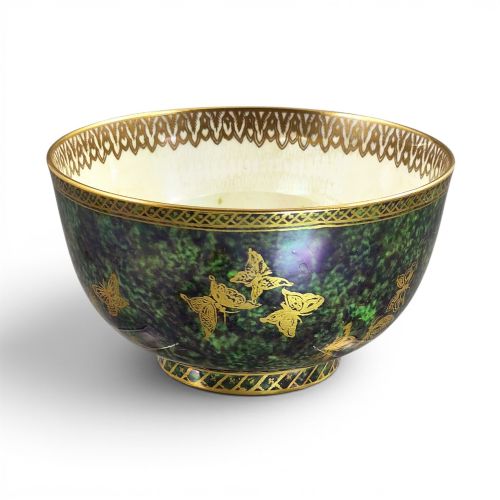
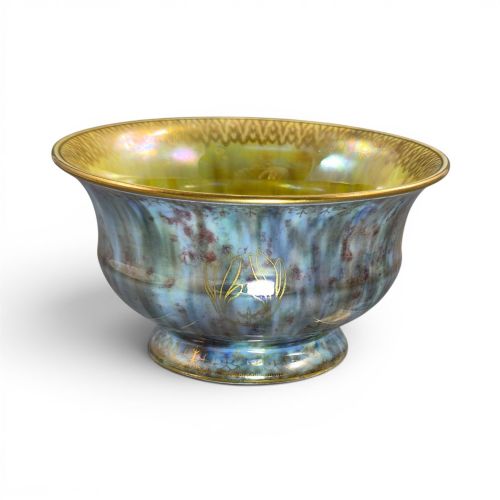
Potters shape porcelain and earthenware into distinctive geometric or figural profiles, applying glazes that run from mottled orange to deep green. Lustre glazes and enamel additions bring shimmering iridescent effects to the surface.
Gold leaf and gilt accents often highlight the rims and moulded details of these vessels. Stamped marks to the underside frequently indicate the pottery or place of origin.
Listings feature porcelain and earthenware materials finished with lustre glaze, enamel, and gold leaf accents.
What varies in quality
The precision of the modelling on figural lids, such as half doll figures and bathing belles, separates standard productions from more expressive works. Intricate hand-painted enamel and complex lustre glaze applications require higher skill levels than flat monochrome surfaces.
The depth and brilliance of the iridescence in lustre glaze pieces dictate the visual impact of the vessel. Clean execution of transfer printing and clear stamps to the underside anchor the origin of the piece.
Daisy Makeig-Jones·Clarice Cliff·Maling·Charlotte Rhead Bursley Ware·Limoges·Gladstone potteries
The Art Deco Ceramic Bowl Glossary
- Lustre Glaze
- A metallic ceramic glaze that produces an iridescent sheen. It creates a rainbow effect on the surface when fired in a reduced oxygen environment.
- Porcelain
- A hard, white, translucent ceramic fired at high temperatures. It permits thinner walls and finer detail work than standard earthenware.
- Earthenware
- A porous pottery body fired at lower temperatures. It requires a glaze layer to hold liquids and forms the base for many decorative vessels.
- Half Doll
- A ceramic figure modelled from the waist up without legs. These figures typically serve as decorative lids for powder boxes and brush handles.
- Enamel
- Opaque vitreous material fused to the ceramic surface through firing. It adds bright, durable blocks of colour to patterned bowls.
Art Deco Ceramic Bowl: Frequently Asked Questions
How do I use a powder bowl?
These lidded vessels sit on a dressing table to hold loose face powder, puffs, or small trinkets.
The figural lid lifts off to access the hollow bowl underneath, keeping vanity surfaces neat.
Where were these pieces made?
Production centres span British potteries alongside continental European kilns in France, Germany, and Austria.
Stamps or marks on the underside often reveal the specific town or factory of origin.
How do I date an art deco bowl?
Most items on this page trace back to the 1930s, though some pieces date from the Edwardian period around 1910 to 1920.
Stylistic markers like geometric patterns and flapper figures point firmly to the interwar era.
What is fairyland lustre?
Fairyland lustre is a complex decorative glaze technique developed by Daisy Makeig-Jones at Wedgwood featuring fantastical motifs.
These designs incorporate dragons, butterflies, and mystical figures rendered in rich, iridescent colours.