





Art Deco Bronze Clock
An art deco bronze clock brings bold geometric lines and sculptural figures into your room, exactly what collectors want for a striking mantelpiece display.
Art Deco Bronze Clock
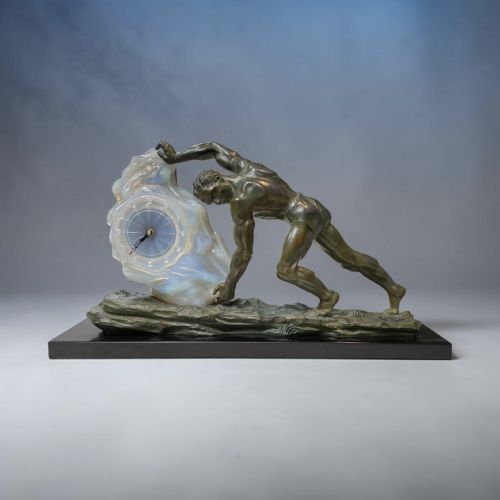
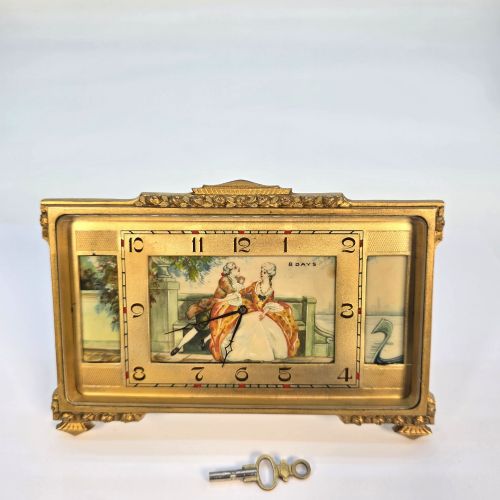
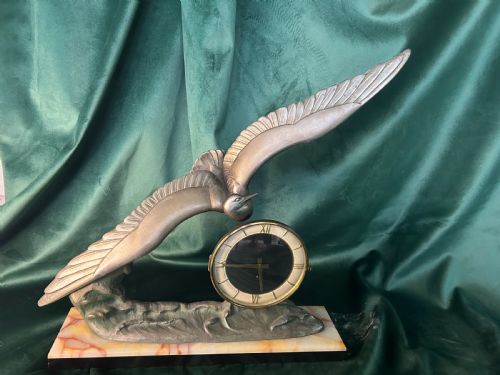
When you search for an art deco bronze clock, you encounter striking mantelpieces, table clocks, and garniture sets shaped by the aesthetic of the early twentieth century. These pieces combine heavy stone bases with sculptural metalwork, capturing the distinct visual rhythm of the period.
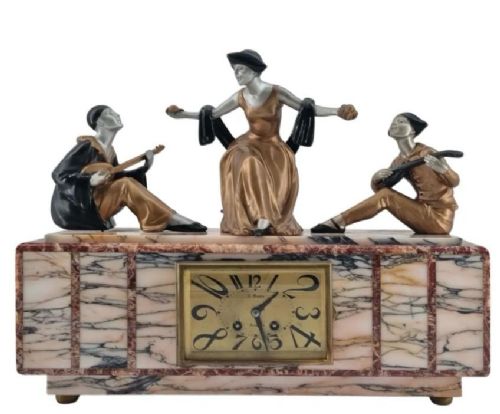
You are most likely to meet French examples from the nineteen-twenties and nineteen-thirties, often featuring figures such as Pierrot and Columbine, greyhounds, or elephants. The designs range from simple geometric table clocks to elaborate three-piece clock sets.
Earlier nineteenth-century and nineteen-ten manifestations also appear, showing how sculptural clock design evolved before the full crystallisation of the deco style. Mantel clocks dominate the selection, offering a substantial presence on any surface.
Materials and construction
Makers built these pieces using contrasting heavy bases of marble and onyx to anchor the dynamic metalwork above. Grey breccia marble and various coloured stones provide a solid foundation for the bronze, gilt bronze, or spritely spelter sculptures.
Clock faces incorporated glass, enamel, and brass bezels, housing Swiss or French movements designed for eight-day timekeeping. Metal components received silver plating, gilding, or bronzed finishes to complement the mineral grain of the surrounding stone.
Art Deco Bronze Clock Retail Price Guide 2026
Typical asking prices for art deco bronze clock among the pieces listed under this phrase on Sellingantiques today, from the lower quarter to the upper quarter. They describe what is for sale here now, not the wider market.
Listings feature pieces spanning four distinct decades, led predominantly by nineteen-twenties and nineteen-thirties items alongside occasional nineteen-ten and eighteen-fifty examples.
Judging quality and execution
Quality separates the master-sculpted figural groups from mass-market production by the weight and definition of the cast metal. Superior examples display crisp chasing on figures like greyhounds or human dancers, whereas lesser items rely on softer, generic casting.
The choice of housing materials also dictates grade, with dense grey breccia marble and genuine bronze commanding higher regard than simple mixed metals or substitute stones. Complete garniture sets with matching sidepieces demonstrate a higher original investment than standalone clocks.
Uriano·Sega·Jaeger·Sue et Mare
The Art Deco Bronze Clock Glossary
- Garniture set
- A centre clock flanked by matching decorative objects such as urns or companion animal sculptures. These matching sets were designed to sit harmoniously on a mantelpiece.
- Spelter
- An alloy of zinc and lead used as a cheaper alternative to bronze for sculptural figures. It takes patination well but lacks the weight and tensile strength of true bronze.
- Mystery clock
- A timepiece where the mechanism for driving the hands is concealed, often making the hands appear to float without visible connection to the movement. These represent ingenious horological design.
- Breccia marble
- A stone composed of broken fragments of rock cemented together by a fine-grained matrix. Its variegated appearance makes each clock base entirely unique.
- Ormolu
- Finely ground high-carat gold applied to a bronze base using a mercury amalgamation process. The technique produces a rich, durable golden lustre on metal mounts.
Art Deco Bronze Clock: Frequently Asked Questions
How do I wind an art deco clock?
Most clocks from this era use a key-wound mechanical movement requiring a gentle turn of the arbour until resistance is felt. Care must be taken not to over-wind the mainspring.
Eighty-day movements require attention every week or so to maintain accurate timekeeping, depending on the specific Swiss or French escapement used.
Where should I place a heavy marble clock?
These clocks require a deep, stable surface capable of supporting substantial weight, such as a sturdy fireplace mantel or a heavy sideboard. The combination of marble and bronze makes them surprisingly top-heavy.
Ensure the placement surface is completely level so the pendulum or balance wheel beats evenly.
Are these clocks suitable for daily use?
Many of these timepieces remain fully functional and keep reliable time when properly serviced by a professional horologist. Their mechanical movements are robustly engineered for daily ticking.
Collectors often treat them as decorative centrepieces first and working clocks second, running them occasionally rather than continuously.
How do I distinguish bronze from spelter?
Bronze possesses a heavier weight, a resonant ring when gently tapped, and a warmer feel against the hand compared to zinc-based alloys. Patination on genuine bronze tends to age with deeper warmth.
Spelter is softer and may show silvery grey metal beneath worn areas of paint or bronze-coloured finish.