


Art Deco Brass Table Light
An art deco brass table light brings geometric lines and warm metal tones to a desk or side table.
Art Deco Brass Table Light
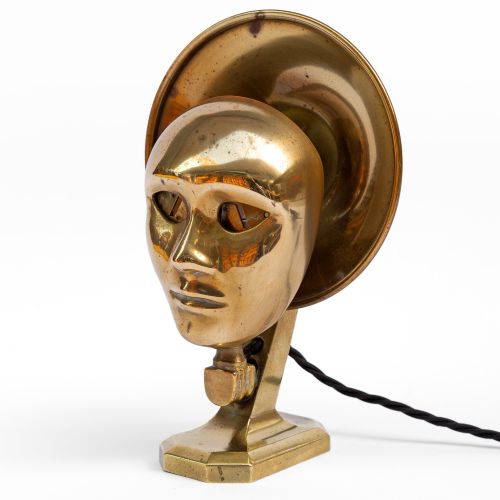
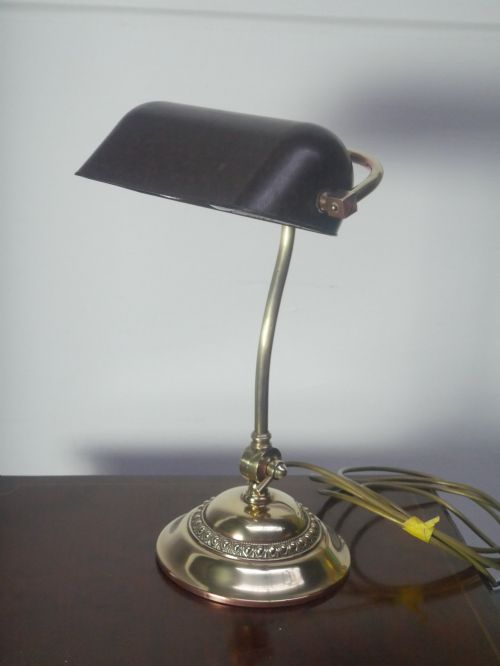
When searching for an art deco brass table light, buyers encounter a variety of forms including desk lamps, bankers lamps, adjustable angle lights, and figural designs featuring animals or human subjects. These pieces originate from the early twentieth century, spanning decades from nineteen hundred to nineteen thirty.
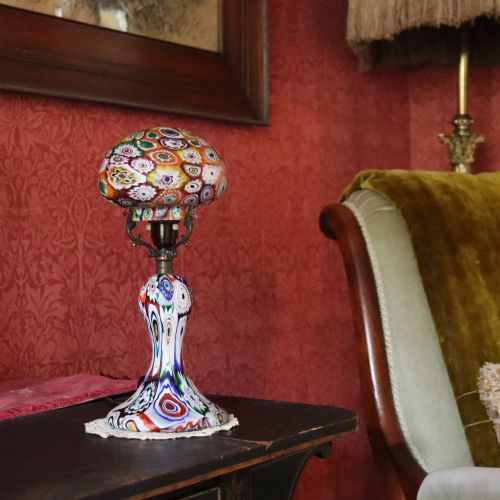
The selection frequently includes French and British examples, alongside pieces influenced by the Amsterdam School, Bauhaus, Jugendstil, and Arts and Crafts movements. Materials extend beyond simple metalwork to incorporate marble, onyx, granite, leather, and various types of glass such as opaline, frosted, and millefiori.
How they were made
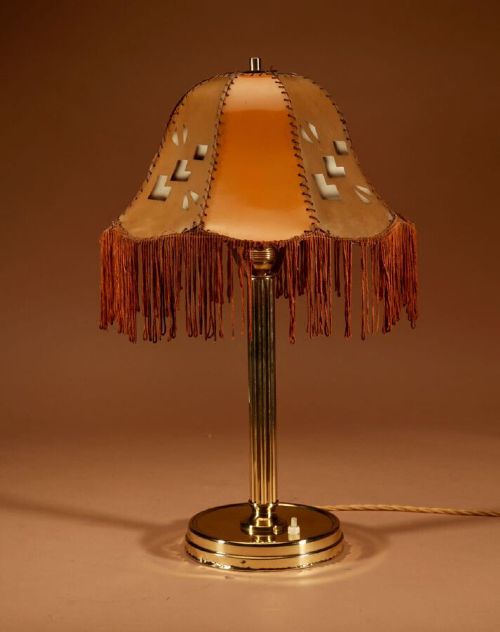
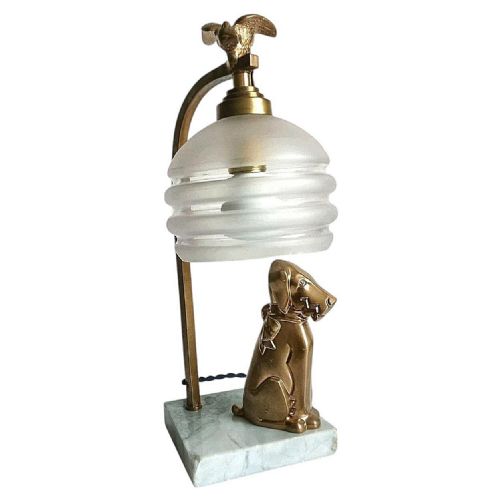
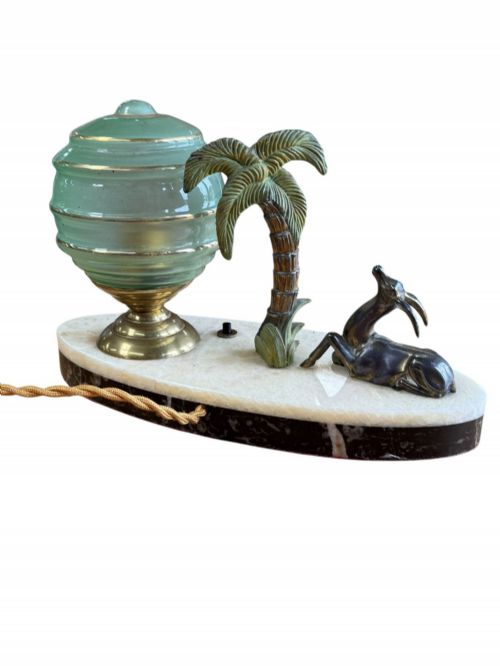
Maker workshops utilised cast and patinated brass, ormolu, and copper, often pairing the metal components with heavy stone bases made of marble or onyx to anchor adjustable and articulated arms. Many designs incorporate fabric shades, painted faience, or moulded glass elements like tulip up-lighters and shell-shaped shades.
Construction techniques involve structural metal articulation, swan necks, and flexible tubing designed for task lighting on desks and dressing tables. Decorative details range from hand-painted porcelain figures and figural motifs like dogs and birds to cubist forms and modernist silhouettes.
Keep an eye out for brass seagulls riding waves and porcelain parrots keeping watch over your desk.
What varies in quality
Quality in these items rests upon the weight of the cast brass and the integrity of the stone bases, where dense marble or onyx provides superior stability for articulated arms. The refinement of secondary materials, such as hand-blown opaline glass shades or detailed figural porcelain elements, distinguishes standard utility pieces from higher-tier artistic productions.
The sophistication of the design execution, whether following a strict Bauhaus aesthetic, an Amsterdam School pattern, or a French novelty form, dictates the overall character. Original components, including specialised shades and patinated finishes, retain greater integrity compared to heavily altered or mismatched examples.
Fratelli Toso·Karl Ens·Anton Buschelberger·Rowley Gallery·Polaire of Paris
The Art Deco Brass Table Light Glossary
- Art Deco
- A design style spanning the nineteen twenties and thirties characterised by geometric shapes, stylised motifs, and streamlined forms. It succeeded the floral curves of Art Nouveau.
- Opaline glass
- A milky, translucent glass popular in nineteenth and twentieth-century lighting. It diffuses light softly and appears in white, blue, and other pastel tones.
- Ormolu
- Gilt bronze or brass applied to decorative objects and light fittings. The technique creates a rich, gold-coloured metallic surface.
- Bauhaus
- A German art school operational from nineteen nineteen to nineteen thirty-three that influenced modernist design. It emphasised functionalism, clean lines, and industrial materials.
- Amsterdam School
- An architectural and design movement originating in the Netherlands around nineteen ten. It favoured expressive forms, rounded brickwork, and decorative metal detailing.
Art Deco Brass Table Light: Frequently Asked Questions
How do I date a brass desk lamp?
Dating relies on stylistic markers such as stepped art deco bases, functionalist Bauhaus tubing, or early twentieth-century adjustable brass joints. Examining the switch mechanisms, wiring channels, and manufacturing stamps also helps establish the production era between nineteen hundred and nineteen thirty.
Materials provide further clues, as heavy marble bases and opaline glass shades frequently correspond to French or British production methods typical of the interwar period.
Were these lamps used for reading?
Many examples function directly as task lighting, including adjustable angle bankers lamps, flexible gooseneck designs, and pullman lights intended for desk work. Their articulated arms allowed users to direct illumination precisely where needed for reading or writing.
Other variants served decorative roles on dressing tables, sideboards, or nightstands, functioning primarily as ambient lighting rather than direct task illuminators.
How do I clean patinated brass?
Patinated brass benefits from gentle dusting with a soft dry cloth to preserve the historical surface finish. Aggressive metal polishes strip away the aged oxidation that collectors value on twentieth-century pieces.
Glass shades and marble bases can be wiped down separately using mild soapy water, ensuring all electrical components remain entirely dry during the process.