


Brass Double Table Lamp
A brass double table lamp brings dual illumination and period character to a room, offering warm twin light sources through enduring metal and glass construction.
Brass Double Table Lamp
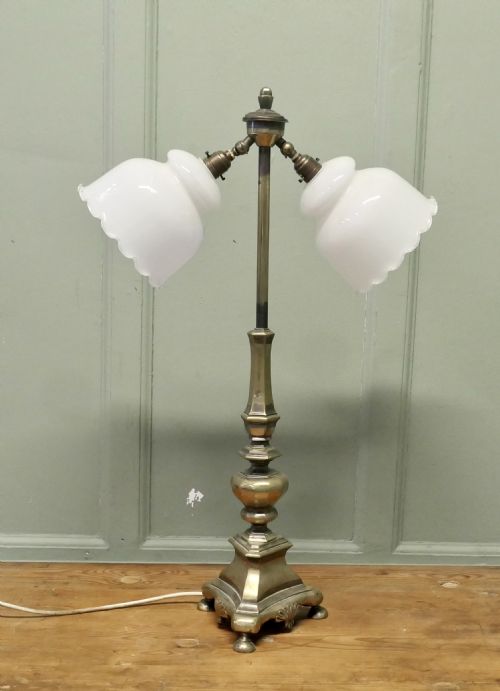
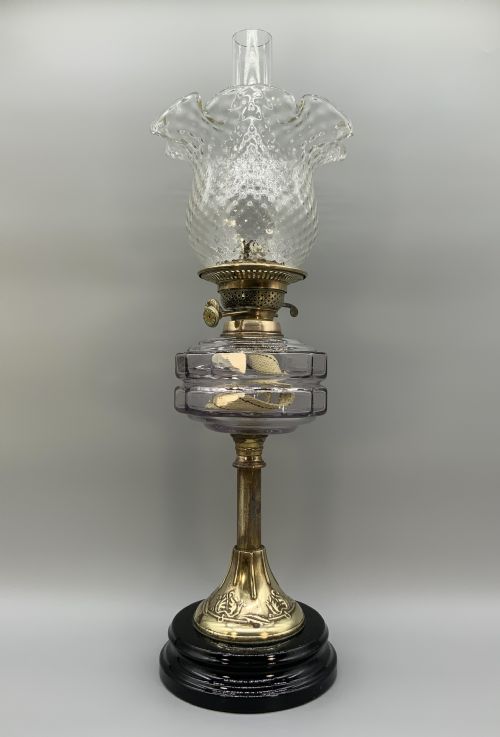
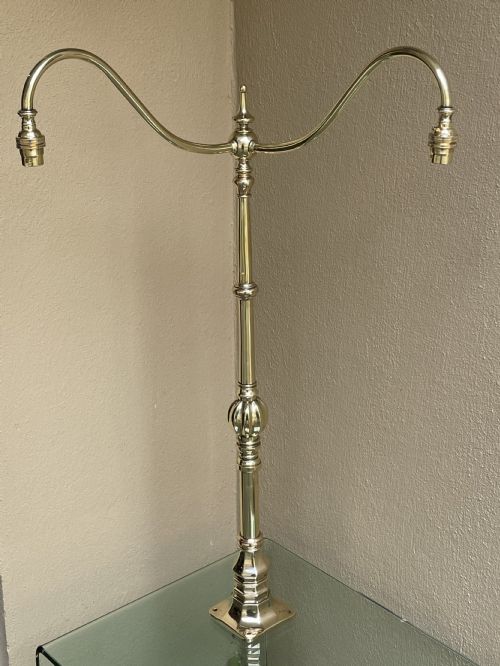
When you search for a brass double table lamp, you encounter twin-burner oil lamps, adjustable reading lights, bouillotte desk lamps, and newel post lamps from the Victorian, Edwardian, and Art Deco periods. These pieces provide two distinct illumination points mounted on a single heavy base, often featuring paired burners, arms, or bulbs.
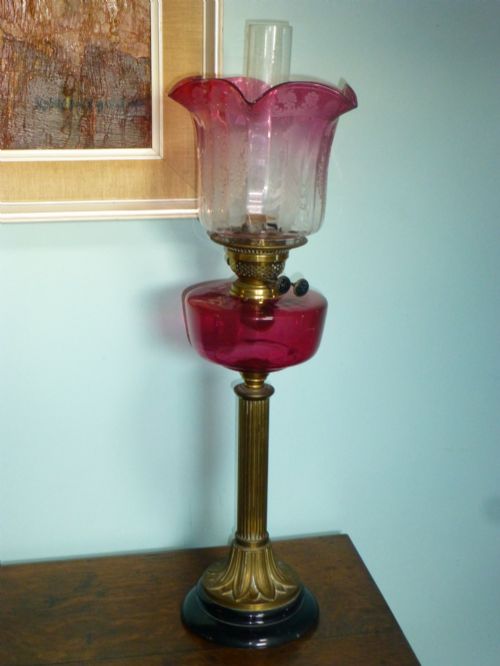
You are most likely to meet Victorian and 1920s examples on this page, reflecting the eras when dual-burner technology and electrified twin designs flourished. The forms range from tall botanical cranberry oil lamps and Chinese famille rose porcelain bodies to sleek Art Deco blue and white figural porcelain and dual lamp brass structures with frosted glass.
How they were made
Maker construction combines cast and turned brass frameworks with delicate hand-blown glass, cranberry glass, and frosted glass shades. Metal components provide structural support and a heavy footing to balance the dual arms.
Ceramic, porcelain, and toleware elements are frequently incorporated into the bodies, alongside specialist burner mechanisms like duplex systems. Artisans shaped these materials using traditional foundry and ceramic techniques suited to domestic lighting.
Some double lamps started life illuminating staircase posts or card games before finding a quieter retirement on modern side tables.
What varies in quality
The standard of a brass double table lamp depends upon the weight of the cast metal framework and the fineness of any hand-blown glass or hand-painted porcelain components. Substantial brass gauge and crisp casting detail distinguish superior examples from lighter, simpler productions.
The sophistication of the mechanism also determines worth, such as adjustable twin angled arms, complex double burners, and original integrated shades rather than later replacements.
The Brass Double Table Lamp Glossary
- Duplex burner
- A double-wick burner system designed to provide significantly brighter illumination in Victorian oil lamps. This mechanism requires two distinct wicks manipulated via twin control knobs.
- Bouillotte lamp
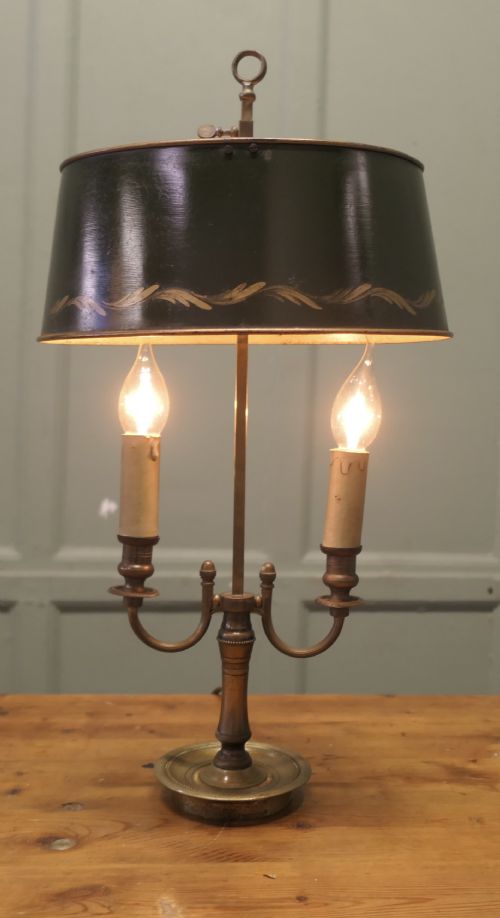
- A traditional desk or table lamp featuring a central standard and dual or triple candle arms beneath an adjustable shade. They commonly utilise toleware or metal shades to direct light downwards.
- Newel post lamp
- A sturdy lighting fixture originally designed to sit atop the decorative vertical post at the start of a staircase. These pieces often feature robust brass construction to withstand high-traffic hallway environments.
- Cranberry glass
- A rich red-pink glass created by adding gold chloride to the molten batch during manufacturing. It is frequently seen in Victorian oil lamp reservoirs and shades.
Brass Double Table Lamp: Frequently Asked Questions
What periods do these lamps come from?
The pieces span the Victorian and Edwardian eras through to the 1920s Art Deco period. You will find items representing nineteenth-century manufacturing alongside early twentieth-century stylistic shifts.
Design influences range from French Empire and Neoclassical Revival to Art Nouveau and Chinoiserie. Each era brings distinct decorative motifs to the brass and ceramic bodies.
How were double lamps used originally?
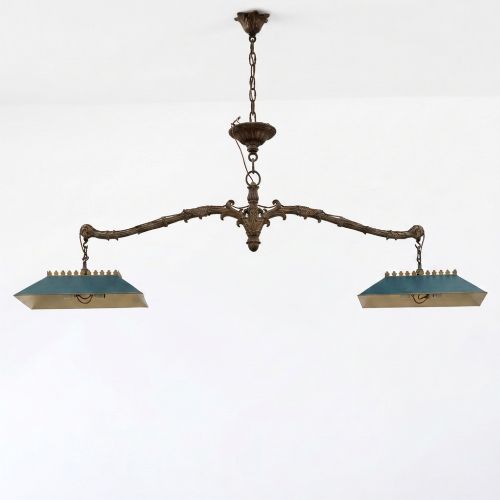
Twin burner and double arm configurations were designed to cast a wider spread of light across a desk, billiard table, or reading area. They maximised illumination before widespread electricity.
Many started as oil lamps utilising twin wicks or duplex burners before being adapted for modern electrical wiring. Desk and reading variants offered adjustable arms to direct light precisely where needed.
How can I tell a Victorian lamp from a 1920s piece?
Victorian examples often display ornate casting, botanical motifs, and oil lamp mechanisms with double burners. They lean towards Neoclassical, Art Nouveau, or traditional oil-burning forms.
Pieces from the 1920s frequently showcase cleaner geometric lines, Art Deco styling, and simpler dual lamp configurations. Porcelain bodies from this later decade tend to feature brighter figural or blue and white patterns.