


Art Deco Bedroom Mirror
An art deco bedroom mirror brings clean geometric lines and striking wood grains directly into the private chamber.
Art Deco Bedroom Mirror
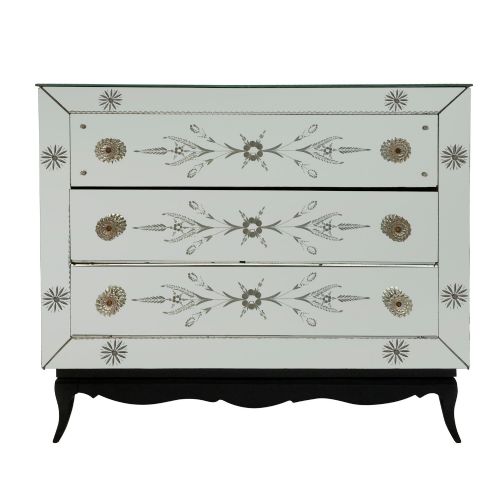
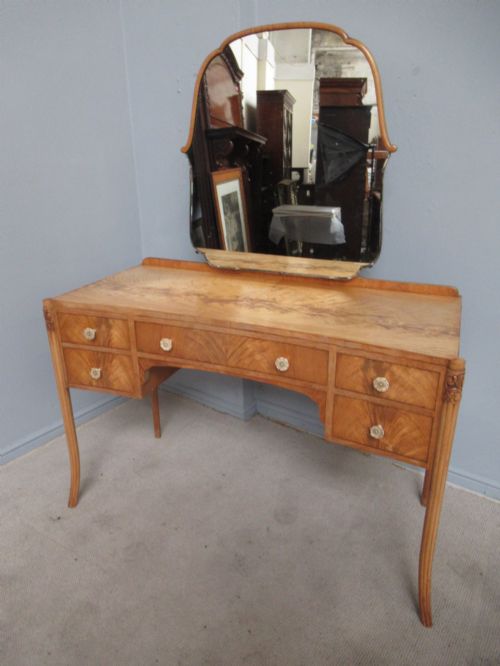
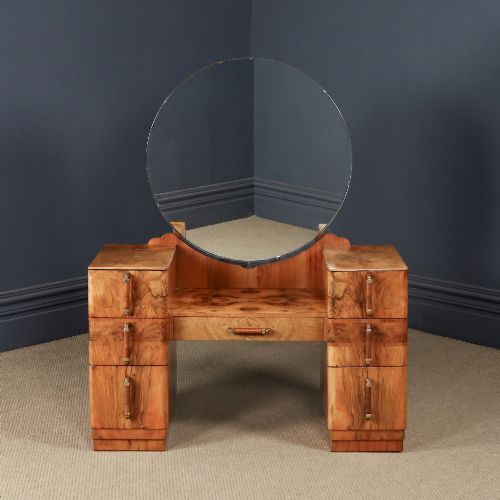
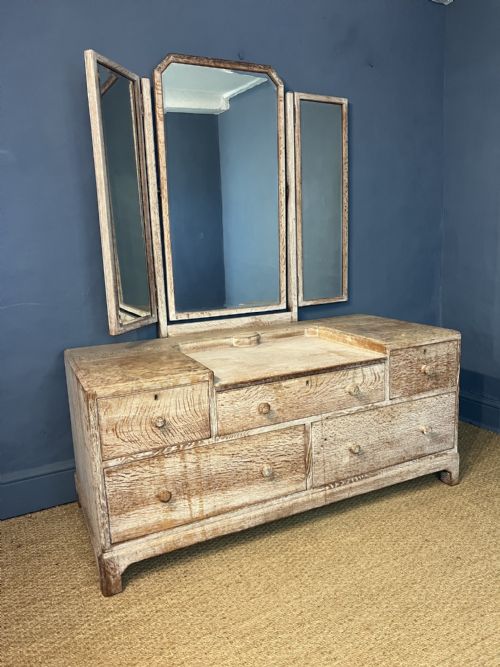
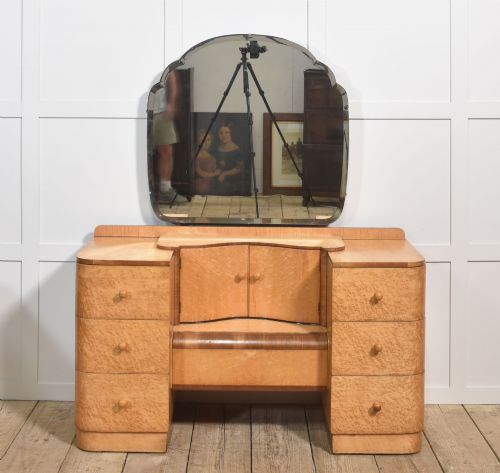
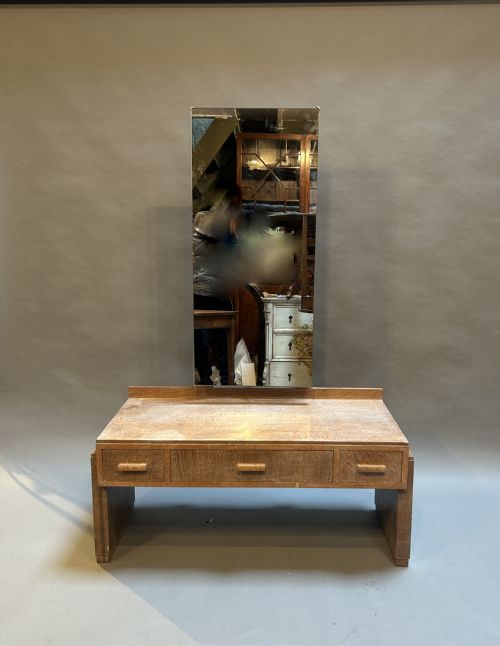
When you search for an art deco bedroom mirror, you enter a field populated primarily by dressing tables, vanity units, and freestanding cheval mirrors originating from the 1910s to 1930s. These pieces often arrive as integrated components of larger bedroom suites or as standalone pedestal dressing chests featuring pivoting or fixed glass plates.
The selection here encompasses English, French, and Continental workshops, running from simple oak chests to elaborate burr walnut vanities. You will find that most examples incorporate shaped mirror glass framed in matched veneers or solid hardwoods, designed specifically to catch the light in a bedroom setting.
Materials and construction methods
Cabinet makers constructed these pieces using solid foundations of oak, maple, and mahogany, then overlaid them with highly figured veneers such as burr walnut. Brass hardware and occasional metal accents provide structural contrast, while glass forms both the central looking plates and decorative surface panels.
Joinery follows traditional cabinet-making standards adapted for modernist forms, employing curved woodwork and stepped pedestals. The mirror glass itself is typically heavy plate glass, often bevelled or shaped to echo the angular geometry typical of the style.
Listings span the decades from 1910 to 1930, utilising walnut, oak, maple, mahogany, brass, and mirrored glass across dressing tables and wardrobes.
Distinctions in craftsmanship and design
Quality rests heavily on the selection of timber veneers and the harmony of the proportions. Master workshops matched burr walnut and maple across large surfaces with deliberate symmetry, whereas lesser pieces relied on plain timber boards.
The sophistication of the hardware and the integrity of the original mirror plate further separate standard production from exceptional design. Pieces bearing attributed or signed maker details demonstrate a higher level of bespoke joinery and refined finishing.
Heals·Maurice Adams·Harry and Lou Epstein·Jean Faure·B Cohen and Sons·Betty Joel·Rowley Gallery
The Art Deco Bedroom Mirror Glossary
- Cheval mirror
- A freestanding full-length mirror mounted in a frame that allows it to tilt. These rotating plates allow the user to adjust the viewing angle easily.
- Burr walnut
- A wood veneer taken from the warted growths on walnut trees, showing swirling, intricate grain patterns. It was favoured by modernist cabinet makers for its decorative impact.
- Limed oak
- Timber treated with a specialised finish that leaves a white pigment in the open grain. This technique lightened the appearance of oak furniture during the interwar period.
- Pedestal dressing table
- A vanity unit featuring banks of drawers on either side of a central kneehole. The configuration supports both storage and a dedicated surface for grooming.
Art Deco Bedroom Mirror: Frequently Asked Questions
How do I date an art deco mirror?
Dating relies on examining the construction methods, wood types, and stylistic indicators present in the frame and associated furniture. Pieces from the 1920s and 1930s often utilise specific veneers like burr walnut alongside characteristic geometric stepped forms.
Looking closely at the backing boards, screw types, and the silvering on the glass plate provides further chronological clues. Comparative study with documented pieces from known workshops helps narrow down the decade of manufacture.
Were these mirrors part of larger sets?
Many mirrors and dressing chests originated as part of comprehensive bedroom suites that included matching wardrobes and chests of drawers. Cabinet makers designed these suites to unify the interior aesthetic of private sleeping quarters.
Finding a piece that retains its matching companions remains a notable occurrence in the secondary market. Even when separated, the distinctive timber choices often allow them to complement other period furnishings.
How should I care for burr walnut?
Burr walnut surfaces require protection from direct sunlight and excessive moisture to prevent the delicate veneers from fading or lifting. Regular dusting with a soft, dry cloth preserves the polished finish without harming the wood.
Occasional application of appropriate furniture wax maintains the moisture balance in the timber. Avoiding synthetic cleaning sprays ensures the historic polish remains stable over time.
What defines French art deco style?
French interpretations frequently employ exotic timber veneers, dramatic curves, and luxurious metal mounts that emphasise opulence. These designs often push modernist geometry toward more theatrical and sculptural silhouettes.
Master craftsmen in France combined maple, mahogany, and mirrored glass to create high-status dressing furniture. Their work stands apart through bolder proportions and sophisticated surface detailing.