





Architectural Timber Panel Pair
These architectural timber panel pair items are matching sets of historic woodwork and salvage, offering authentic period character for interior schemes.
Architectural Timber Panel Pair
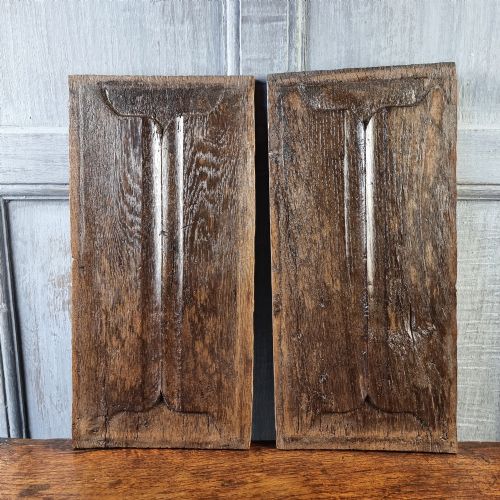
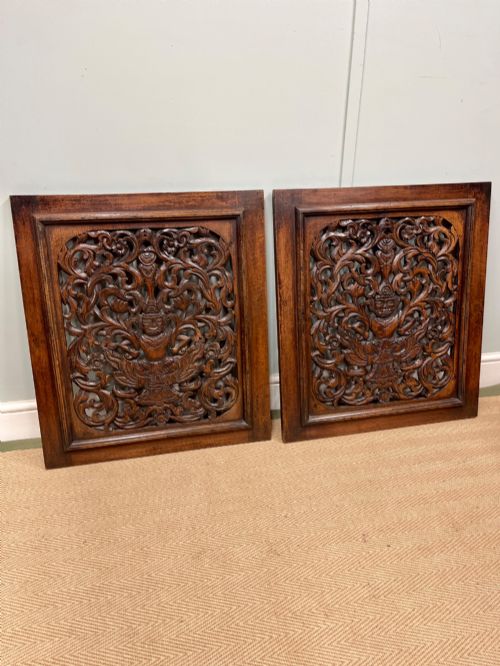
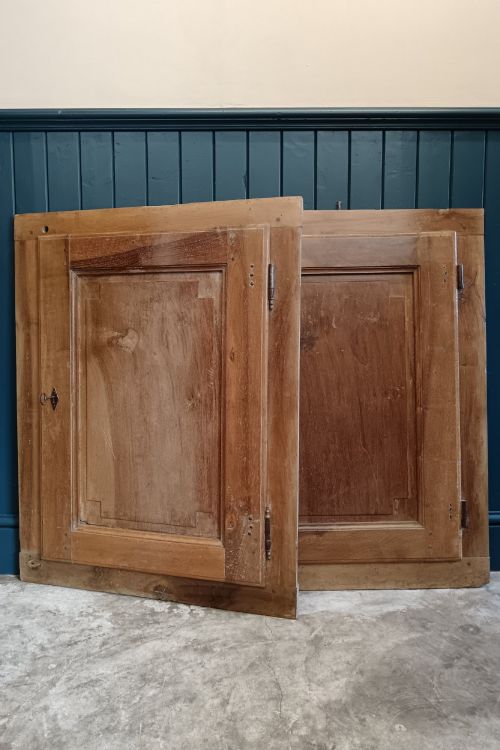
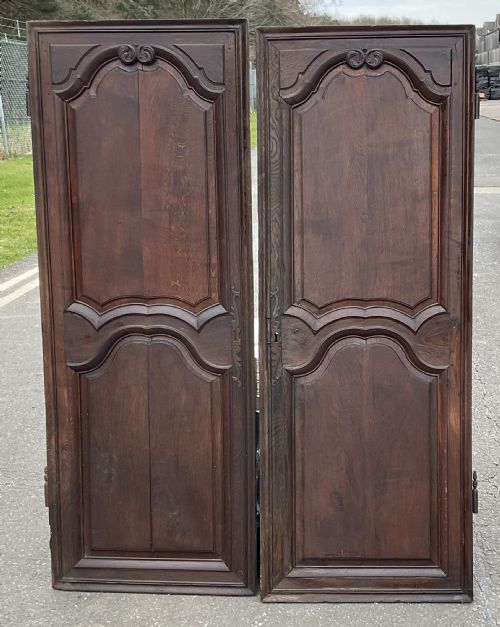
When you search for an architectural timber panel pair, you encounter matching sets drawn from domestic and institutional buildings, ranging from cupboard doors to wall panels. The examples seen here include 16th and 17th century linenfold carvings, 18th century Italian walnut cupboard doors, and 19th century Burmese or Chinese Qing Dynasty hand-carved wood panels.
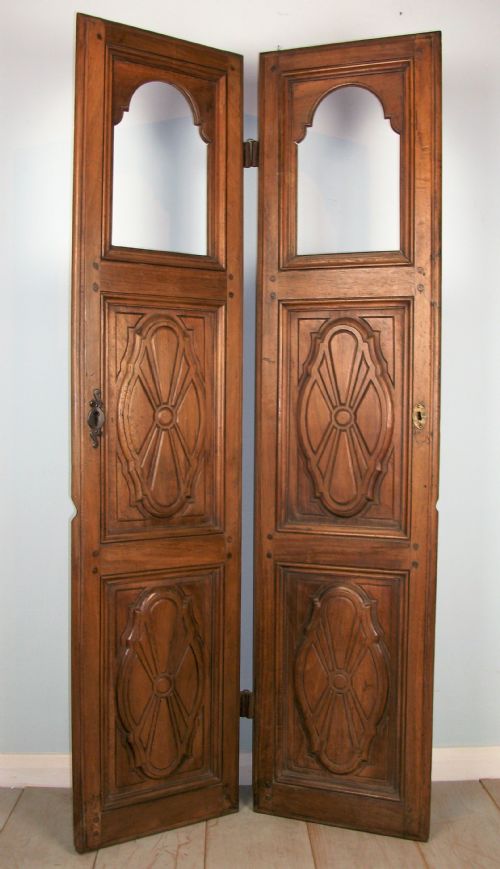
You are most likely to meet French and Italian provincial styles alongside English and continental forms, often originating from armoires, pantry doors, or architectural salvage. These pairs span the 16th, 17th, 18th, and 19th centuries, as well as Edwardian pieces like stained glass windows and rustic painted doors from around 1900.
The selection also encompasses specialist items such as Toraja Sulawesi carved tribal doors and limewood carvings executed in the Thomas Chippendale style. Each pair retains the functional framework or decorative relief characteristic of its original architectural context.
Assessing quality in historical panels
The standard of a carved panel pair depends upon the crispness of the hand-carving and the depth of the relief work executed by the artisan. Finer examples display masterly control in symmetrical designs, whereas simpler rustic pieces rely on straightforward joinery and utilitarian surfaces.
Condition and originality dictate the upper tier of the range, particularly where original paint finishes, scumbling, or historic hardware remain intact. Matched pairs that retain their original frames or retain uniform patination across both components command greater interest than assembled or heavily altered sets.
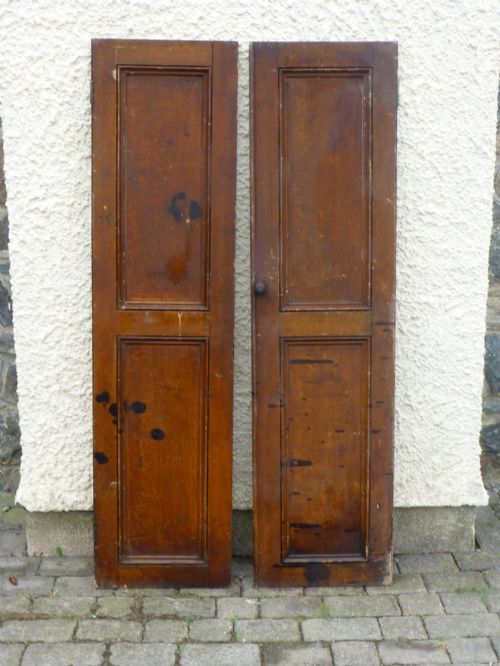
Pantry doors dressed up in faux oak paint prove that earlier generations also loved a clever budget-friendly makeover.
The Architectural Timber Panel Pair Glossary
- Linenfold
- A style of relief carving used to decorate wooden panels, imitating folded linen. This ornamentation is frequently encountered on 16th and 17th century pieces.
- Scumbling
- A painting technique involving a thin, translucent layer of paint dragged over a base coat to create texture. It appears on architectural cupboard doors to simulate expensive timbers like faux oak.
- Architectural salvage
- Building materials and decorative elements rescued from structures slated for demolition or renovation. This category covers the doors, panels, and windows gathered here.
- Panel and frame
- A method of construction designed to accommodate the natural expansion and contraction of wood across the grain. It prevents warping in large cupboard doors and wall panels.
Architectural Timber Panel Pair: Frequently Asked Questions
How were these panels originally used?
These items functioned as architectural elements within domestic and institutional buildings, serving as cupboard doors, armoire fronts, wall panels, or room dividers.
Many originated in specific contexts such as pantries, alcoves, or grand reception rooms, where matched pairs provided symmetry to an interior scheme.
Can these doors be hung in modern rooms?
Hanging historic doors requires careful assessment of their weight, dimensions, and the condition of the surrounding timber frame. Professional installation often involves bespoke framing to accommodate irregularities acquired over centuries of use.
Many buyers utilise them as decorative wall art or fixed partitions rather than functioning entryways.
How do I identify 17th century panels?
Seventeenth-century panels frequently exhibit characteristic motifs such as linenfold carvings, heavy oak construction, and pegged mortise and tenon joints. The tooling marks left by hand axes and chisels help distinguish authentic early work from later reproductions.
Surface patination and dry timber surfaces further indicate considerable age.
What does scumbled mean on a listing?
Scumbling refers to a decorative paint finish where a translucent glaze is manipulated over a lighter base colour to create mottled or textured effects. In historic joinery, this technique was often employed to imitate superior timbers like oak.
Pantry and alcove doors frequently display this finish.