


Architectural Salvage Glass Panel
An architectural salvage glass panel brings genuine period character and natural light into a modern space through historic leaded, stained or etched glazing.
Architectural Salvage Glass Panel
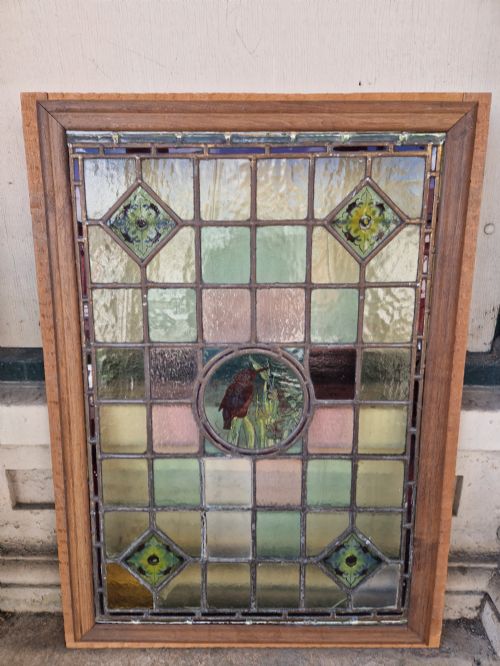
When you search for an architectural salvage glass panel, you encounter surviving fragments from Victorian and Edwardian buildings, ranging from domestic doors to church windows and commercial shopfronts. The most common examples on this page are leaded windows featuring hand-painted countryside scenes, floral motifs or distinct avian designs.
These pieces originate from a span stretching from the nineteenth century through to the early decades of the twentieth century. Styles vary widely, taking in Gothic Revival church windows, Art Nouveau railway carriage doors, Arts and Crafts domestic panels, and even specific commercial signs.
Many items retain their original timber or pine frames, while others are presented as standalone panels ready for hanging or re-setting into interior partitions. They document the shifting decorative tastes of Victorian and Edwardian trades, homes and places of worship.
Materials and construction
Makers constructed these panels by holding individual pieces of coloured or clear glass within pliable strips of lead cames, which were then soldered at the joints to form a rigid matrix. Hand-painted details, such as rural landscapes or botanical subjects, were fired onto the glass surface before leading.
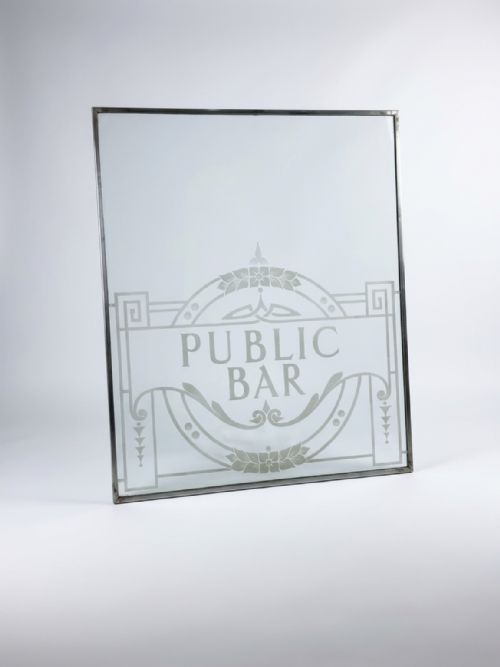
Etched glass panels achieved their opaque patterns through acid treatment or abrasive cutting on flashed or plain sheet glass, frequently seen in commercial settings like pubs and confectionary shops. Frames fashioned from robust timbers such as pine provided the structural support necessary for larger architectural insertions.
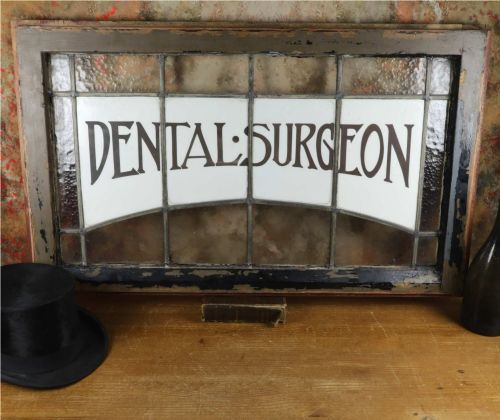
A charming nineteenth-century trade window once beckoned customers toward a dental surgeon's practice.
Assessing quality and execution
The sophistication of the hand-painted artistry dictates much of the distinction between standard production and exceptional work, particularly in pictorial scenes depicting figures, animals or landscapes. Finer execution shows in the subtlety of the fired enamel pigments and the precision of the lead work.
The ambition of the original design also sets panels apart, moving from simple geometric bullseyes and square panes to elaborate Pre-Raphaelite compositions or heraldic motifs. Complete survival of the original timber framing and the integrity of the surrounding lead network further influence the standing of any given piece.
The Architectural Salvage Glass Panel Glossary
- Lead came
- The H-section lead strips used to hold individual pieces of glass together in a stained or leaded window. These strips provide the flexible skeletal structure of the entire panel.
- Bullseye
- A circular distortion or button in crown glass, formed where the molten material was spun from a pontil rod. They appear frequently as decorative accents in period glazing.
- Flashed glass
- A manufacturing method involving a thin layer of coloured glass fused over a thicker base of clear or contrasting glass. Etchers remove parts of the top layer to create a two-tone design.
- Came
- The generic term for the channeled strips of lead, zinc or brass used to assemble stained glass windows. They define the outlines of the pictorial composition.
Architectural Salvage Glass Panel: Frequently Asked Questions
How do I hang a heavy glass panel safely?
Heavy panels require secure mechanical support rather than simple picture wire, as the lead framework can stretch or sag under its own weight over time.
Fixing custom metal brackets to the outer timber frame or mounting the panel within a dedicated internal window reveal ensures the weight rests properly on a solid base.
Can these panels be installed into modern walls?
These pieces integrate well into modern interiors as internal room dividers, decorative wall hangings or transoms placed between rooms to borrow light.
When fitted into an exterior opening, most historic panels require secondary glazing on the outside to protect the fragile leadwork and hand-painted surfaces from weather damage.
How do I clean historic stained glass?
Cleaning requires a gentle approach using a soft cloth and mild, neutral soap mixed with warm water to avoid disturbing fragile paintwork or corroded lead.
Harsh chemical cleaners, abrasive pads and excessive moisture must be avoided because they can strip fired pigments and degrade the historic metal cames.
How can I tell the period of a panel?
Stylistic clues offer the clearest indication of date, with Gothic Revival and heavy heraldic designs pointing to the nineteenth century, and streamlined geometric forms suggesting the nineteen-twenties or thirties.
Materials also help date a piece, as the specific use of hand-painted floral swags, specific bird motifs and particular types of flashed glass align closely with Edwardian and Victorian production standards.